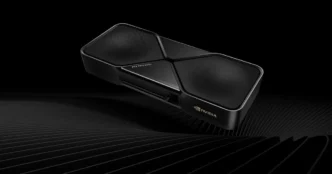
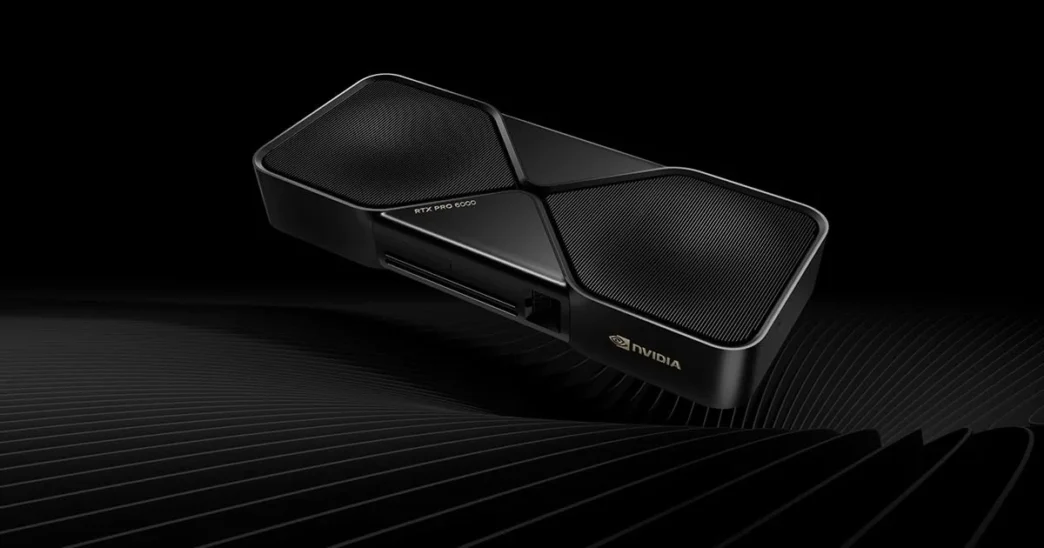
NVIDIA’s flagship RTX PRO 6000 Blackwell workstation GPU has reportedly reached a $16,000 US listing, making it nearly twice as expensive as its original launch price. The 96GB professional card is aimed at AI developers and workstation users, but escalating GDDR7 and component costs are pushing its price into unprecedented territory.
Key takeaways
- The RTX PRO 6000 Blackwell is now listed at $16,000 in the US.
- Its original MSRP was approximately $8,565, according to the latest reporting.
- The card includes 24,064 CUDA cores and 96GB of GDDR7 memory.
- Its price rose from roughly $13,250 in June.
- Continued memory shortages could lead to further increases.
Price nearly doubles from launch
The latest NVIDIA marketplace listing represents an increase of about 87% over the card’s reported $8,565 launch MSRP. Wccftech previously described the original price as approximately $8,000, but either figure highlights the same trend: NVIDIA’s top workstation GPU has nearly doubled in cost within a matter of months.
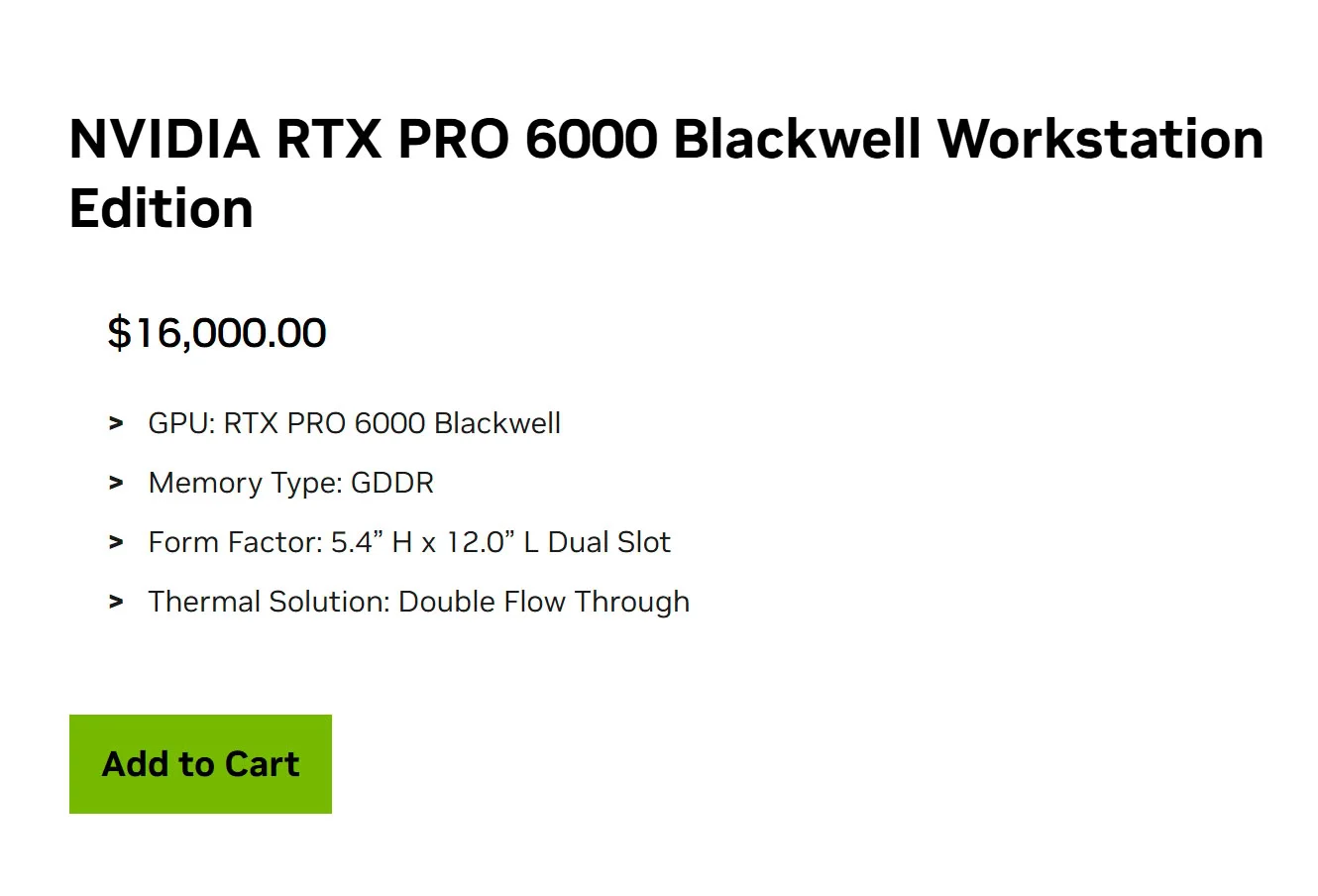
The RTX PRO 6000 was reportedly listed at approximately $13,250 in June. Its move to $16,000 makes it NVIDIA’s most expensive graphics card outside of server-focused products such as the B200 and B300 systems.
96GB of GDDR7 drives costs
The card’s defining feature is its 96GB memory capacity, which is three times that of the 32GB GeForce RTX 5090. The RTX PRO 6000 uses 32 GDDR7 memory modules, with 16 mounted on each side of the PCB. Each module reportedly provides 3GB of capacity.
TechPowerUp estimates that the GDDR7 alone cost between $1,920 and $2,240 based on module prices of approximately $60 to $70 in late July. Any increase across 32 modules can therefore have a substantial effect on the finished product, before accounting for the GPU, board, cooling system, power delivery components, and other parts reportedly affected by supply constraints.
Built for AI and professional workloads
With 24,064 CUDA cores and its large memory pool, the RTX PRO 6000 Blackwell is designed for AI development, content creation, simulation, and other professional workloads that can exceed the memory limits of consumer GPUs. Its higher memory capacity can allow larger models and datasets to run locally, reducing the need to split workloads across multiple cards.
That positioning also means the price increase may be less disruptive for enterprise and professional buyers than it would be for gamers or PC builders. Still, the card’s pricing illustrates how AI demand and memory shortages are influencing the broader graphics market.
More GPU price increases remain possible
The latest listing does not guarantee that every retailer will charge exactly $16,000, but it indicates that the official pricing environment has shifted sharply. Partner versions from companies such as PNY may differ, depending on region, taxes, and supply.
If GDDR7 and other component shortages continue, the RTX PRO 6000 could move beyond $17,000 and potentially approach the $20,000 mark. Consumer products are already feeling similar pressure, with reported increases affecting GeForce RTX 50-series and AMD Radeon RX 9000 graphics cards. For enthusiasts following the PC hardware market, the RTX PRO 6000 is another sign that elevated GPU pricing may persist well beyond the current generation.