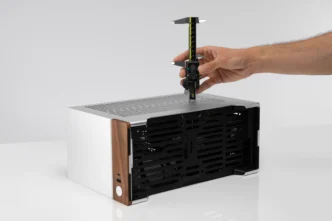
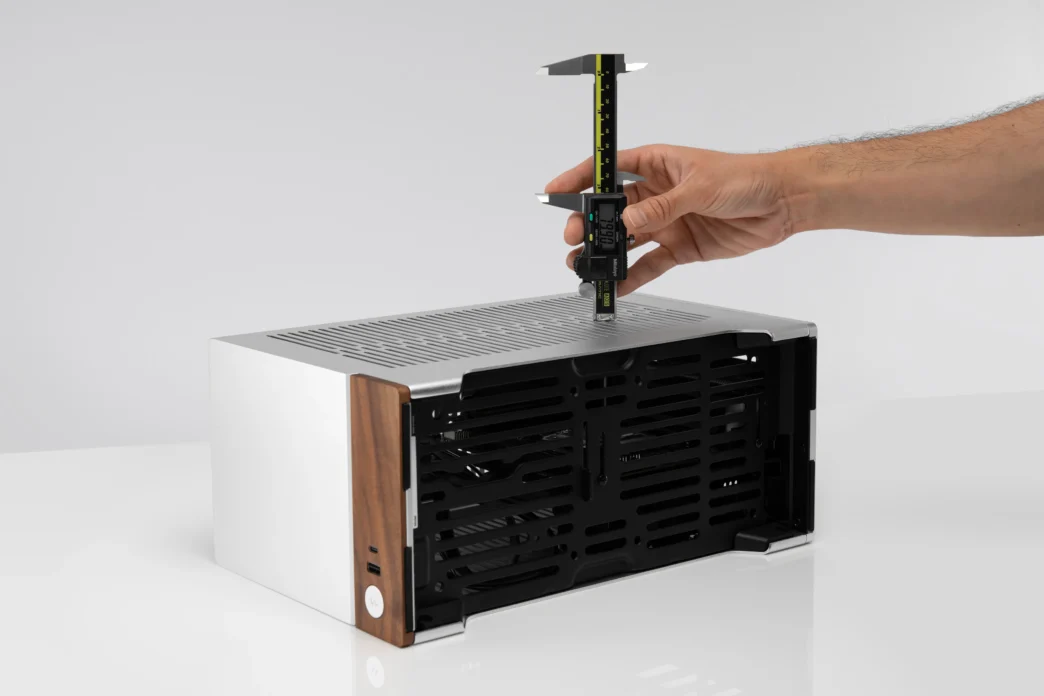
If you’ve ever double-checked a case’s “maximum CPU cooler height” spec before buying a heatsink, Noctua just gave you a good reason to double-check again. The cooling giant has spent months hand-measuring more than 100 popular PC cases, and the results aren’t flattering for the industry: over half of them list CPU cooler clearance figures that don’t match reality. In some cases, builders are missing out on extra headroom for beefier coolers. In others, they risk buying a cooler that simply won’t fit despite the spec sheet’s promise. Noctua has now folded all of this data into a public case compatibility database, and the discrepancies it uncovered are big enough to matter for anyone planning a build.
Key Takeaways
- – Noctua manually measured over 100 PC cases and found that 56 of them deviate from their manufacturers’ official CPU cooler clearance specifications.
- – Errors ranged from cases offering up to 10mm less usable space than advertised to cases offering up to 10mm more.
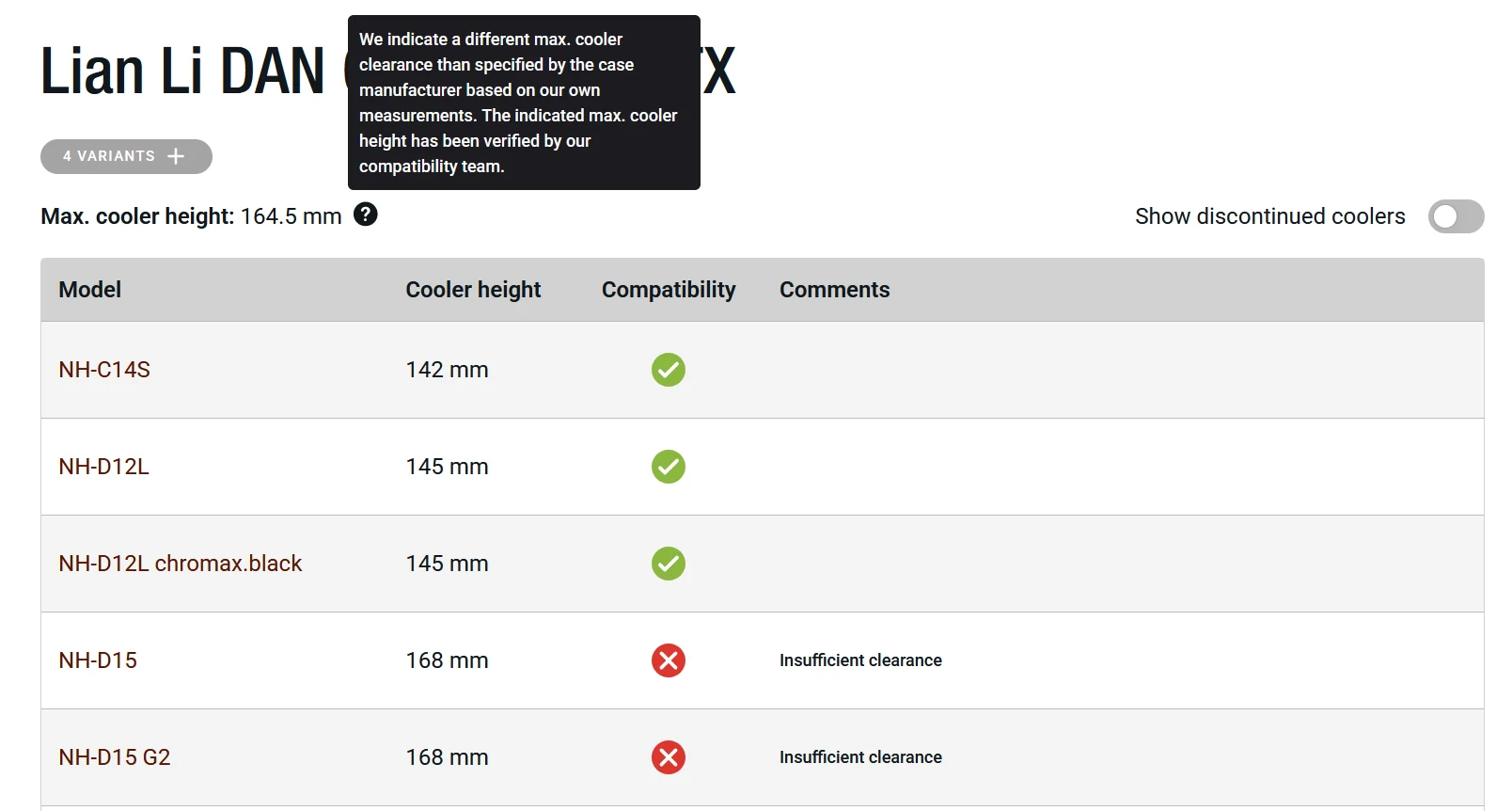
- – Notable examples include the NZXT H2 Flow (listed at 75mm, actually fits up to 79mm), Corsair’s Frame 4000D (listed at 170mm, actually offers 180mm), and the Lian Li B4-mATX (listed at 168mm, actually tops out at 164.5mm).
- – Noctua has published its measurements in a free case compatibility database, which it plans to keep expanding as it tests more chassis.
A Widespread Problem Builders Didn’t Know They Had
Cooler clearance might be one of the least glamorous specs in a PC build, but it’s one of the most consequential. Builders rely on it to determine whether a specific air cooler will physically fit inside a case without touching the side panel. Noctua’s testing suggests that trust has been misplaced more often than most people realized. After manually measuring over 100 cases, the company found that 56 of them showed a “relevant” deviation from the clearance figures listed on manufacturers’ own product pages. That’s a failure rate north of 50%, spanning big-name brands including Corsair, NZXT, Lian Li, Asus, and Thermaltake.
When Cases Offer More Room Than Advertised
The more common — and less harmful — type of discrepancy is when a case actually has more room than its spec sheet claims. The NZXT H2 Flow is one of the standout examples: NZXT lists a maximum clearance of 75mm, but Noctua’s measurements found enough room to fit coolers up to 79mm tall, meaning NZXT’s own NH-L12Sx77 cooler technically fits a case its spec sheet suggests it shouldn’t. Corsair’s Frame 4000D showed an even larger gap, with a listed clearance of 170mm against a measured 180mm, a full 10mm of hidden headroom. Thermaltake’s TR100 followed the same pattern on a smaller scale, listed at 68mm but measuring out to 70.7mm. Noctua explains that manufacturers often build conservative buffers into their published specs to account for manufacturing tolerances and motherboard standoff variation, erring on the side of caution rather than precision. That’s good news in the sense that nothing breaks, but it’s still a missed opportunity: builders could be choosing smaller, less capable coolers than their case can actually support.
When Cases Fall Short of Their Own Claims
The more concerning category is the opposite problem: cases that offer less clearance than advertised. Noctua flagged the Asus Prime AP201, listed at 170mm but measuring closer to 168.3mm, and the Lian Li B4-mATX, listed as supporting 168mm coolers but actually topping out around 164.5mm. That shortfall is enough to rule out Noctua’s own NH-D15 G2, a cooler that, according to the case’s official specs, should have fit. For builders who plan a system around exact published numbers, a gap like this can mean a cooler that physically won’t close the side panel, or won’t install at all. Noctua notes that these tighter margins matter most in small form factor and ITX-style builds, where every millimeter is already stretched thin.
Noctua’s Fix: A Public Compatibility Database
Rather than simply calling out manufacturers, Noctua has turned its findings into a practical tool. The company has launched a case compatibility database that lists its own hands-on measurements alongside manufacturer specs, with a tooltip flagging which cases it has independently verified. Noctua says it plans to keep expanding the database as it tests additional chassis, giving builders an increasingly reliable second opinion before they commit to a cooler purchase. For now, the takeaway for PC builders is simple: official spec sheets are a good starting point, but they’re not gospel. Cross-referencing against real-world measurements, especially for tight small form factor builds, could be the difference between a cooler that fits perfectly and one that doesn’t fit at all.
Via Noctua