Crypto news usually talks about prices, politics, and market drama, but the real story is in the hardware. ASIC miners (application-specific integrated circuits) are single-purpose computers built to do one job very well. Like any specialized device, how they actually perform depends on more than just specs.
For readers who care about thermals, power delivery, uptime, and firmware, ASIC miners are worth understanding as a type of specialized computer. Even if you never plan to run a full setup, the engineering choices behind modern ASICs are a lot like what we see in GPUs, servers, and networking gear.
What Sets an ASIC Apart From a GPU Rig?
A GPU is flexible — it can render frames, train models, or mine different algorithms depending on software. An ASIC is the opposite — it is built for one algorithm and one task. That focus is why ASICs are far more efficient than GPUs for certain jobs. But it also means they age differently. A GPU can switch to a new workload; an ASIC cannot.
That’s why buying ASIC hardware is less like buying a graphics card and more like buying infrastructure built for a single purpose. The product is a mix of chip design, power system, cooling, firmware, and support.
The Spec Sheet Is Just the Start
Many buyers look at hashrate and efficiency (often in joules per terahash). That’s a fair starting point — but it is not enough. Two units with similar stats can perform very differently under load.
A better way to judge ASIC hardware is to think like a systems builder:
- Power delivery quality — How stable is the PSU under constant load? Are the connectors solid? Does the unit handle small voltage swings?
- Thermal behavior — Does it hold performance without throttling? Are fan curves harsh? Is it too sensitive to room temperature?
- Firmware maturity — Does it stay stable for weeks? Does it give useful monitoring and logs?
- Noise and airflow — Does it need ducting or soundproofing? How does it act outside a data center?
Those details decide whether a miner runs like a reliable appliance — or turns into a hot, loud problem.
Why Cooling Is the Real Problem for Many Users
In PC building, weak cooling just clips your top speed. With an ASIC, weak cooling can kill stability, shorten life, and stop production. Many units are built on the promise of a strong, steady breeze — drop one in an ordinary room with no plan and you will hit the wall almost right away.
If you plan to run a machine in a garage or utility room, think about “heat management per hour,” not only “fan RPM.” Where the hot air goes, how clean the incoming air is (dust!), and how much the room temperature jumps matter far more than most expect. Even simple steps — lifting the unit off the floor so it swallows less dust — help it last longer.
Where You Buy Matters More Than People Say
The ASIC market suffers the same headaches that hit other high-demand tech gear — fakes, vague ads, and murky warranties. Finding “a miner at a price” is not enough — you also need to know whether the unit is new or refurbished, when it will ship, and what happens if it shows up dead.
While you are still shopping and want to line up models and stock in one spot, you will probably scroll supplier pages. For instance, if you want to reach an asic miner buy choice based on what is in stock or sorted by class, it pays to scan structured lists before you decide which grade of hardware fits your power and cooling limits.
Power: Handle It Like a Server, Not a Desktop
Many first-timers do not grasp what “continuous draw” truly means. A gaming PC surges and relaxes with the load; an ASIC can hold a flat, top-level draw for months. That rewires the arithmetic for wire gauge, breakers, and safety headroom.
At the least, check:
- Circuit size and sustained-load margin
- Right outlet and cord rating
- Surge protection and safe load sharing
- A real plan for shutting down and restarting when the grid flickers
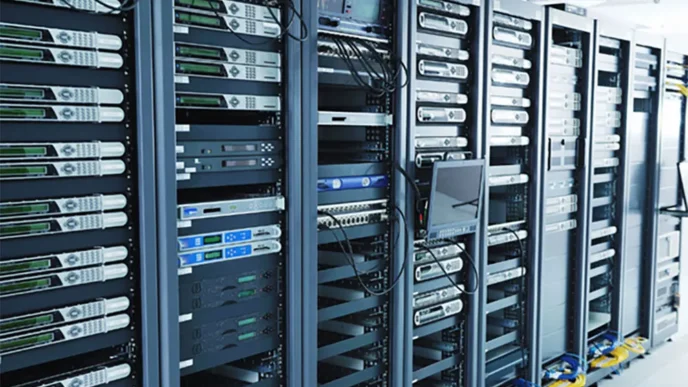
If you come from desktop builds, picture an ASIC as a rack server with a single task — steady, predictable output. Build the electrical side with that view.
Networking and Monitoring: The Dull Work That Saves the Day
An ASIC is blind to you unless you can see it. A modest monitoring stack — temperature, fan speed, error count, uptime alerts — keeps a hiccup from snowballing into a dead board. Skills you already have from home labs or NAS boxes carry over well: simple dashboards, quick log checks, and alert rules pay off.
When the firmware allows it, turn on remote control, pool failover, and readable logs. Without those, you fly in the dark, and every fix turns into a guess.
The Bigger Trend: Mining Hardware Is Becoming Data-Center Hardware
The clearest change in recent years is that ASIC mining has left the hobby behind and now follows strict operations. Efficiency still counts, but steady uptime counts more. Victory goes not to whoever owns the latest box, but to whoever runs power, cooling, and repairs like a professional.
For anyone who follows technology, the lesson is plain: ASIC miners push special-purpose design to the limit. Whether you buy, benchmark, or only survey the hardware scene, they show what occurs when efficiency, heat control, and availability become the whole product.
Treat ASICs the same way you treat any serious compute gear — check every spec, design the site first, and put reliability ahead of everything else — and you will skip the usual traps and choose far more wisely for the long haul.