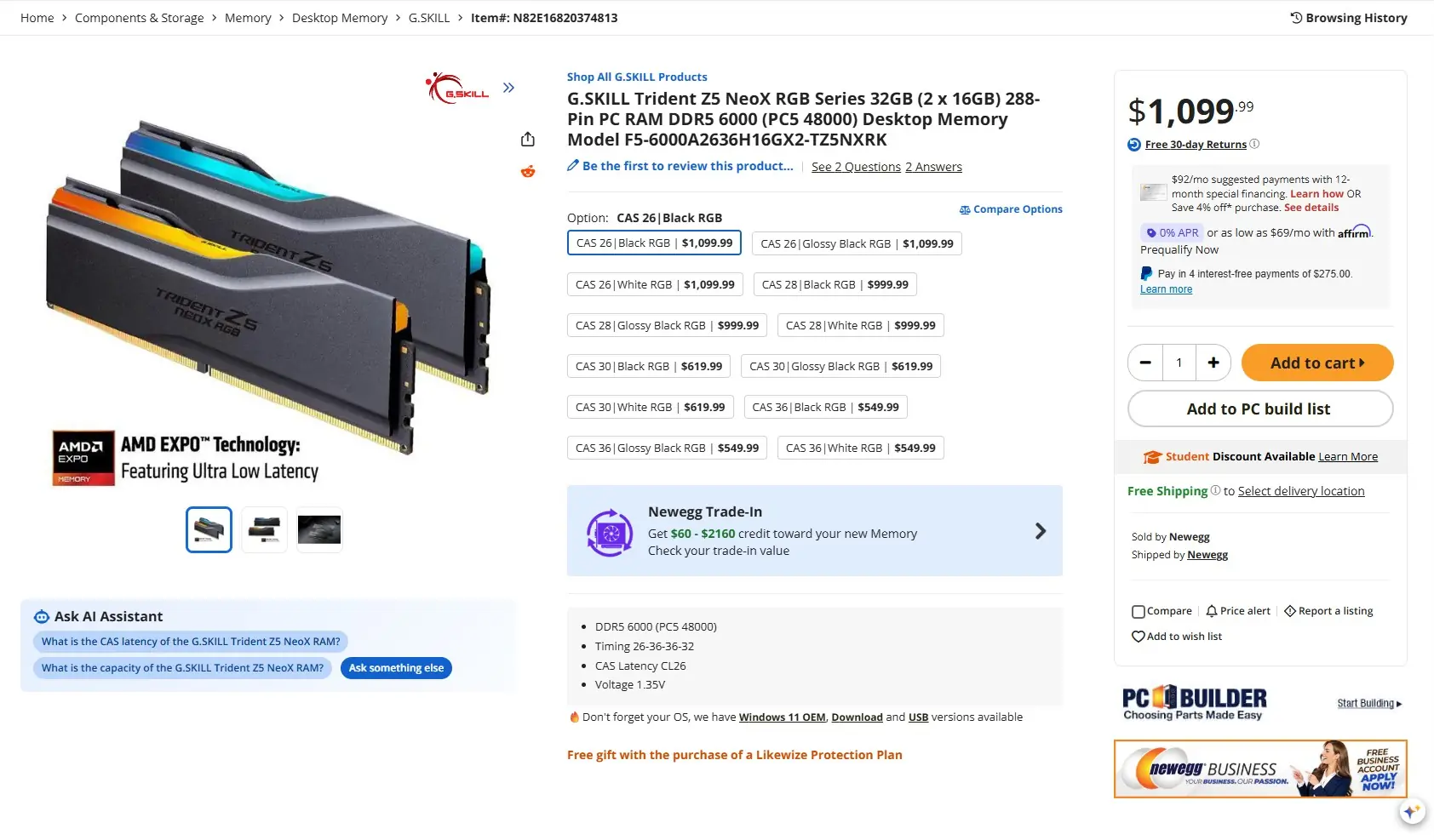
The long-awaited AMD EXPO Ultra Low Latency (ULL) memory kits have officially hit the retail market, led by the debut of G.Skill’s new Trident Z5 NeoX series. Despite AMD’s previous assertions that these optimized modules would be priced similarly to standard EXPO kits, early retail listings indicate a significantly different reality, with some variations commanding nearly double the price of their counterparts.
Key takeaways
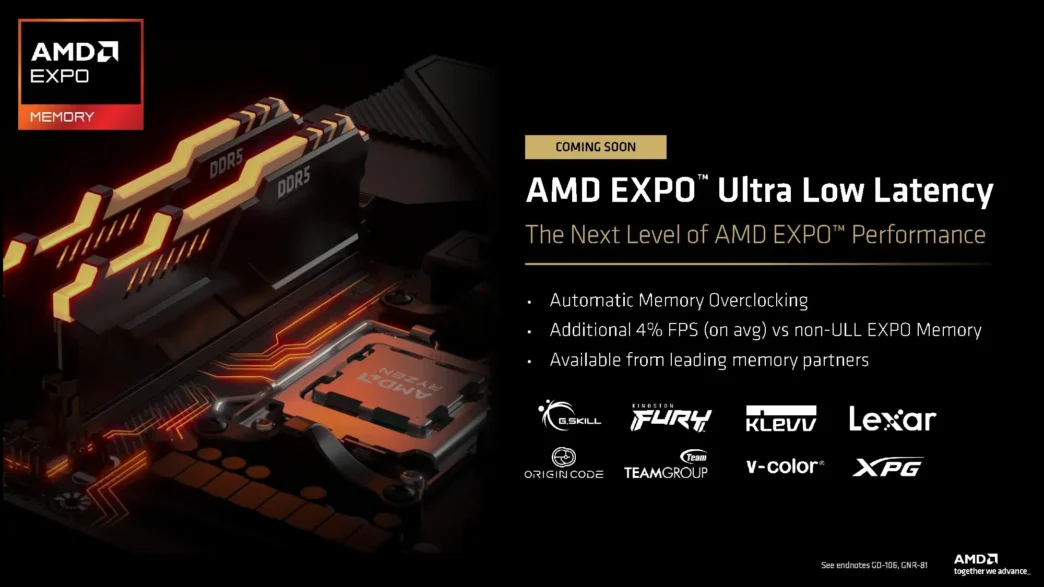
- AMD EXPO ULL technology is designed to improve gaming frame rates by approximately 4% through refined sub-timings.
- Retail premiums for these kits vary significantly, ranging from 10% to as high as 79% over equivalent non-ULL models.
- The flagship 32GB DDR5-6000 CL26 configuration has appeared at a staggering MSRP of $1,099.99.
- While the hardware architecture remains similar to standard DDR5, the high cost is attributed to exhaustive binning processes required to guarantee performance stability.
The disconnect in pricing
When AMD originally unveiled the EXPO ULL standard at Computex, the company expressed expectations that these kits would occupy similar price brackets to existing modules. However, the market reaction shows that the extra labor involved in binning low-latency, high-performance chips has driven costs upward. The Trident Z5 NeoX DDR5-6000 CL28 kit, for example, represents the most extreme disparity, costing 79% more than its standard Trident Z5 Neo equivalent. Even at the lower end of the spectrum, consumers are seeing double-digit price increases for modules that feature even slightly tightened timings.
Technical enhancements and performance
The primary appeal of EXPO ULL is the reduction of specific memory timings, most notably tRAS. By lowering these values, the memory controller can operate more efficiently, which AMD suggests provides a noticeable boost in both average and 1st percentile frame rates. Furthermore, the Trident Z5 NeoX series manages to maintain these tight timings at a lower operating voltage of 1.35V compared to the 1.40V or 1.45V often required by standard kits. This reduction not only creates more thermal headroom but also positions these modules as an attractive choice for extreme overclockers.
Considerations for prospective buyers
While the performance gains are real, they remain incremental for the average user. Because these modules require compatible motherboards with updated BIOS support to unlock the full potential of the EXPO ULL profile, they currently cater specifically to enthusiasts looking to squeeze every drop of performance from their AM5 systems. As production scales and more manufacturers introduce their own ULL-certified kits, it is possible that price gaps will shrink; however, for now, the premium for “ultra-low” latency remains substantial, potentially offering diminishing returns for most gaming rigs.
Via Newegg, Tom’s Hardware