


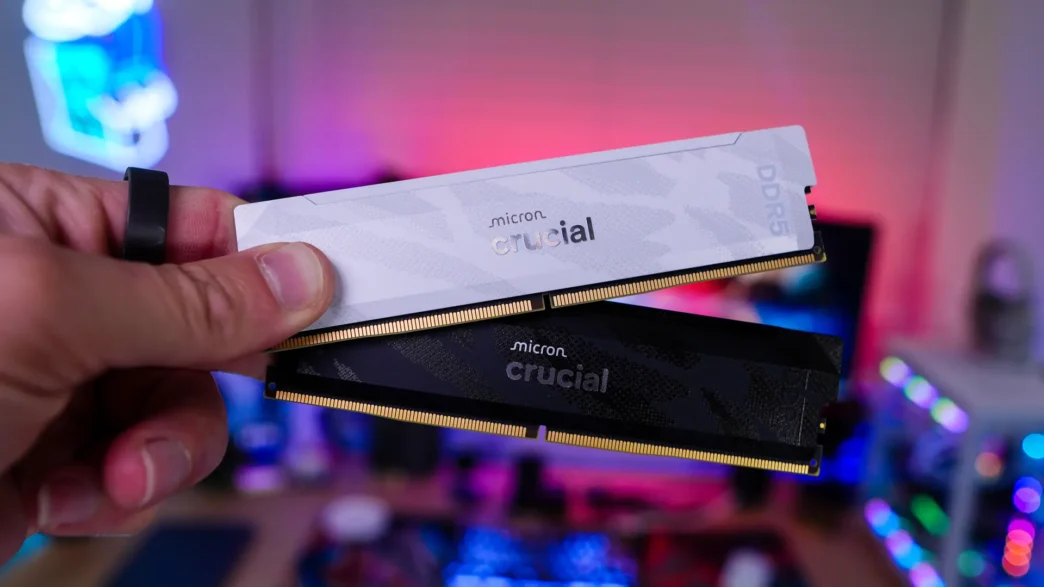
PC memory pricing has entered a severe upswing, with tracked DDR5 kits costing several times more than they did a year ago. A 128GB DDR5-6400 kit has reached $3,399 in the United States, while mainstream 64GB kits now exceed $1,000. The shortage is increasingly affecting DDR4, SSDs, and hard drives as AI infrastructure absorbs memory production.
Key takeaways
- A 128GB DDR5-6400 kit now costs $3,399, roughly 10 times its lowest tracked price.
- Average prices for high-capacity DDR5 kits have risen by as much as 485% year over year.
- DDR4 prices have climbed between 120% and nearly 180% as buyers turn to older platforms.
- Hyperscale AI customers are reportedly reserving much of the industry’s future DRAM capacity.
For PC builders, the price shock has transformed memory from a predictable part of a system budget into one of its most expensive components.
DDR5 prices reach unprecedented levels
Price tracking data shows some of the steepest increases among 64GB and 128GB kits. DDR5-6000 2x32GB kits that averaged about $222 in August 2025 now average approximately $1,272, a 473% increase. DDR5-5600 2x32GB kits have risen from $191 to $1,118, up 485%.
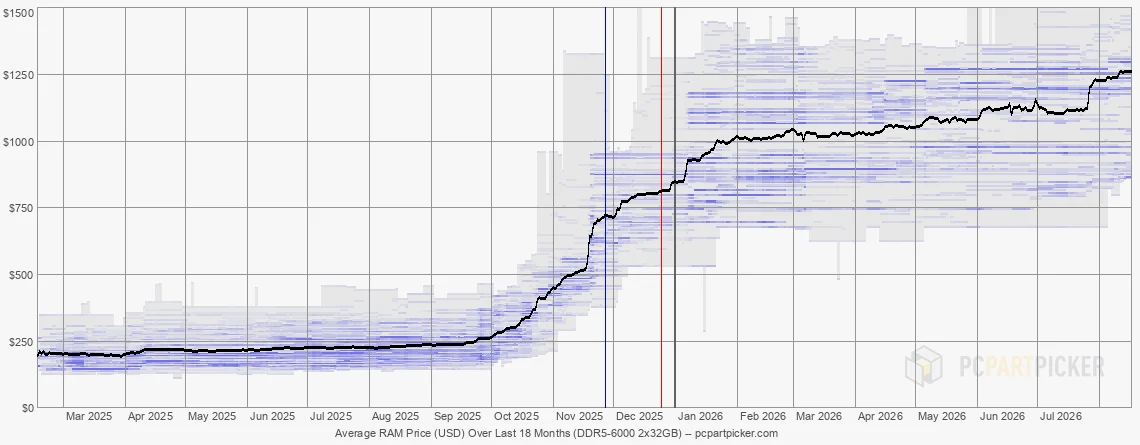
Even smaller kits are substantially more expensive. A DDR5-6000 2x16GB kit now averages around $572, compared with $108 one year earlier. Retail listings show 128GB DDR5-6400 kits at $3,399, versus a previous low of $329.
DDR4 is also caught in the shortage
Moving to an older AM4 or LGA1700 platform is no longer a guaranteed way to avoid the crisis. As DDR5 becomes less affordable, demand for remaining DDR4 inventory has increased.
Average DDR4 pricing has risen by roughly 120% to 177% across tracked speeds and capacities. A 64GB DDR4-3200 kit, for example, has climbed from about $222 to $614. While DDR4 remains cheaper than comparable DDR5 memory, the increase can significantly affect budget upgrades and repairs.
AI demand reshapes the memory market
The shortage is closely tied to demand from AI data centers. Manufacturers are allocating more production to high-bandwidth memory, or HBM, used alongside AI accelerators. HBM requires multiple DRAM layers, reducing the capacity available for conventional PC memory.
Reports indicate that hyperscale customers have already secured a large share of global DRAM production for 2027 through advance commitments. SK hynix, Samsung, Micron, and China’s CXMT have all benefited from sharply higher memory-related revenues, while PC and smartphone manufacturers compete for less supply.
What PC buyers can do
There is no immediate sign of a return to previous pricing. Industry executives have warned that supply constraints could persist for years, although the exact duration remains uncertain and depends heavily on AI spending and new manufacturing capacity.
ThinkComputers’ practical advice for builders is to avoid unnecessary upgrades, compare capacities carefully, and consider buying only the amount of RAM a current workload requires. Buyers with functioning systems may be better served by delaying a platform change, while new-build shoppers should include memory volatility in their budgets.
Via Tom’s Hardware