


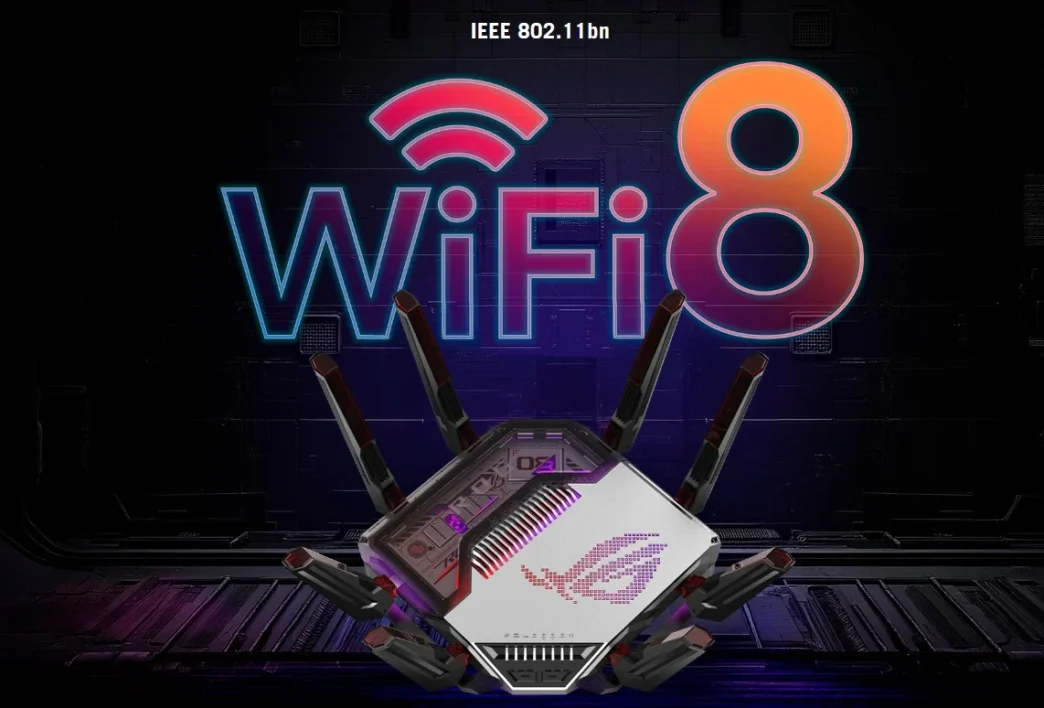
ASUS has introduced the ROG Rapture GT-BN98 at Gamescom 2026, positioning it as the first Wi-Fi 8 gaming router. The quad-band system combines a claimed 25Gbps of wireless throughput with multi-gigabit Ethernet, gaming traffic optimization, security tools, and support for ASUS AiMesh networks. Pricing remains unannounced.
Key takeaways
- The GT-BN98 is a quad-band Wi-Fi 8 router with up to 25,000Mbps total throughput.
- Its 6GHz band supports 320MHz channels and speeds up to 11,529Mbps.
- Wired connectivity includes dual 10GbE ports and four multi-gigabit LAN connections.
- Gaming features include Adaptive QoE and GTNet traffic routing.
- ASUS has not yet disclosed pricing or availability.
Quad-band wireless performance
The ROG Rapture GT-BN98 uses one 2.4GHz band, two 5GHz bands, and one 6GHz band. ASUS rates them at up to 1,376Mbps, 5,764Mbps each, and 11,529Mbps respectively, adding up to a theoretical 25Gbps. The 6GHz radio supports 320MHz channels, providing the highest capacity for compatible Wi-Fi 8 devices operating nearby.
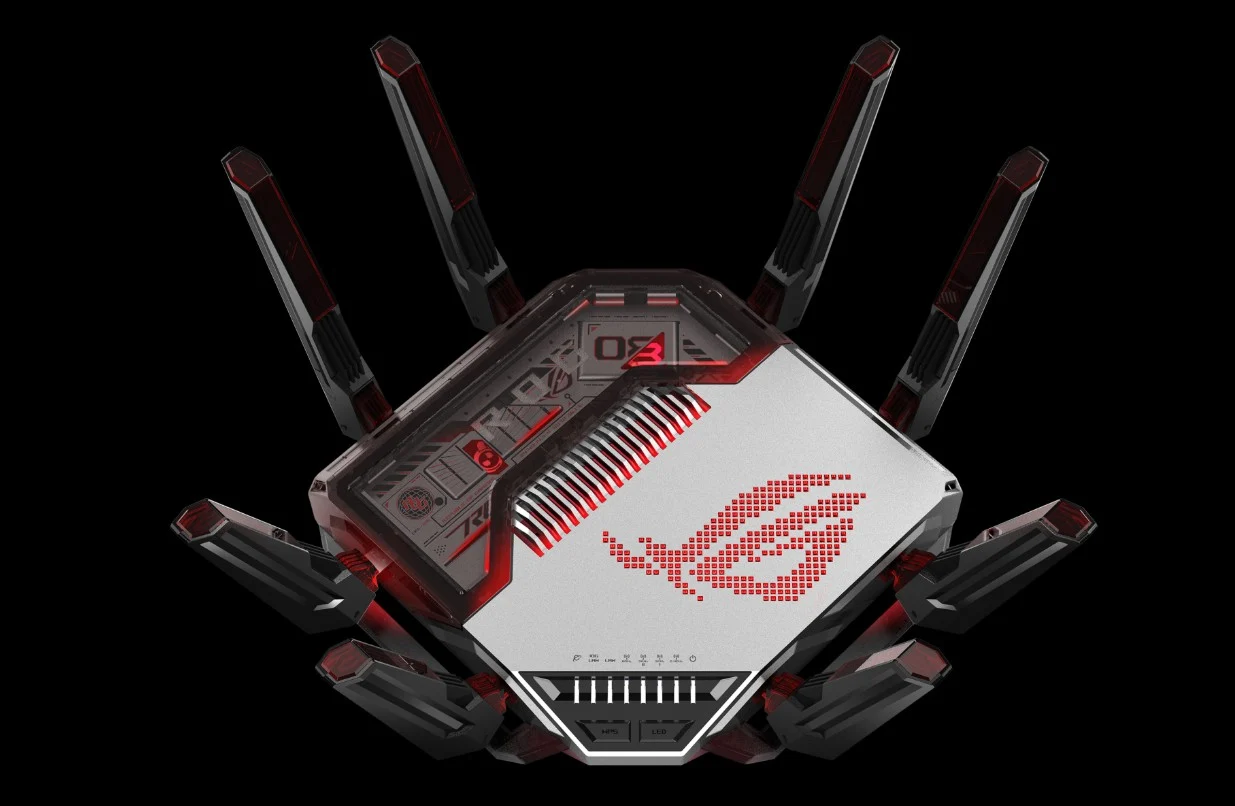
The router is built around a 2.6GHz quad-core processor and includes 2GB of RAM alongside 256MB of flash storage. Eight external antennas give the unit an aggressive ROG design intended to match ASUS’s wider gaming hardware lineup.
Multi-gigabit wired connectivity
For PCs, gaming consoles, network storage, and high-speed internet services, the GT-BN98 includes one 10Gbps WAN/LAN port, one 10Gbps LAN port, one 2.5Gbps WAN/LAN port, three 2.5Gbps LAN ports, and a standard gigabit LAN connection. USB 3.2 Gen 1 and USB 2.0 ports add support for peripherals and shared storage.
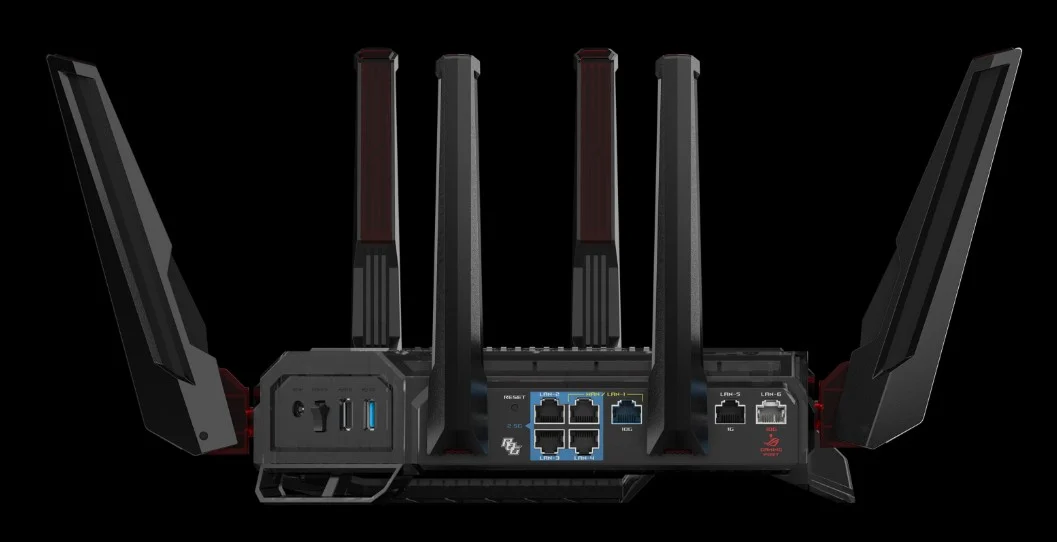
The port selection gives enthusiast networks several options, although users with multiple 10GbE devices may still require a dedicated switch. As with any wireless router, the advertised aggregate throughput is a theoretical maximum and depends on client hardware, channel conditions, distance, and network traffic.
Gaming and network management features
ASUS says Adaptive QoE dynamically allocates bandwidth according to live network conditions. Wi-Fi Insight monitors the wireless bands and continuously checks for interference, features that could help maintain more consistent performance in busy home networks.
The router also includes GTNet, a third-party service designed to route game traffic through reliable paths to supported game servers. AiProtection provides security functions, including ad and tracker blocking, while Guest Network Pro can create up to five SSIDs for guest access, IoT devices, VPN use, and parental controls.
Modes, availability, and expectations
The GT-BN98 can operate as a standard router, AiMesh node, access point, repeater, or media bridge. That flexibility makes it relevant beyond gaming PCs, particularly for homes combining wireless clients, wired workstations, and network storage.
ASUS has not announced a price or release date. The router’s value will ultimately depend on Wi-Fi 8 client availability, regional configurations, and whether its bandwidth-management tools deliver measurable latency and stability improvements. Wired Ethernet will remain the preferred option for users who can run dedicated connections, while the GT-BN98 targets installations where cabling every gaming device is impractical.
Via ASUS