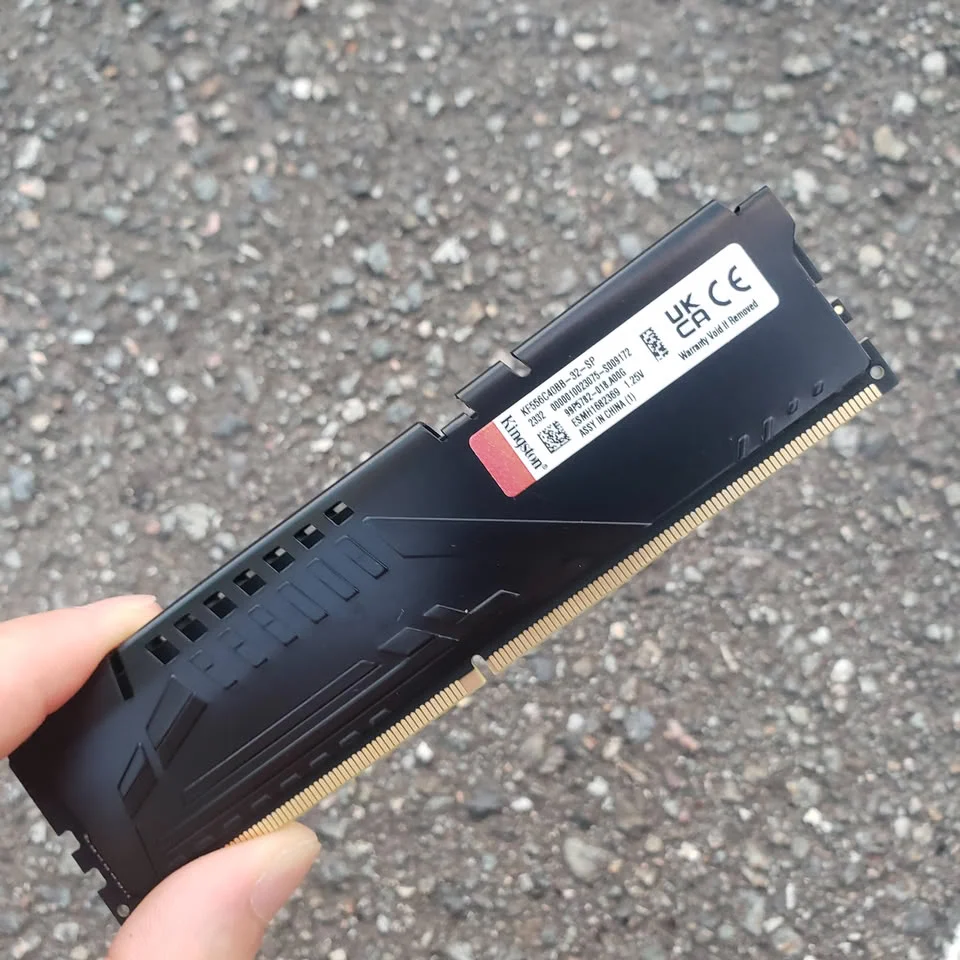
A buyer says a supposedly unopened Kingston FURY Beast DDR5 memory module contained DDR4 chips beneath an authentic-looking heatsink. The discovery highlights how rising memory prices and increasingly convincing component fraud can leave even experienced PC builders unable to verify a DIMM without taking it apart.
Key takeaways
- The module was sold and labeled as Kingston FURY Beast DDR5.
- A teardown reportedly found DDR4 chips mounted on a DDR5-style PCB.
- Soldering residue, unused pads, and inconsistent package details pointed to an alteration.
- The incident does not currently establish that Kingston manufactured or sold the altered module.
What the buyer found
The buyer, posting as @watagjt, said the module arrived unopened and showed no obvious damage. Its label and heatsink appeared consistent with a genuine Kingston product, offering no visible warning during a normal inspection.
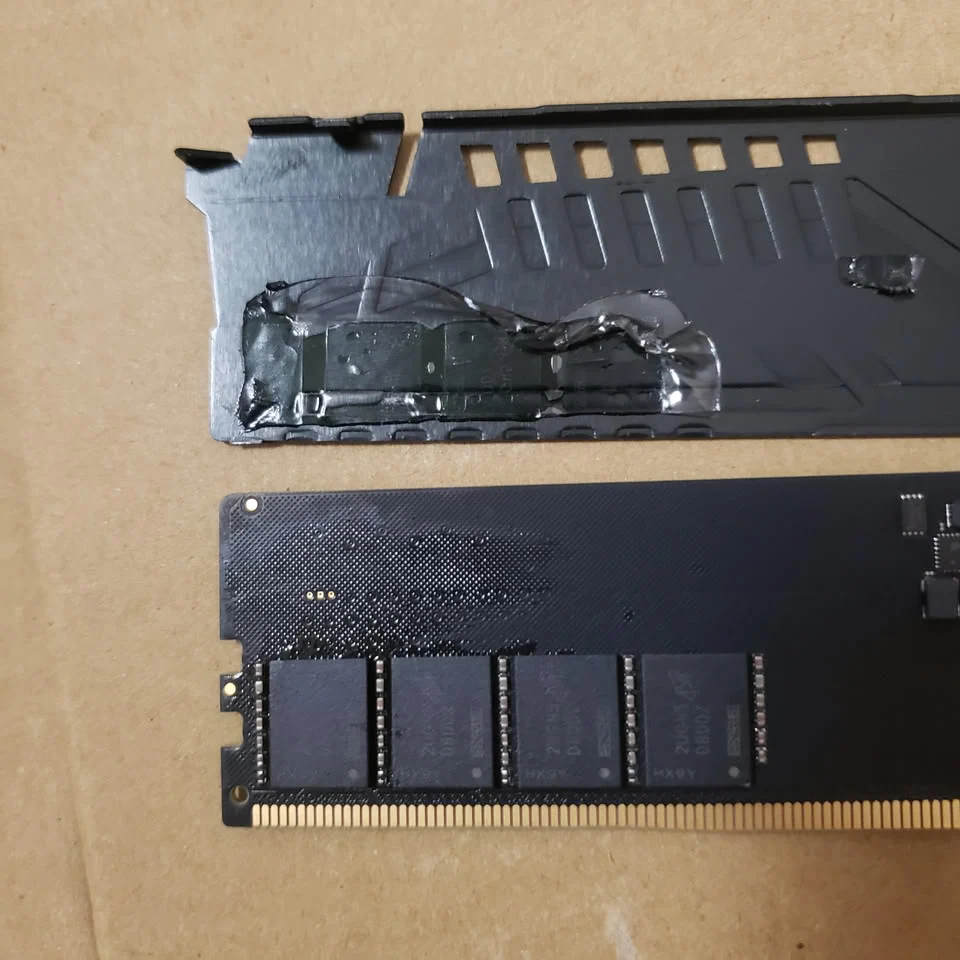
Removing the heatsink revealed memory packages carrying Micron branding and markings associated with DDR5 components. Closer examination reportedly showed that the packages had been modified or substituted. The board contained flux residue, a rough-looking soldering job, and unused pads suggesting that components had previously been removed or that the PCB was not populated as intended.
Why the counterfeit is difficult to identify
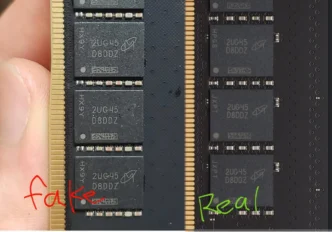
The report points to a mismatch between the package and the DDR5 PCB footprint. Genuine parts reportedly use an 82-ball VFBGA package, while the chips found on the module appeared to use a 78-ball TFBGA layout. The external markings therefore looked plausible even though the physical and electrical configuration did not match.
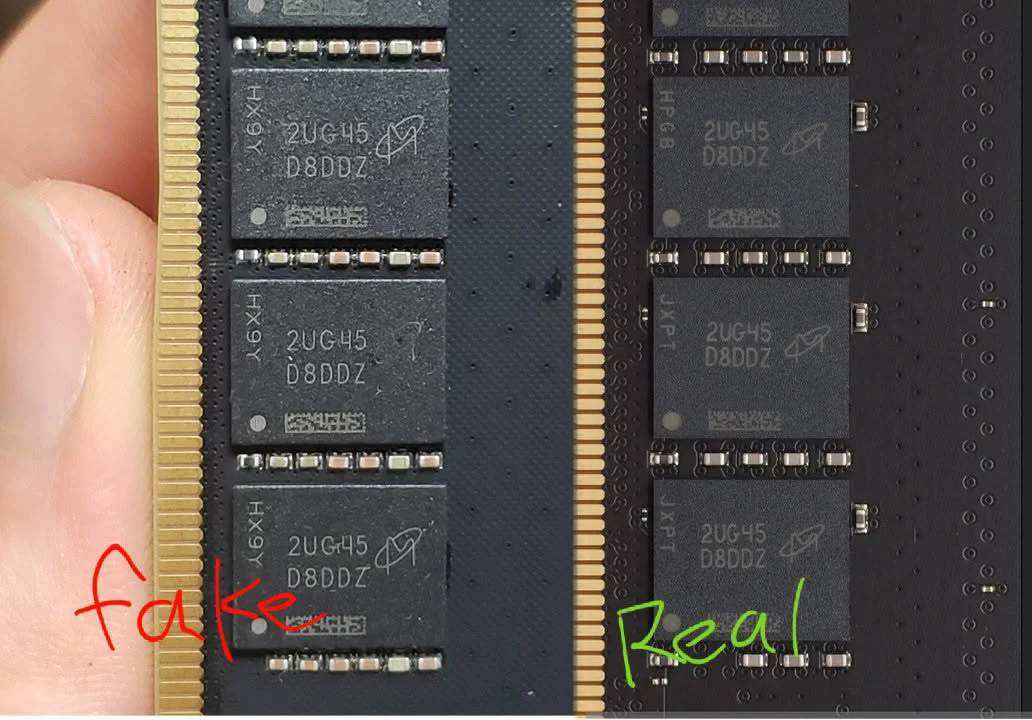
The repeated 2D codes visible on the chips were also raised as a possible warning sign. However, spotting such inconsistencies requires close inspection, hardware knowledge, and potentially desoldering equipment—well beyond what most buyers can reasonably perform.
Could the module work in a PC?
It is unclear whether the altered DIMM successfully booted or operated reliably. DDR4 and DDR5 use different signaling, power requirements, memory architectures, and module wiring, so simply soldering DDR4 packages onto a DDR5 PCB would not normally create a compatible product.
Some Intel LGA1700 platforms support either DDR4 or DDR5, but they still require a motherboard designed for the relevant memory type. Specialized adapter designs have demonstrated that conversion is technically possible with additional wiring and power regulation, but those requirements make a straightforward chip swap highly unlikely to deliver stable operation.
What buyers should do
The incident comes as elevated memory prices increase the incentive for relabeling, component swapping, and return fraud. Buyers should favor authorized retailers, verify seller histories, inspect packaging and serial information, and be cautious of unusually cheap listings.
Software tools can help confirm reported capacity and basic operating parameters, but they cannot prove that the memory packages are genuine. In practice, purchasing from a reputable channel remains the safest way to avoid an altered DIMM. The report also should not be interpreted as evidence that Kingston produced the suspect module; it may have been modified after leaving the legitimate supply chain.
Via Watagjt on X