


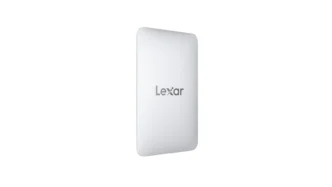
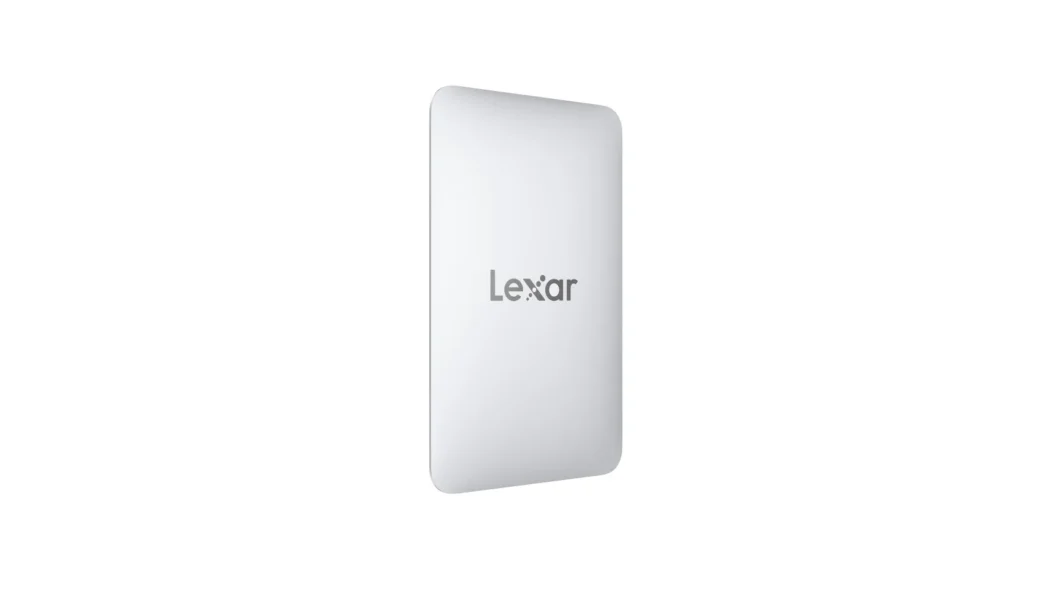
Lexar used IFA 2026 to unveil the Muse Ultra-Slim Portable SSD, a card-like external drive designed for mobile creators and compact PC setups. The company claims it is the world’s thinnest portable SSD, measuring 3.8mm at its thickest point and tapering to just 1mm along the edges.
Key takeaways
- Lexar claims a 3.8mm maximum thickness and 1mm edge profile.
- Capacities will include 512GB and 1TB, arriving in Q4 2026.
- Rated performance reaches 1,050MB/s reads and 1,000MB/s writes.
- A proprietary magnetic SnapLink cable replaces the standard USB-C port.
- Reported target pricing is approximately $230 for 512GB and $380 for 1TB.
A design built around thinness
The Muse measures 80 × 48 × 3.8mm, or approximately 3.15 × 1.89 × 0.15 inches. Lexar credits the profile to a precision-machined unibody metal enclosure, a custom ultra-thin PCB, high-density NAND stacking, compressed internal construction, and tapered edges.
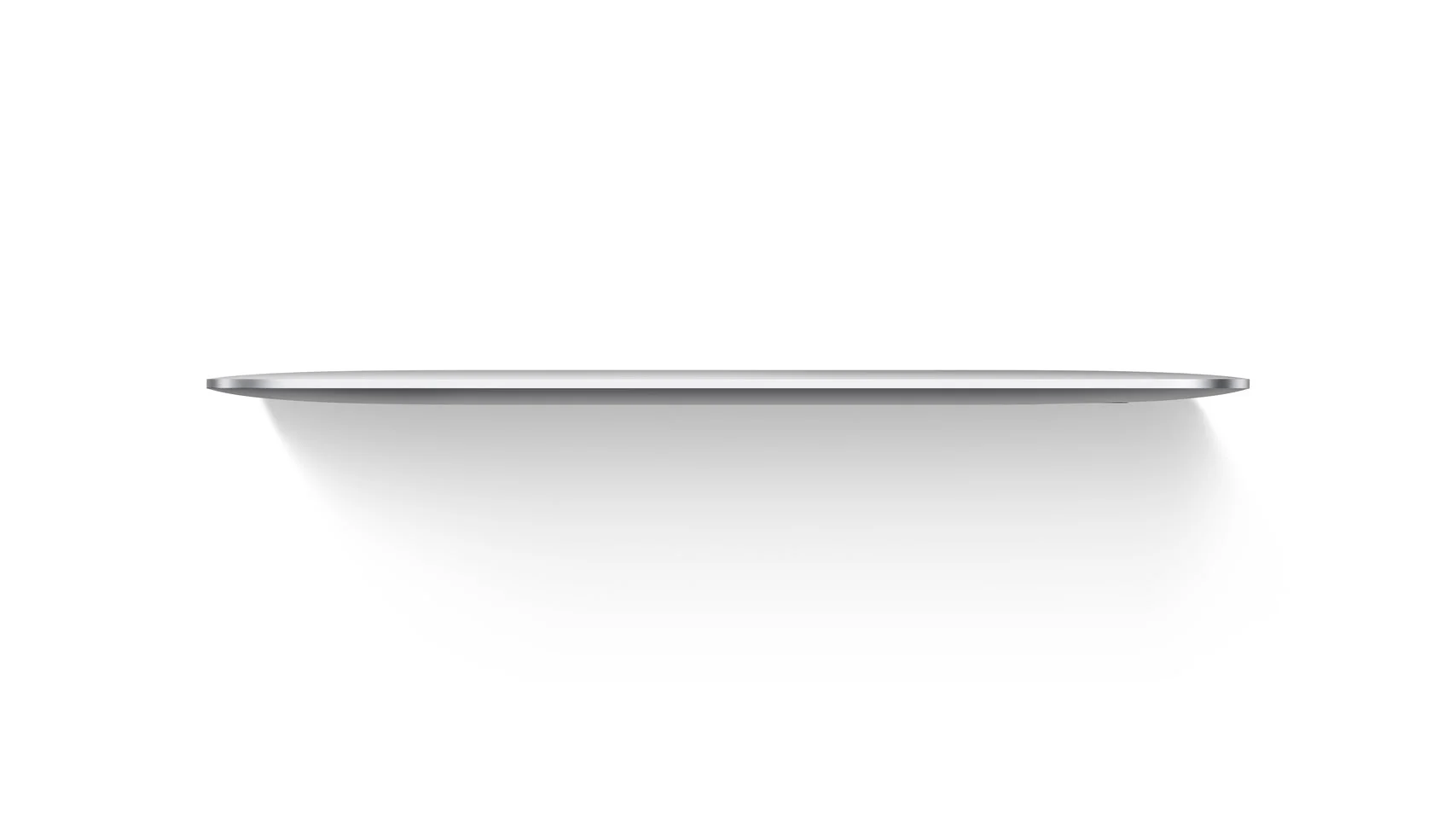
That design makes the drive closer to a metal card than a conventional portable SSD. The approach could appeal to photographers, PC enthusiasts, and mobile filmmakers who want extra storage without adding the bulk associated with many external drives.
Proprietary connectivity replaces USB-C
The most significant trade-off is the lack of a conventional USB-C port on the drive itself. Instead, the Muse uses Lexar’s proprietary PogoPin connection and a supplied SnapLink Magnetic Cable. Spring-loaded pins connect the cable to the SSD, while the cable’s other end uses USB-C for connection to compatible computers, phones, and tablets.
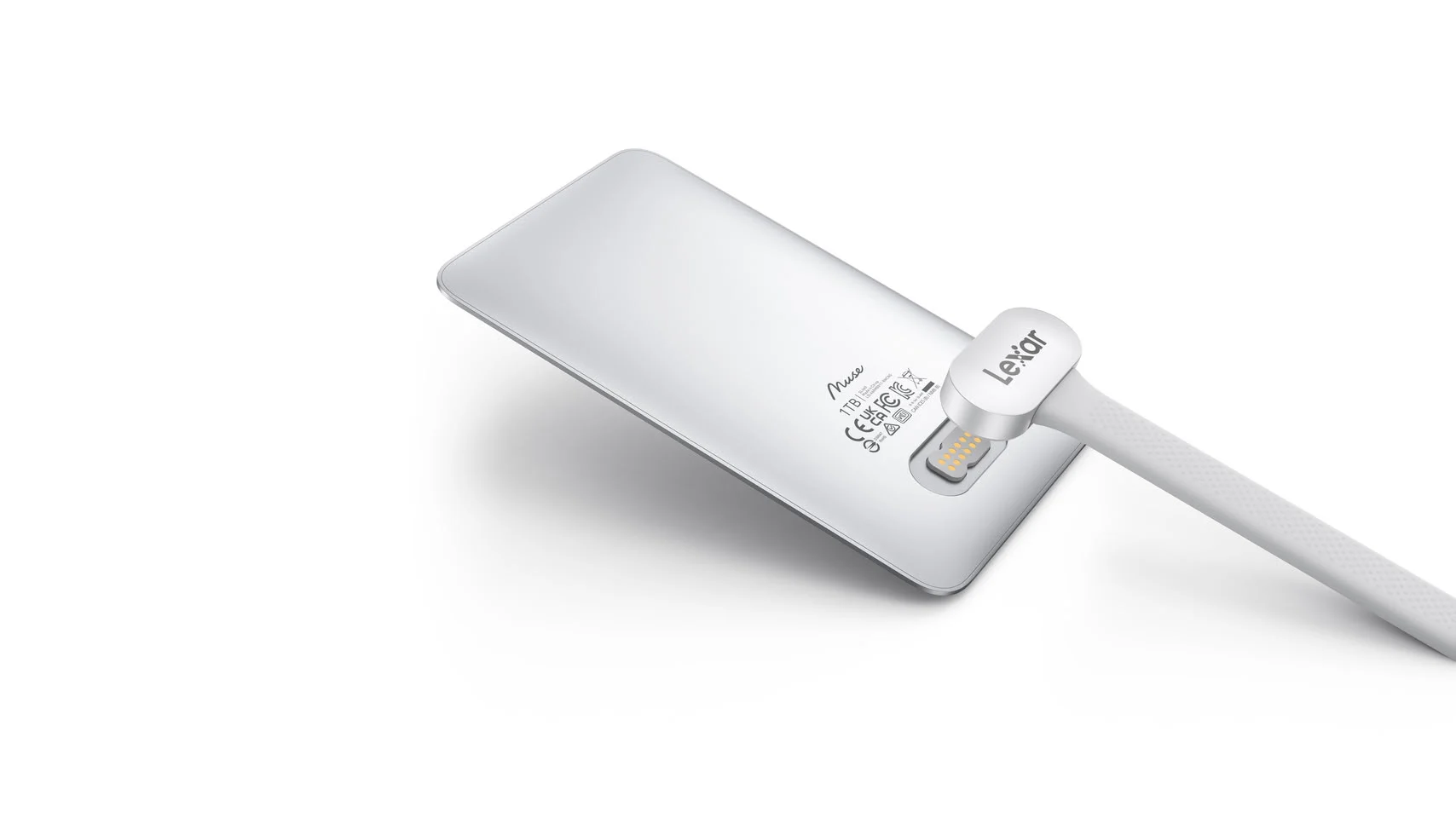
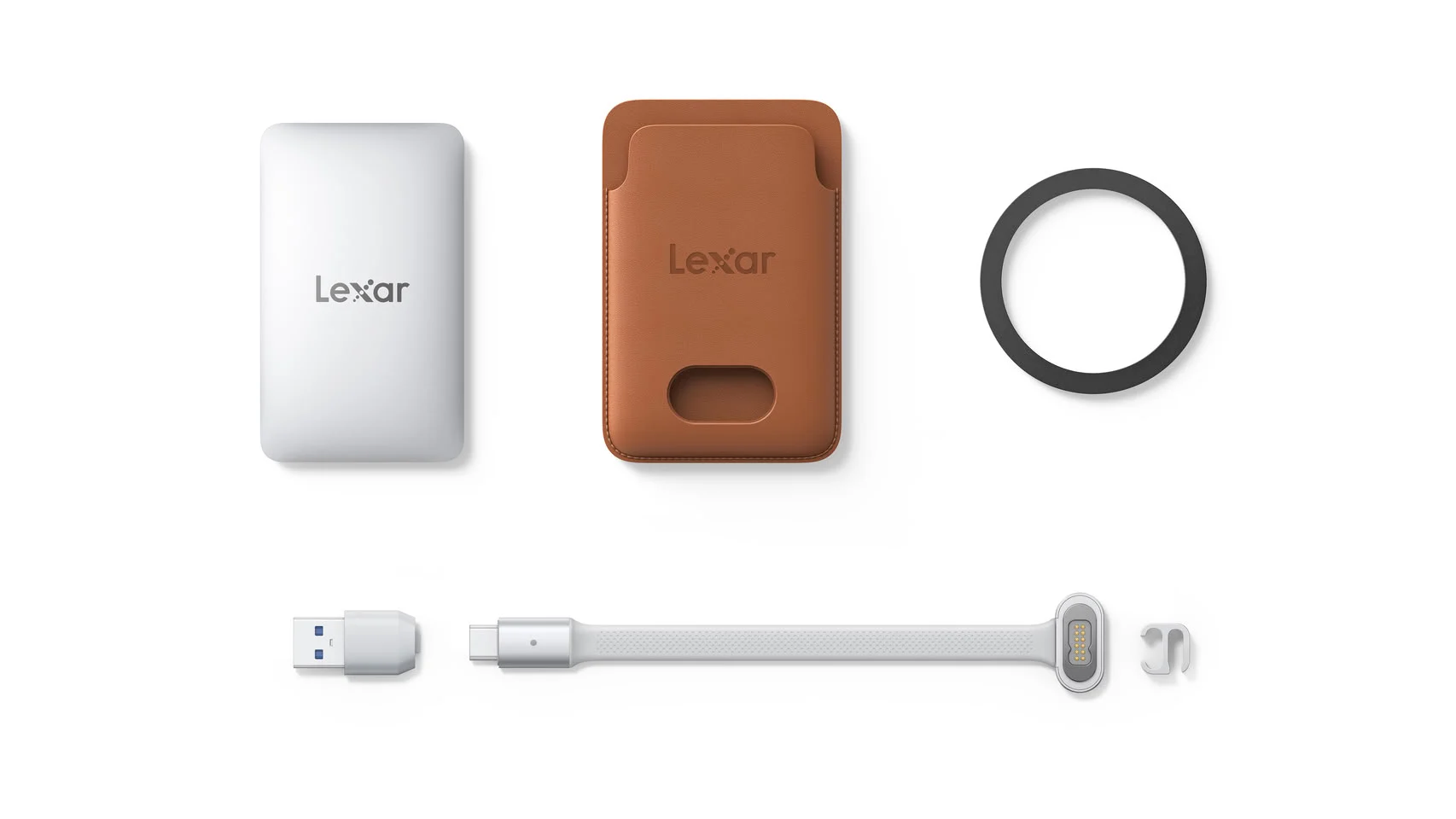
Lexar says the magnetic connection uses N52-grade neodymium magnets. However, the proprietary design means users will need to protect the included cable, and an accidental disconnection could interrupt a transfer. Unlike a standard USB-C port, replacement cables may not be readily available from other manufacturers.
Performance aimed at creators
The Muse is rated for sequential read speeds of up to 1,050MB/s and write speeds of up to 1,000MB/s, placing it broadly in the class of 10Gbps portable SSDs. Lexar says the drive can support direct Apple ProRes 4K video recording at up to 120 frames per second on compatible iPhone Pro models.

It will also support iPhone, iPad, Mac, and other USB-C devices, although users may need to reformat the drive when moving between operating systems. Lexar has also cited app support for automatically backing up iPhone footage. Sustained write performance and thermal behavior remain unconfirmed, particularly given the unusually thin enclosure.
Magnetic phone mounting adds flexibility—and bulk
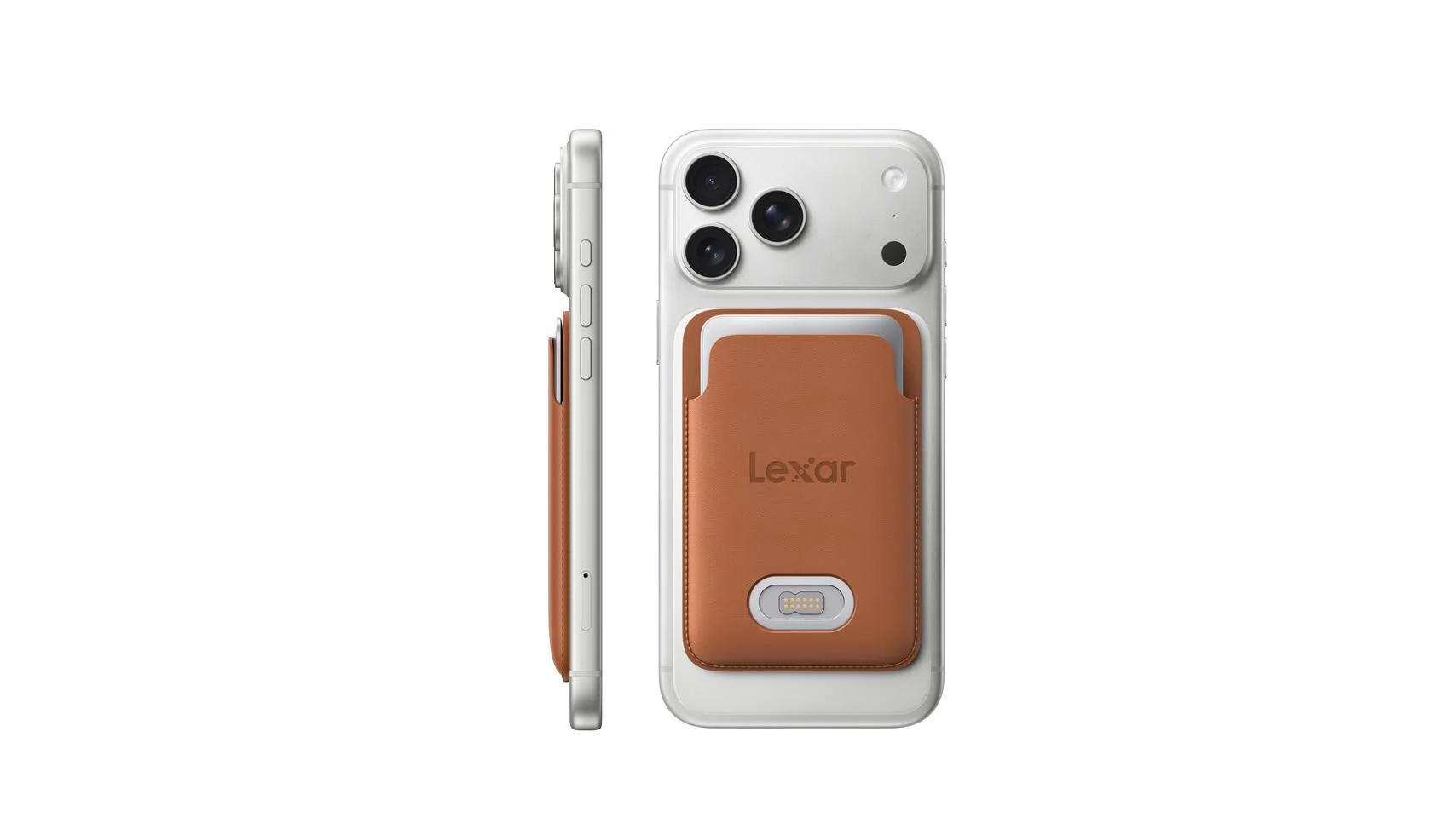
For mobile recording, the Muse can be placed inside a magnetic sleeve that attaches to the back of compatible MagSafe iPhones. The setup keeps the drive aligned with the phone while leaving the SnapLink cable accessible. The sleeve does add thickness, reducing some of the advantage of the bare drive, but it should make handheld recording more practical than carrying a separate SSD and loose cable.
Availability and pricing
Lexar plans to release the Muse in 512GB and 1TB capacities during the fourth quarter of 2026. Official pricing has not been finalized, although company representatives reportedly indicated targets of about $230 and $380, respectively.
Those prices would position the Muse at a premium over many similarly rated portable SSDs. Buyers will ultimately need to weigh its record-setting claimed dimensions and phone-focused design against the proprietary connector, accessory dependence, and still-unverified long-duration performance.
Via Lexar