


A Korean outlet’s test of NVIDIA DLSS 5 found that the feature drove an RTX 5090 Founders Edition to higher power use and hotter connector temperatures in Cyberpunk 2077. The 12V-2×6 connector reached 91.7°C, while PCAT recorded a brief 646.7-watt draw through the card’s 16-pin input. The results do not establish that DLSS 5 causes connector failures.
Key takeaways
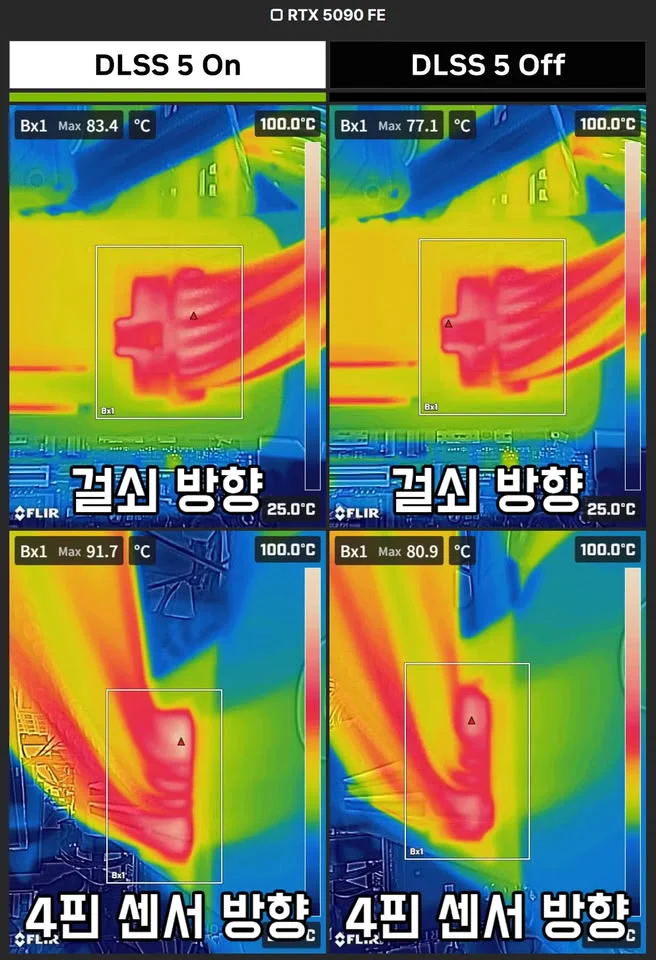
- The RTX 5090’s connector temperature rose from 80.9°C to 91.7°C on the side opposite the latch when DLSS 5 was enabled.
- Average GPU power reached 575.1 watts in HWiNFO readings; PCAT recorded a 646.7-watt peak at the 16-pin input.
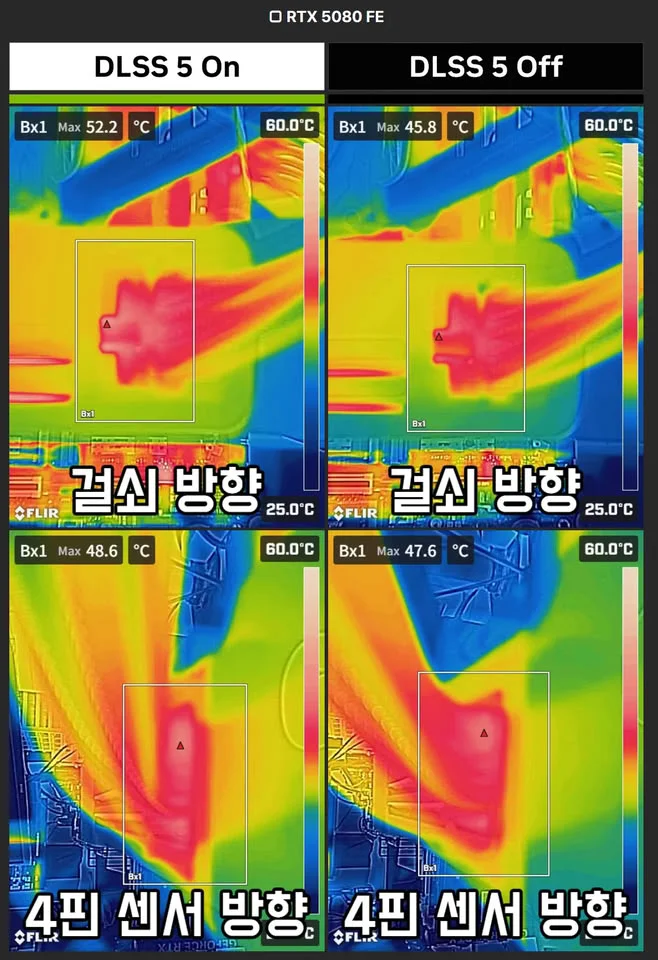
- An RTX 5080 Founders Edition ran cooler, with connector readings of roughly 49°C to 52°C under DLSS 5.
- The test highlights higher load, but does not prove DLSS 5 caused any melted connectors.
For ThinkComputers readers tracking high-end GPU thermals, the key distinction is between a measured stress-test result and evidence of a confirmed hardware defect. QuasarZone’s findings show increased power and heat under one specific workload, not a general failure rate.
How the test was run
QuasarZone tested RTX 5090 and RTX 5080 Founders Edition cards in Cyberpunk 2077 at 4K, using DLSS Quality and Ultra settings, for 20 minutes. The test environment was about 27.5°C. A thermal camera measured both sides of each power connector, while HWiNFO and NVIDIA’s PCAT tool tracked power use.
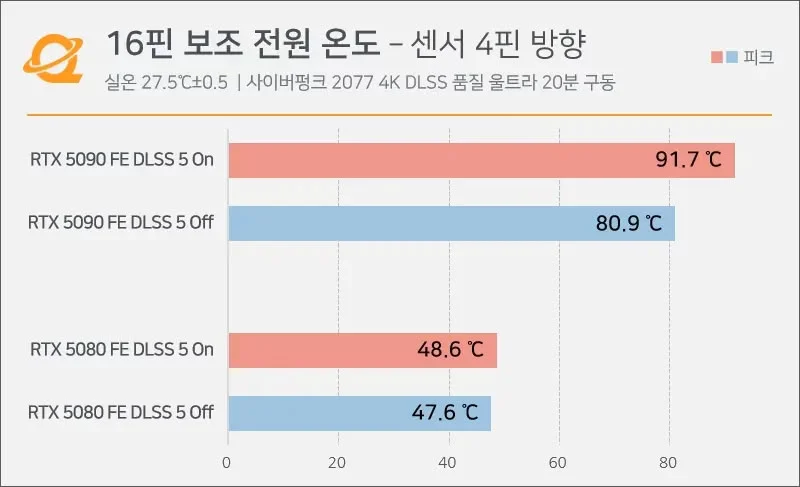
On the RTX 5090, the connector’s latch-side temperature increased from 77.1°C to 83.4°C with DLSS 5 on. On the opposite, sense-pin side, it climbed from 80.9°C to 91.7°C. The GPU core also got warmer, rising from an average of 79.4°C to 83°C, but remained cooler than the hottest connector reading.
Power draw approached the card’s limit
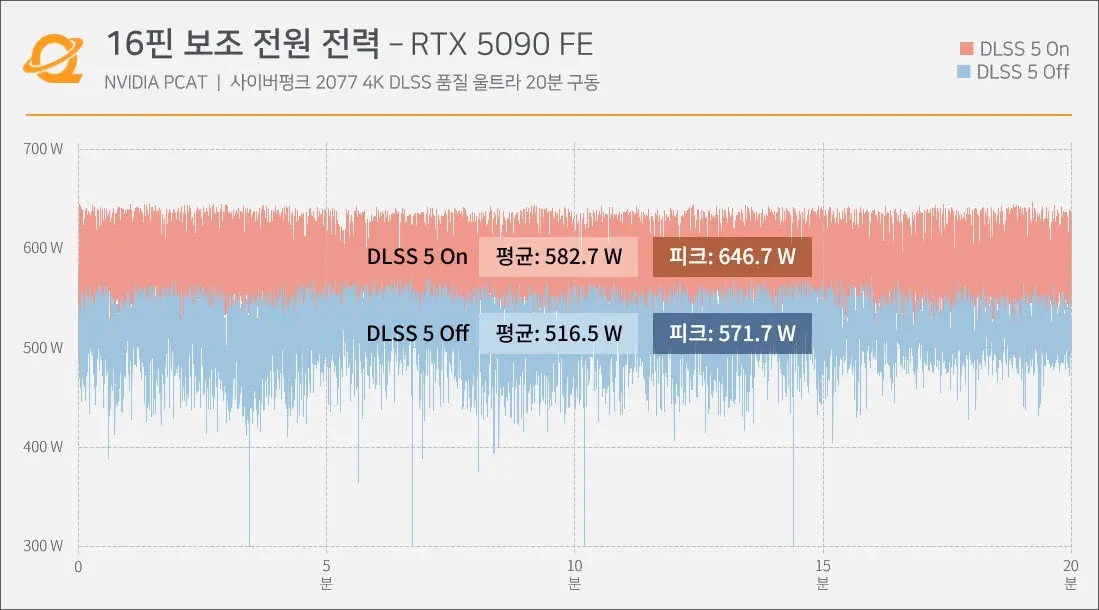
HWiNFO recorded the RTX 5090’s average draw rising from 509.2 watts without DLSS 5 to 575.1 watts with it enabled—roughly the card’s rated power limit. PCAT measured higher totals, including 593.9 watts average board power and a 658-watt peak. The 16-pin input itself averaged 582.7 watts and briefly peaked at 646.7 watts with DLSS 5 enabled.
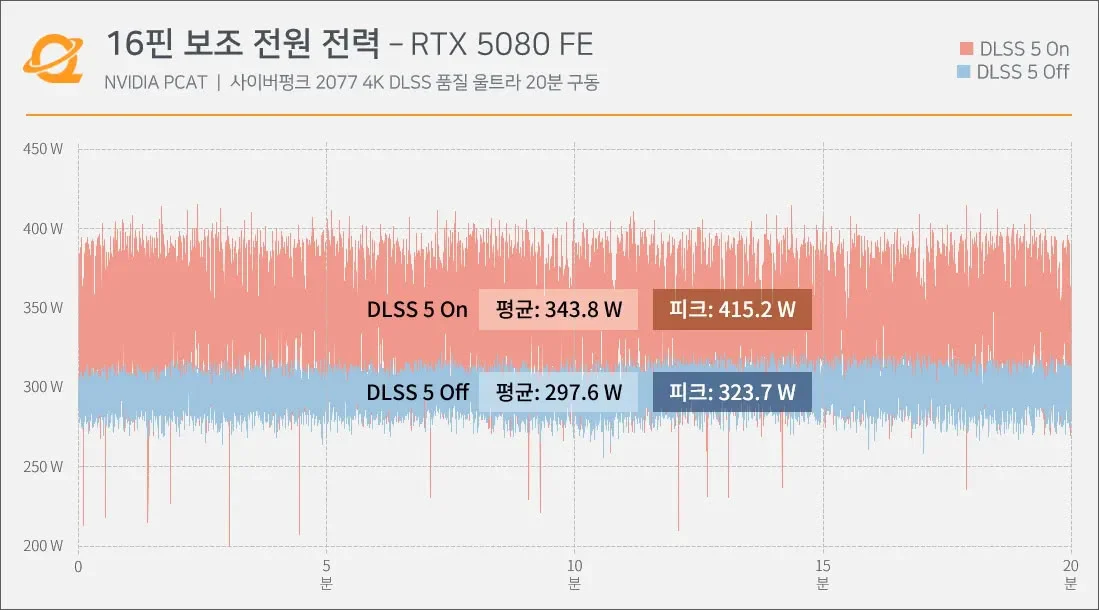
The RTX 5080 also drew more power, increasing from 298.2 watts to 350.3 watts on average, close to its 360-watt limit. These measurements indicate that the feature can push tested GPUs toward their power ceilings; brief peaks above a card’s rating are not, by themselves, proof of a fault.
What the connector readings mean
A separate current test on an ASUS ROG Astral RTX 5090 found that its six power pins carried 7.83 to 8.51 amps with DLSS 5 enabled, below the cited 9.2-amp-per-pin specification. In a hypothetical scenario where one pin stopped carrying current, however, QuasarZone estimated that the highest-loaded pin could reach 10.1 amps.
That scenario illustrates why connector condition and balanced power delivery matter, but it was a calculation—not a demonstrated failure during the test. The results do not show that DLSS 5 directly melts connectors, and further testing would be needed to determine how the readings translate to long-term risk in different cards, cables, and PC cases.
Via Quasar Zone