After months of relentless price hikes, DDR5 memory prices are finally showing a downward trend, offering consumers and PC builders a glimmer of relief. This shift comes at a time when industry dynamics, especially related to AI and cloud computing, had driven up demand and squeezed supplies worldwide.
Key Takeaways
- DDR5 prices have fallen for the first time in months, especially in the US, China, and Europe.
- Price drops are most noticeable on some 32GB and 16GB RAM kits, but remain well above historical lows.
- The downward trend is linked to changes in AI workload requirements and inventory adjustments by retailers.
- Experts caution that this correction may be temporary, with broader industry trends still favoring strong memory demand.
Recent Price Drops and Their Drivers
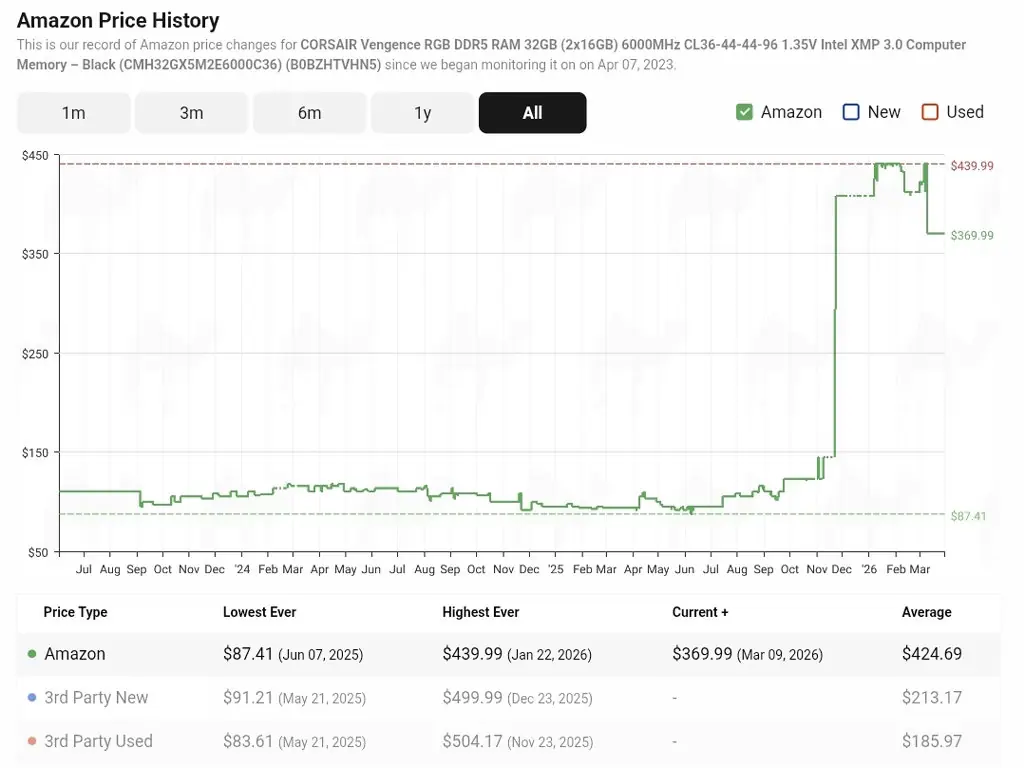
Across major retail platforms, DDR5 RAM kits that previously hovered near $500 have dropped to the $370–$380 range, with some 16GB kits seeing $40–$100 off previous high points. The cuts are especially prominent for popular brands like Corsair, though not all manufacturers have followed suit. In China and Europe, comparable reductions have been observed, with some modules falling 25–30% since earlier this year.
One key factor influencing the price correction is Google’s TurboQuant algorithm, a technology that can reduce memory requirements for AI workloads by up to six times. The unveiling of TurboQuant sparked debates about future DRAM demand, triggered stock price drops among memory suppliers, and encouraged inventory sell-offs, leading to softer retail prices.
Context: AI Demands, Supply Chains, and Market Volatility
Despite the welcome price reductions, industry experts note these drops result more from short-term factors than a substantial change in overall demand. Recent corrections largely reflect slowing consumer momentum and inventory adjustments, not a collapse in the underlying need for high-performance memory in areas like server and industrial applications.
Contract prices between major vendors and corporate clients have remained stable, suggesting the current declines are concentrated in consumer retail channels. Some insiders argue that memory demand is likely to persist—or even grow—as new workloads and technologies emerge, limiting how far prices can fall.
Should Consumers Wait or Buy Now?
While current price cuts are significant compared to peaks earlier in 2026, they have not returned to pre-boom lows. For instance, a 32GB DDR5-6000 kit once sold for under $100 at its lowest but now hovers close to $370–$400, even after recent discounts. Many industry observers advise cautious optimism—while deals have improved, it’s likely too soon for widespread celebration or aggressive stockpiling.
Looking forward, further changes in memory pricing will depend on how the AI sector evolves, how manufacturers manage supply, and whether current patterns in demand persist. For consumers, the message is clear: take advantage of deals if you need RAM now, but don’t expect a return to bargain-basement pricing in the near future.
Via WCCFTech