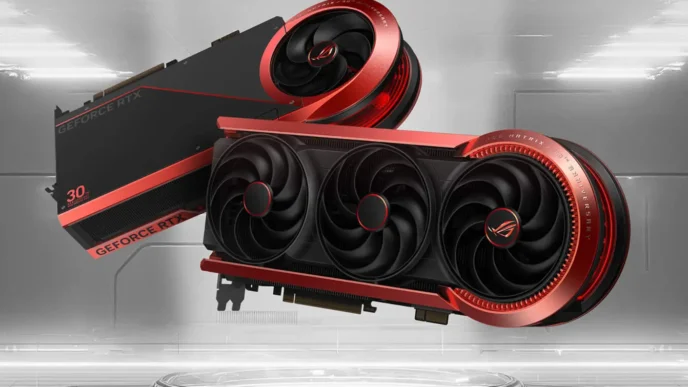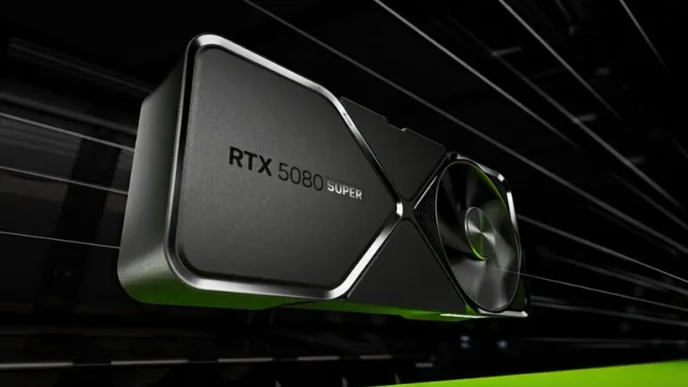
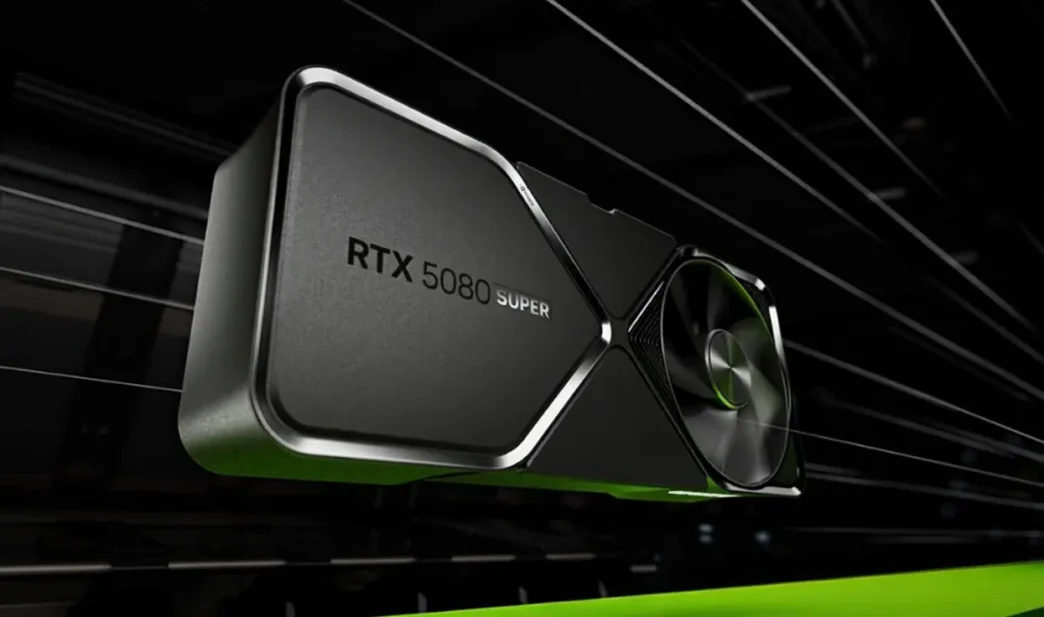
Recent rumors suggest that NVIDIA’s upcoming GeForce RTX 50 SUPER series graphics cards may face significant delays or even outright cancellation. The primary cause appears to be a widespread shortage of GDDR7 memory modules, particularly the 3GB variants crucial for these next-generation GPUs. This situation could impact NVIDIA’s product roadmap and potentially affect pricing for existing models.
Key Takeaways
- A shortage of 3GB GDDR7 memory modules is reportedly impacting NVIDIA’s plans for the RTX 50 SUPER series.
- This scarcity could lead to delays or the complete cancellation of the SUPER refresh.
- NVIDIA may be prioritizing higher-margin AI and server products for the limited GDDR7 supply.
- Existing RTX 50 series cards could see price increases due to the rising cost of 2GB GDDR7 modules.
- The RTX 50 SUPER series was anticipated for late Q1 to early Q2 2026, possibly announced at CES 2026.
GDDR7 Memory Scarcity
The core of the issue lies in the limited availability of 3GB GDDR7 memory modules. These higher-density modules are essential for the planned specifications of the RTX 50 SUPER cards, which were expected to offer increased memory capacities over their non-SUPER counterparts. For instance, the RTX 5070 SUPER was rumored to feature 18GB, while the RTX 5070 Ti SUPER and RTX 5080 SUPER were slated for 24GB.
[rumor]
due to the crazy shortage recently, 3gb gddr7 cant make it to the consumer market for desktop, thus the super series is cancelled.
and the current models are expected to be more expensive very soon, because of the increasing cost of 2gb gddr7. pic.twitter.com/yMSMj1MjqJ— UNIKO's Hardware (@unikoshardware) November 7, 2025
AI Demand and Prioritization
Industry analysis suggests that the burgeoning AI sector is consuming a significant portion of high-density memory production. This demand is reportedly leading NVIDIA to prioritize its more profitable AI server stack and specialized accelerators, such as the “Rubin CPX” family, which utilize substantial amounts of GDDR7 memory. Consequently, the gaming segment may be left with fewer resources.
Potential Impact on RTX 50 SUPER Series
Reports indicate that the scarcity of 3GB GDDR7 modules could force NVIDIA to cancel the entire RTX 50 SUPER refresh. If the SUPER cards are indeed scrapped, only the standard RTX 50 series, which uses the more readily available 2GB GDDR7 modules, would remain in production. Even these standard models might face price hikes due to the increasing cost of the 2GB GDDR7 memory.
Timeline and Future Outlook
NVIDIA had reportedly planned a mid-lifecycle refresh for the RTX 50 series, with a potential announcement at CES 2026 and a launch in late Q1 to early Q2 2026. However, the current memory shortage casts a shadow over these plans. While NVIDIA has not officially commented on the rumors, the situation highlights the intense competition for semiconductor resources, particularly advanced memory technologies, driven by both the gaming and AI markets.