
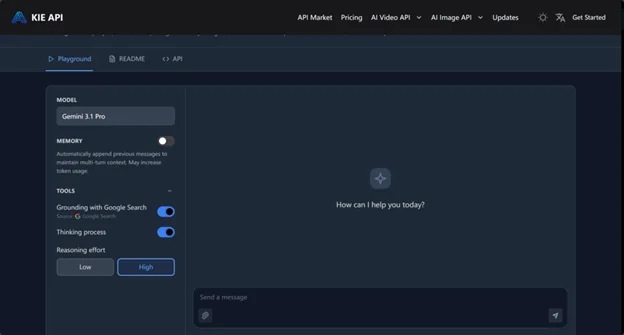
Businesses are paying closer attention to advanced APIs, but not only because the technology is improving. What matters more is whether a tool can fit real workflows, reduce operational friction, and support teams that already work under pressure to move faster. That is why conversations around Gemini 3.1 Pro API are becoming more practical and less theoretical.
For many organizations, the real question is not whether a powerful API exists. It is whether that API can be accessed easily, adopted without heavy disruption, and turned into measurable value across content, service, and internal knowledge workflows. In that context, Gemini 3.1 Pro API has become part of a broader business discussion about workflow design, not just technical capability.
Why Gemini 3.1 Pro API Matters in Today’s Business and Technology Landscape
The business world has changed its expectations. Teams are no longer interested in technology simply because it sounds advanced. They want tools that can improve speed, support better internal execution, and help them manage growing information demands without adding unnecessary complexity.
This is where Gemini 3.1 Pro API becomes relevant. Its value is not limited to one function or one department. It can support a range of business needs where information must be processed, clarified, or restructured quickly enough to keep teams moving.
Businesses Are Looking for More Than Raw Capability
In the past, companies often evaluated tools by headline features alone. Today, that is rarely enough. A business may be less impressed by technical promise than by a tool’s ability to improve coordination, reduce repetitive work, and fit existing digital operations.
Practical Value Is Becoming the Main Adoption Filter
Adoption is increasingly shaped by practical value. If a tool does not support day-to-day execution, teams will not keep using it. That makes workflow fit, access simplicity, and operational usefulness more important than broad claims about performance.
How Gemini 3.1 Pro API Access Affects Real-World Adoption
Access is often underestimated in discussions about APIs. Yet for most teams, adoption starts there. If evaluation is difficult, setup feels awkward, or workflow entry points are unclear, a potentially useful tool may never move beyond limited testing.
That is why access matters so much in real business settings. Teams exploring the Gemini 3.1 Pro preview API landscape are often trying to answer a very practical question: how quickly can this become part of the workflow without creating another adoption problem? Even something as basic as handling a Gemini 3.1 Pro API key becomes important when teams need a process that is simple enough to test and structured enough to scale.
Why Access Simplicity Matters for Teams
The easier a tool is to access and evaluate, the faster teams can determine where it fits. This is especially true for organizations that do not have the time or resources to build a separate process around every new tool they test.
From Evaluation to Workflow Integration
The bigger challenge is not initial curiosity. It is moving from testing into repeatable use. Businesses need tools that can support real operational routines, not just one-off experiments.
What Gemini 3.1 Pro API Pricing and Cost Really Mean for Businesses
Pricing discussions often begin with posted rates, but that is only the surface of the issue. Businesses rarely evaluate API spending in isolation. They evaluate it against the time being saved, the reduction in repetitive work, and the effect on team output.
That is why Gemini 3.1 Pro API pricing and overall operating cost matter in a broader way. For many teams, cost is not simply about what they pay per use. It is about whether the workflow becomes more efficient, more scalable, and easier to manage over time.
Why Pricing Is Only One Part of the Equation
A low posted rate does not automatically create good value, just as a higher rate does not automatically make a tool expensive in practice. Businesses care about return in workflow terms: faster response, fewer delays, and better use of team capacity.
Looking at Cost Through Workflow Impact
The real cost of adoption should be viewed through workflow impact. If a tool helps teams process information more clearly, reduce repetitive communication, and improve execution speed, its value may extend beyond what a basic price comparison can show.
Practical Business Value in Gemini 3.1 Pro API Workflows
The strongest business case appears when the tool supports work that already consumes time every day. These are not always dramatic use cases, but they are exactly where operational value tends to become visible.
For example, teams handling internal documentation, structured summaries, service support content, or knowledge-heavy coordination can benefit when repetitive language work becomes easier to process. That is one reason workflow teams evaluating Gemini 3.1 Pro API are often less concerned with novelty than with steady practical gains.
Supporting Information Handling and Internal Operations
Many teams spend large amounts of time on tasks such as summarizing updates, clarifying internal information, preparing drafts, and reorganizing notes into usable outputs. These are often overlooked workflow burdens, but they slow businesses down if left entirely manual.
Helping Teams Work Faster Without Expanding Complexity
Growing teams usually want more speed without adding more layers of coordination. A useful API does not have to transform every part of the business at once. It can create value simply by making common tasks easier to handle and easier to repeat consistently.
Where Gemini 3.1 Pro API Fits in Modern Digital Workflows
Modern digital workflows are built around speed, clarity, and adaptability. Teams need to process information quickly, share it across functions, and turn it into action with less delay. This is where Gemini 3.1 Pro API fits best: not as a stand-alone concept, but as part of a workflow that already depends on efficient information movement.
A Useful Option for Content, Service, and Knowledge Work
Content teams, service operations, and knowledge-driven departments often face similar pressures. They all need to organize information, reduce repetition, and communicate clearly under time constraints. That makes them natural areas for practical adoption.
Why Workflow Fit Matters More Than Hype
Hype may attract attention, but workflow fit determines whether a tool remains useful. Businesses tend to keep the tools that support execution, not the ones that only look impressive in isolated demonstrations.
Final Thoughts on Gemini 3.1 Pro API
Gemini 3.1 Pro API is best understood not as a technical headline, but as a business workflow question. Access, cost, and practical value all matter because businesses adopt tools through operations, not through abstract interest.
For teams trying to improve internal execution, support digital workflows, and make adoption decisions with more clarity, the real value lies in whether the tool helps work move better. That is ultimately the standard that matters most.