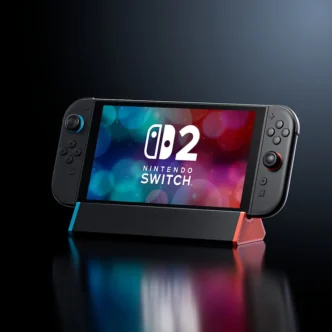

Nintendo appears to be implementing new, proprietary measures to restrict third-party dock compatibility for its upcoming Switch 2 console. Early testing indicates the console utilizes encrypted signals and demands higher voltage during initial connection, posing significant challenges for accessory manufacturers and potentially limiting consumer choice for docking solutions.
Nintendo’s New Docking Strategy
Nintendo’s latest console, the Switch 2, introduces a sophisticated new method for authenticating docks, seemingly designed to deter third-party accessory makers. This strategy involves several key components:
- Proprietary Encrypted Signals: The Switch 2 sends and receives encrypted signals over its USB-C connection to authorize a dock before enabling video output or power delivery. Testing revealed approximately 30 “unstructured” packets exchanged, including what appears to be an encryption key.
- Higher Voltage Demand: The console initially requests 20V from a dock, a departure from the standard 15V. While it doesn’t utilize the full 20V for functionality, this serves as an initial check.
- Dedicated Encryption Chip: Reports from accessory manufacturers suggest the Switch 2 incorporates a dedicated encryption chip specifically to block unauthorized third-party docks and accessories.
If a dock fails either the voltage test or the proprietary communication protocol, the Switch 2 defaults to a USB-only mode, disabling video and power delivery.

Impact on Third-Party Manufacturers
These new measures have already begun to affect the third-party accessory market:
- Limited Compatibility: At present, the Antank S3 Max is reportedly the only third-party dock compatible with the Switch 2. However, even Antank acknowledges that Nintendo could alter the authentication method via firmware updates, potentially rendering current compatibility obsolete.
- Development Halts: JSAUX, a prominent manufacturer of docks for the Steam Deck, has put its plans for a Switch 2 dock on hold due to these changes in the USB protocol.
Key Takeaways
- Nintendo is employing advanced encryption and voltage checks to control Switch 2 dock compatibility.
- This move aims to limit the use of third-party docks, potentially pushing consumers towards official Nintendo accessories.
- Third-party accessory makers face significant hurdles in developing compatible products, with some already pausing development.
- Future firmware updates from Nintendo could further complicate third-party compatibility.
Via The Verge