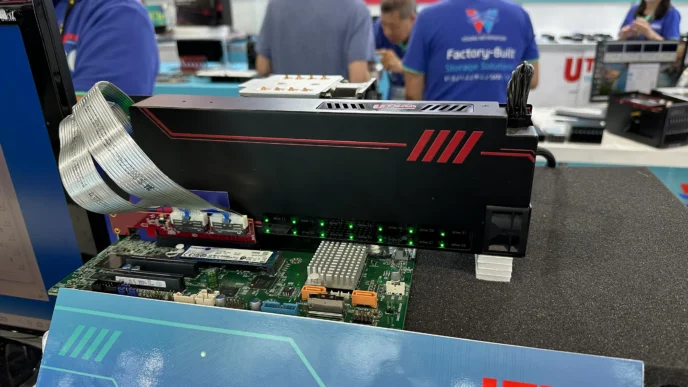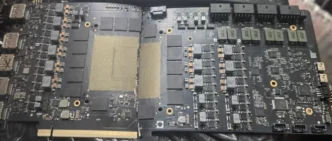
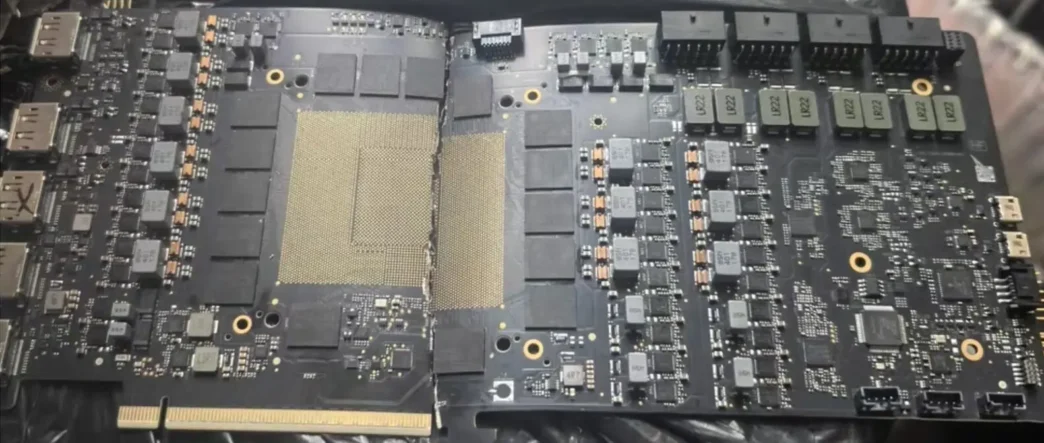
An NVIDIA RTX 5090 graphics card prototye has leaked, revealing a staggering design featuring four 16-pin power connectors capable of delivering up to 2400 watts of power. This unprecedented power demand raises questions about the future of high-performance GPUs and their implications for gaming and computing.
Key Takeaways
- The RTX 5090 prototype features four 16-pin power connectors.
- It can theoretically draw up to 2400 watts, far exceeding current GPU power requirements.
- The design aims to improve power distribution and prevent overheating.
- This prototype is primarily for testing and development, not intended for consumer release.
Unprecedented Power Requirements
The leaked prototype of the Nvidia RTX 5090 showcases a radical shift in GPU power consumption. With a base Total Graphics Power (TGP) of 575 watts, the prototype’s four 16-pin connectors allow for a maximum draw of 2400 watts, a figure that dwarfs any existing consumer graphics card.
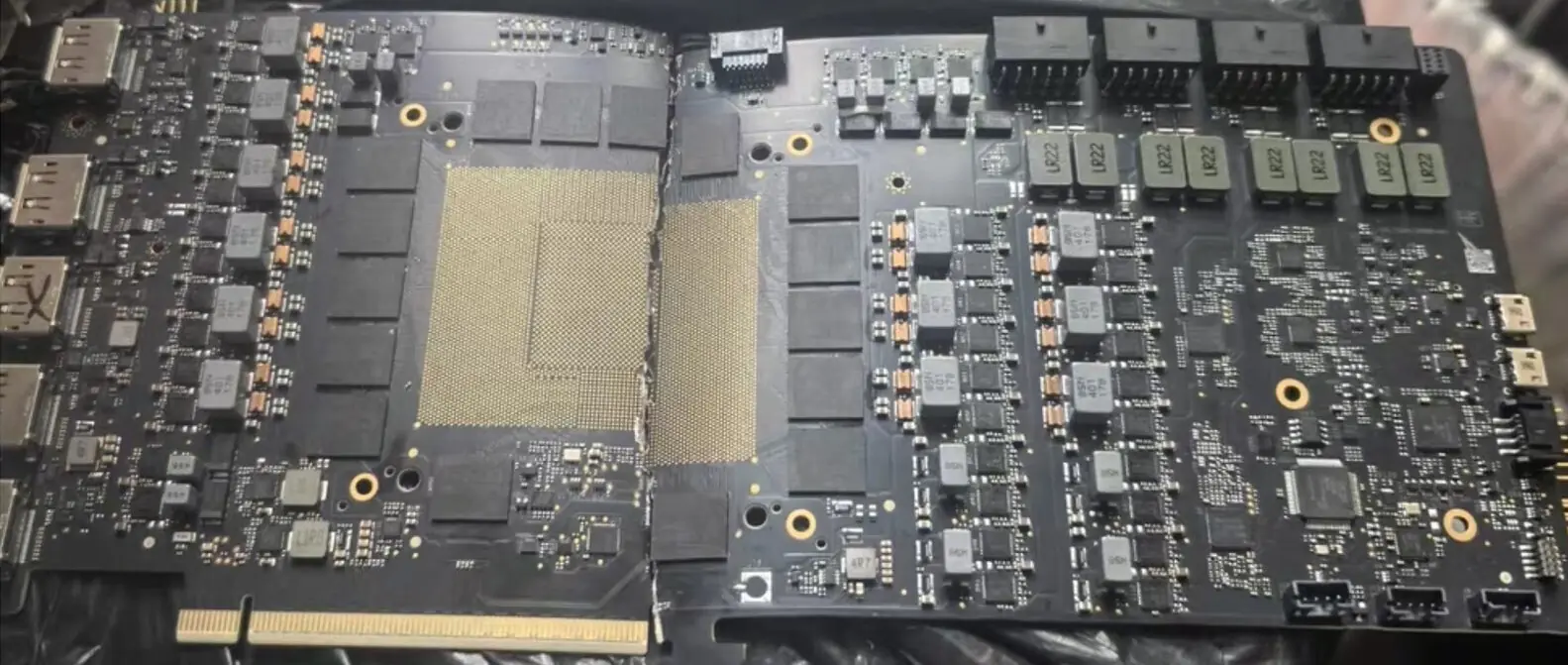
- Power Connectors: 4 x 16-pin connectors
- Maximum Power Draw: 2400 watts (not including PCI Express slot power)
- Base TGP: 575 watts
This design is not just about raw power; it reflects Nvidia’s approach to managing heat and power delivery. By distributing the load across multiple connectors, the company aims to mitigate the overheating issues that have plagued previous models.
Design Features
The engineering sample of the RTX 5090 is equipped with several notable features:
- Enhanced VRM Sections: The prototype includes doubled voltage regulator modules (VRMs) to handle the increased power flow.
- Debugging Interfaces: These allow engineers to monitor and test various performance metrics during development.
- Multiple Display Outputs: Unlike the standard four outputs on most GPUs, this prototype features five, hinting at potential advanced use cases.
Implications for Gaming and Computing
The RTX 5090’s design raises significant questions about the future of gaming and high-performance computing. With such high power demands, users will need to invest in robust power supplies, potentially in the range of 3000 watts, to accommodate this GPU alongside other system components.
- Target Audience: This card is likely aimed at professionals in AI, high-performance computing (HPC), and cinematic rendering rather than traditional gaming.
- Cooling Solutions: The extreme power requirements suggest that advanced cooling solutions, such as liquid nitrogen, may be necessary for optimal performance.
Conclusion
The Nvidia RTX 5090 prototype represents a bold step forward in GPU technology, pushing the boundaries of power consumption and performance. While it remains to be seen whether such a design will make it to market, the implications for future graphics cards are profound, signaling a shift towards even more demanding computing tasks. As Nvidia continues to innovate, the gaming and tech communities will be watching closely to see how these developments unfold.
Via eTeknix