


Global PC shipments fell by roughly one-fifth in the third quarter of 2026, as higher prices and component shortages collided with a market already stocked ahead of expected price hikes. IDC counted 62.7 million units shipped worldwide, down 20.1% year over year; Omdia estimated 58.1 million, a 21.2% decline, with both firms reporting a sharp reversal from the first-half rush.
Key takeaways
The precise shipment total varies between research firms, but both report a steep annual decline and pressure across major vendors. For PC builders and buyers, the data points to continued high component costs and limited prospects for a quick return to last year’s pricing.
- IDC recorded 62.7 million shipments; Omdia counted 58.1 million.
- Memory and storage costs, inventory built ahead of price increases, and softer demand weighed on the market.
- Omdia expects another sharp contraction in Q4 and a further annual decline in 2027.
A first-half buying rush left a Q3 hangover
IDC’s estimate represents a 9.1% drop from Q2, running counter to the usual seasonal lift from back-to-school buying. Vendors and channel partners had brought forward purchases and built inventory earlier in the year to get ahead of anticipated price hikes. With many buyers now facing higher prices and retailers holding stock, that early demand has not been replaced.
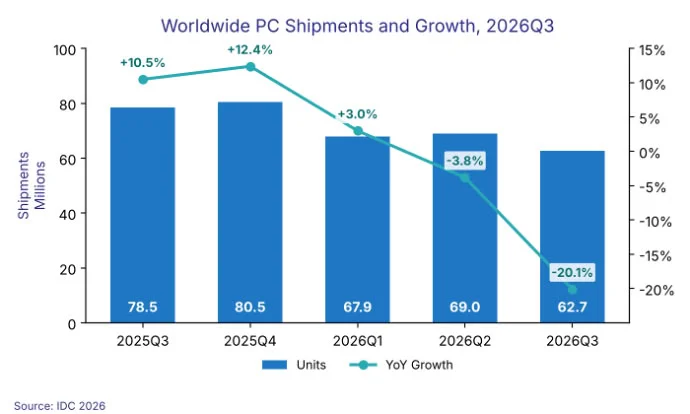
The two firms use different tracking methods, which accounts for the gap in their shipment totals. Their year-over-year findings are broadly aligned: IDC reported a 20.1% fall, while Omdia measured a 21.2% decline. Omdia said desktop shipments dropped 23.5% to 11.7 million, and notebooks fell 20.6% to 46.4 million.
Component shortages are pushing prices higher
Rising memory and storage costs are central to the squeeze. Omdia estimates DRAM and SSDs now represent nearly 40% of a PC’s component costs, compared with a typical share near 15%, after prices increased more than fourfold. Processor, graphics-card, and other integrated-circuit shortages have added supply and inventory-management challenges for manufacturers.
Demand from AI data centers is intensifying competition for memory production, including high-bandwidth memory. For ThinkComputers readers weighing a new build or upgrade, the near-term implication is that lower shipment volumes do not necessarily mean cheaper parts: IDC expects prices to remain elevated, though excess channel stock could prompt some promotions.
Major vendors all shipped fewer systems
Omdia’s vendor data shows Lenovo retained the top spot with 14.9 million units and 26% market share. HP shipped 10.3 million, down 31%, while Dell recorded 7.6 million. Apple shipped 6.8 million, down 11%, and Asus shipped 5.4 million, the smallest decline among Omdia’s leading vendors. The rankings changed little despite widespread contractions.
The outlook remains weak. Omdia forecasts a 24% year-over-year shipment decline in Q4 2026, followed by a 7% fall for full-year 2027. Those are forecasts, not confirmed outcomes, but they suggest PC buyers and manufacturers may face a prolonged period of elevated costs and subdued demand.
Via IDC