For the first time in history, AMD has surpassed Intel in datacenter CPU sales, marking a significant shift in the competitive landscape of the tech industry. This milestone reflects AMD’s growing influence and the challenges faced by Intel in maintaining its long-standing dominance in the market.
Key Takeaways
- AMD’s datacenter revenue reached $3.549 billion in Q3 2024.
- Intel’s datacenter and AI group reported earnings of $3.3 billion in the same quarter.
- AMD’s EPYC processors are increasingly favored for high-end server applications.
- Intel’s Xeon CPUs are being sold at significant discounts to remain competitive.
The Shift In Market Dynamics
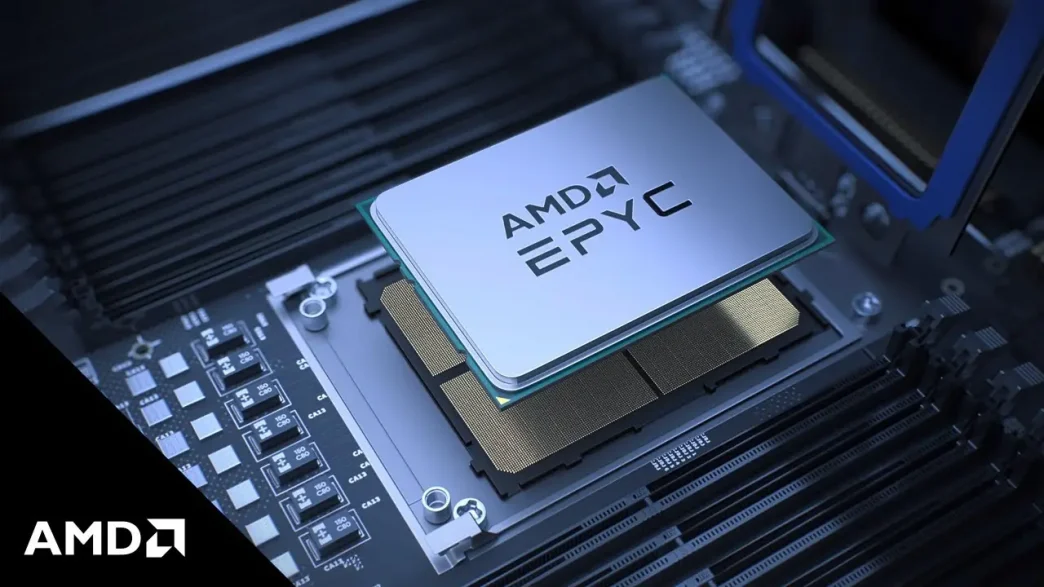
For over two decades, Intel’s Xeon processors have been the backbone of datacenter operations, powering the majority of servers worldwide. However, AMD’s EPYC processors have gained traction, leading to a notable shift in market share. Just seven or eight years ago, AMD held a mere single-digit market share, but that has changed dramatically.

Revenue Comparison
In the third quarter of 2024, AMD’s datacenter segment revenue reached an impressive $3.549 billion, while Intel’s datacenter and AI group’s earnings were reported at $3.3 billion. This marks a significant decline for Intel, which earned between $5 billion and $6 billion per quarter just two years ago.
| Company | Q3 2024 Revenue | Previous Revenue (Q3 2022) |
|---|---|---|
| AMD | $3.549 billion | N/A |
| Intel | $3.3 billion | $5-$6 billion |
Competitive Pricing Strategies
The competitive landscape has forced Intel to adjust its pricing strategies. The flagship 128-core Xeon 6980P ‘Granite Rapids’ processor is priced at $17,800, making it Intel’s most expensive standard CPU to date. In contrast, AMD’s top-tier 96-core EPYC 6979P processor is priced at $11,805, showcasing a significant price advantage for AMD.
Future Outlook
While AMD has made significant strides, Intel still has the potential to regain its footing. If demand for Intel’s Xeon 6900-series processors remains strong and the company can ramp up production of its Granite Rapids products, it may be able to reclaim its position in the market. However, the current trend indicates that AMD’s EPYC processors are becoming increasingly popular among high-end server users.
The Bigger Picture
Despite the competition between AMD and Intel, Nvidia continues to dominate the datacenter market with its GPUs and networking chips. In the second quarter of fiscal 2025, Nvidia’s networking product sales totaled $3.668 billion, while compute GPU sales reached a staggering $22.604 billion. This highlights the growing importance of AI and high-performance computing (HPC) in the datacenter landscape.
In conclusion, AMD’s achievement of outselling Intel in the datacenter for the first time ever is a landmark event that underscores the shifting dynamics in the tech industry. As both companies navigate this competitive landscape, the focus will likely remain on innovation, pricing strategies, and the growing demand for AI capabilities in datacenters.