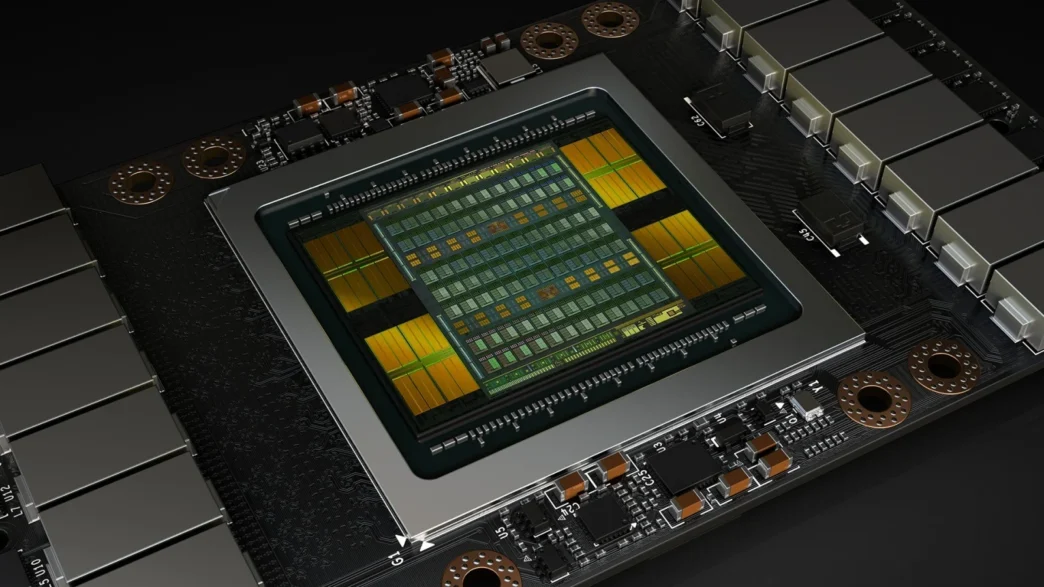
CPUID has released HWMonitor version 1.65, a significant update that restores the ability to monitor GPU hotspot temperatures for NVIDIA’s GeForce RTX 50 series “Blackwell” graphics cards. This functionality was previously restricted by NVIDIA, leaving users unable to access critical thermal data through standard third-party diagnostic utilities until now.
Key takeaways
- HWMonitor 1.65 officially adds support for RTX 50 series hotspot temperature monitoring.
- The update enables users to diagnose cooling issues that standard GPU temperature readings might otherwise overlook.
- It remains unclear whether NVIDIA officially enabled this access or if developers discovered an undocumented workaround.
- Other monitoring applications, including CapFrameX, have announced plans to implement similar support in upcoming releases.
Restoring critical thermal insights
When NVIDIA launched its “Blackwell” GPU lineup, the company restricted access to hotspot sensor data for public-facing applications. Previously, this information was only accessible to professional repair technicians using NVIDIA’s internal Modular Diagnostic Software (MODS). The lack of public access made it difficult for users to identify thermal throttling issues, as standard tools often reported normal core temperatures while the internal hotspot reached critical levels.
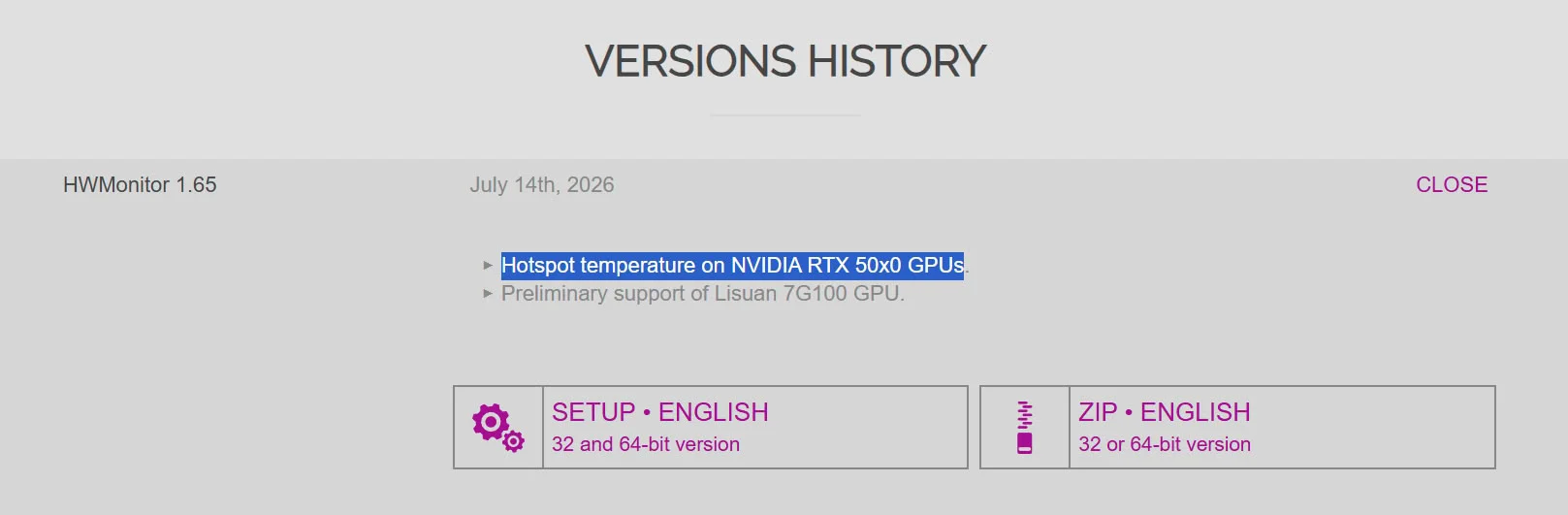
By reintroducing this feature, HWMonitor 1.65 provides essential transparency for enthusiasts and power users. Monitoring the hotspot temperature is vital for identifying problems such as poor thermal paste application, uneven cooler contact, or degraded thermal pads, which are common culprits when a card underperforms despite showing acceptable average temperatures.
Real-world performance testing
Early testing of the new functionality has already provided valuable data for the enthusiast community. An extreme overclocker recently utilized the updated software on a shunt-modded, water-cooled RTX 5090 drawing over 900 watts of power. The test revealed a peak hotspot temperature of approximately 68°C, with a delta of 17°C compared to the standard GPU core temperature. This delta is considered reasonable for a high-performance, water-cooled configuration.
HWMonitor has introduced HotSpot Temperature sensors for Nvidia RTX50 series GPUs!
Here is my Shunt Modded Watercooled RTX 5090 Frostbite using PTM and pulling over 900W from the wall sitting at around 68°C peak HotSpot temp after about a minute or 3DMark11 Loop. Delta between… pic.twitter.com/ihocYxNtf6— Madness! (@madness727) July 14, 2026
In contrast, earlier reports involving faulty RTX 5070 Ti units showed temperature deltas approaching 40°C. These extreme discrepancies were clear indicators of hardware-level cooling failures, demonstrating why access to this specific sensor data is a game-changer for troubleshooting. The following table summarizes the importance of monitoring these metrics:
| metric | purpose |
|---|---|
| Core temperature | Indicates overall thermal load |
| Hotspot temperature | Identifies localized heating and cooling contact issues |
| Delta (Core to Hotspot) | Reveals efficiency of thermal interface materials |
Future implications for monitoring tools
While the exact method CPUID used to bypass NVIDIA’s restrictions remains undisclosed, the update suggests that the necessary data is still present on the silicon. The success of HWMonitor 1.65 has paved the way for other developers, with tools like CapFrameX already confirming that support for RTX 50 series hotspot monitoring is currently in development.
As more utilities adopt this feature, the PC hardware community will gain a more accurate picture of how Blackwell GPUs handle thermal loads. Whether NVIDIA will choose to officially document this access path or continue to leave it as an undocumented workaround remains to be seen, but for now, users have regained a crucial tool for maintaining their high-end hardware.
Via HWMonitor