
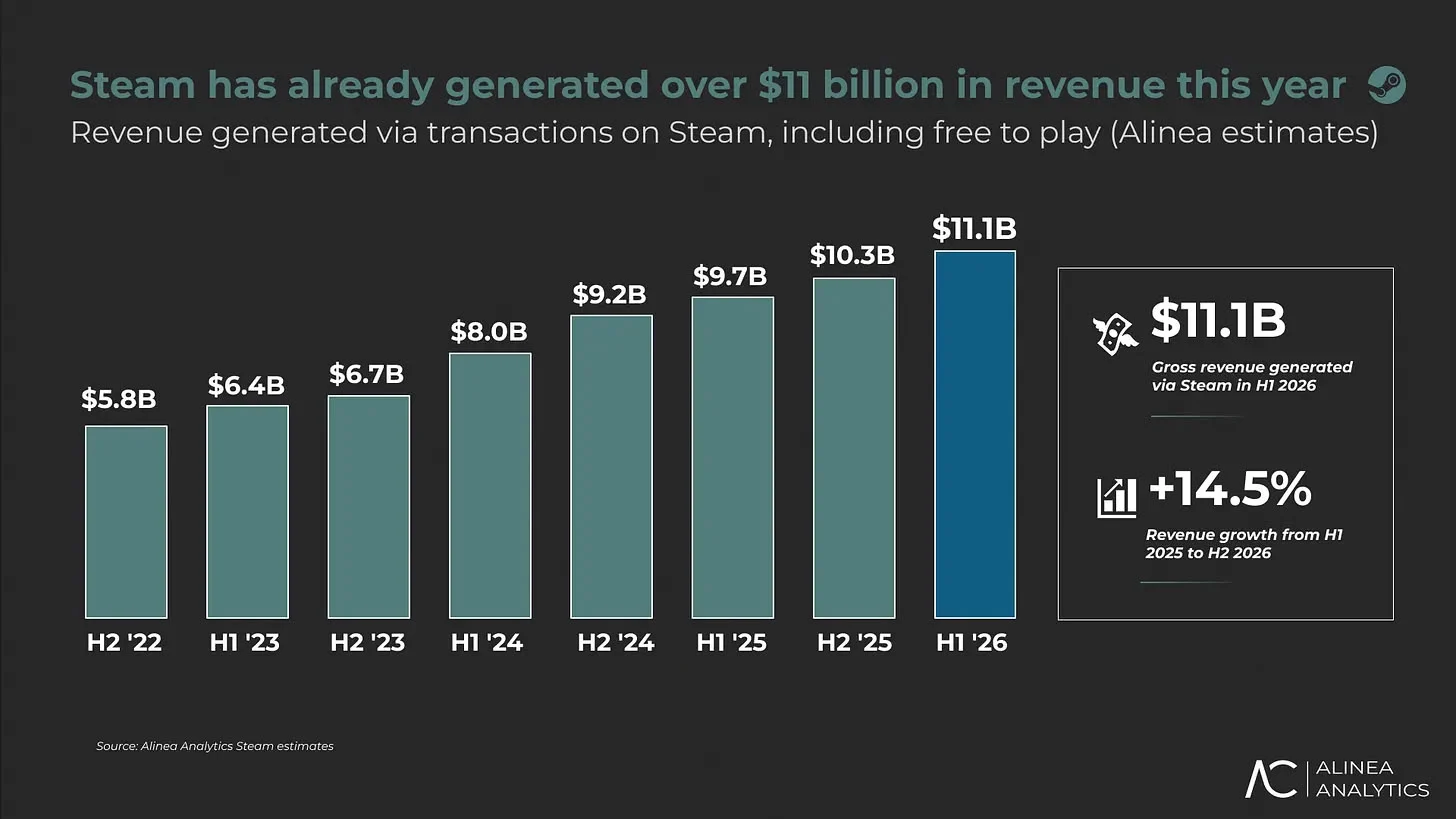
Steam has achieved an unprecedented financial milestone, generating an estimated $11.1 billion in gross revenue during the first half of 2026. This record-breaking performance, reported by Alinea Analytics, highlights the platform’s enduring dominance in the PC gaming market, fueled by a massive legacy catalog and a significant surge in international user engagement.
Key takeaways
- Steam generated $11.1 billion in H1 2026, marking a 14.5% increase over the same period in 2025.
- Only 21% of total revenue originated from 2026 game releases, underscoring the platform’s reliance on its extensive back catalog.
- Growth is significantly bolstered by a rising influx of active users in Asia, with China leading the trend.
- Many game publishers have returned to Steam after failing to maintain traction on their own proprietary storefronts.
The power of the back catalog
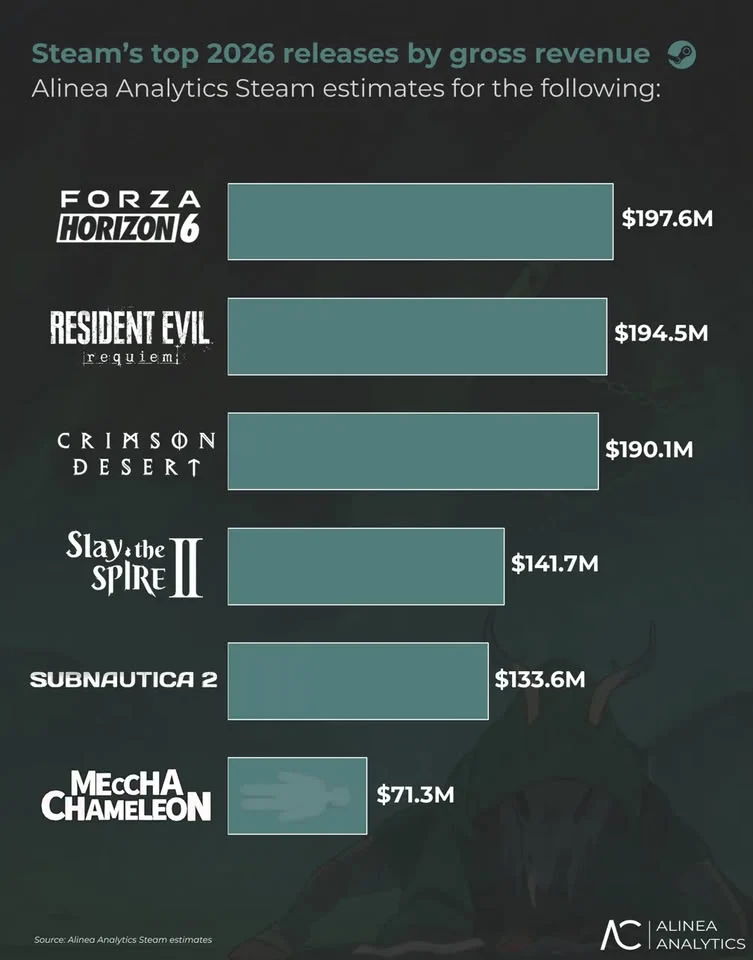
While high-profile 2026 releases such as Forza Horizon 6, Resident Evil Requiem, and Crimson Desert have performed well, they represent only a fraction of the platform’s total earnings. The majority of Steam’s revenue is currently sustained by a vast library of older titles. This trend suggests that players are increasingly prioritizing established games with proven track records, perhaps waiting for newer titles to receive patches or price reductions before committing to a purchase. The median number of games played per user remains focused on a small, consistent set of titles, which keeps legacy software relevant and profitable for years.
Strategic market expansion and publisher returns
Several factors have contributed to this historic half-year performance. Beyond the reliance on older games, Valve has benefited from a rapidly expanding user base in Asia, particularly in China. Furthermore, the industry has seen a notable shift in distribution strategy. After years of major publishers attempting to divert traffic to their own standalone launchers, many have returned to Steam to reach a broader audience. This migration back to the platform validates Steam’s position as the primary hub for PC gaming, offering a centralized experience that competitors have struggled to replicate. As digital storefronts become the industry standard, Steam’s infrastructure, including its robust community features and compatibility layers like Proton, continues to provide a stable environment that keeps both developers and players invested in the ecosystem.