


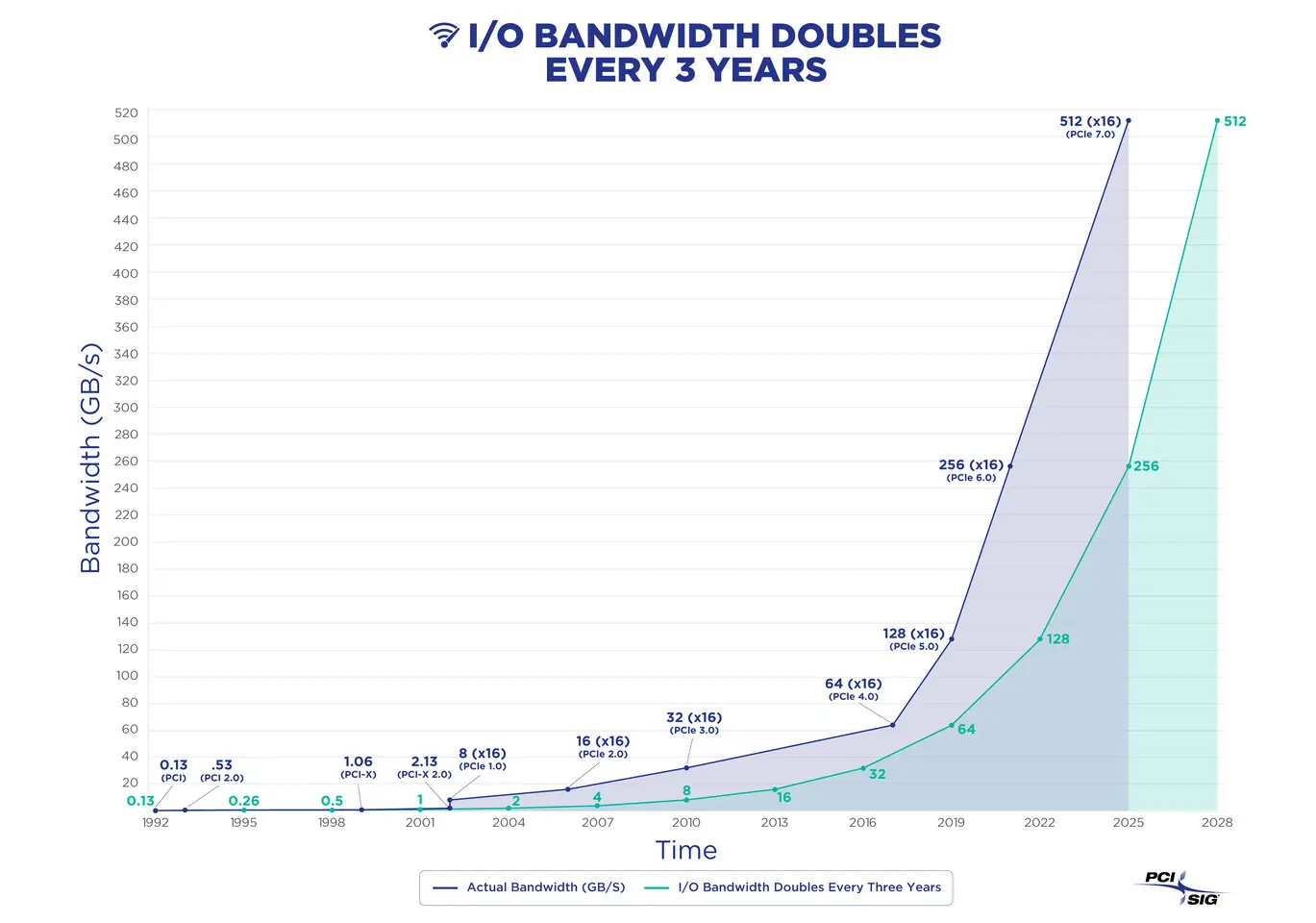
The PCI Special Interest Group (PCI-SIG) has finalized the draft for the PCI Express 7.0 specification, marking a significant advancement in data transfer technology. With a projected launch in 2025, this new standard promises to double the bandwidth of its predecessor, PCIe 6.0, and cater to the growing demands of data-intensive applications.
Key Takeaways
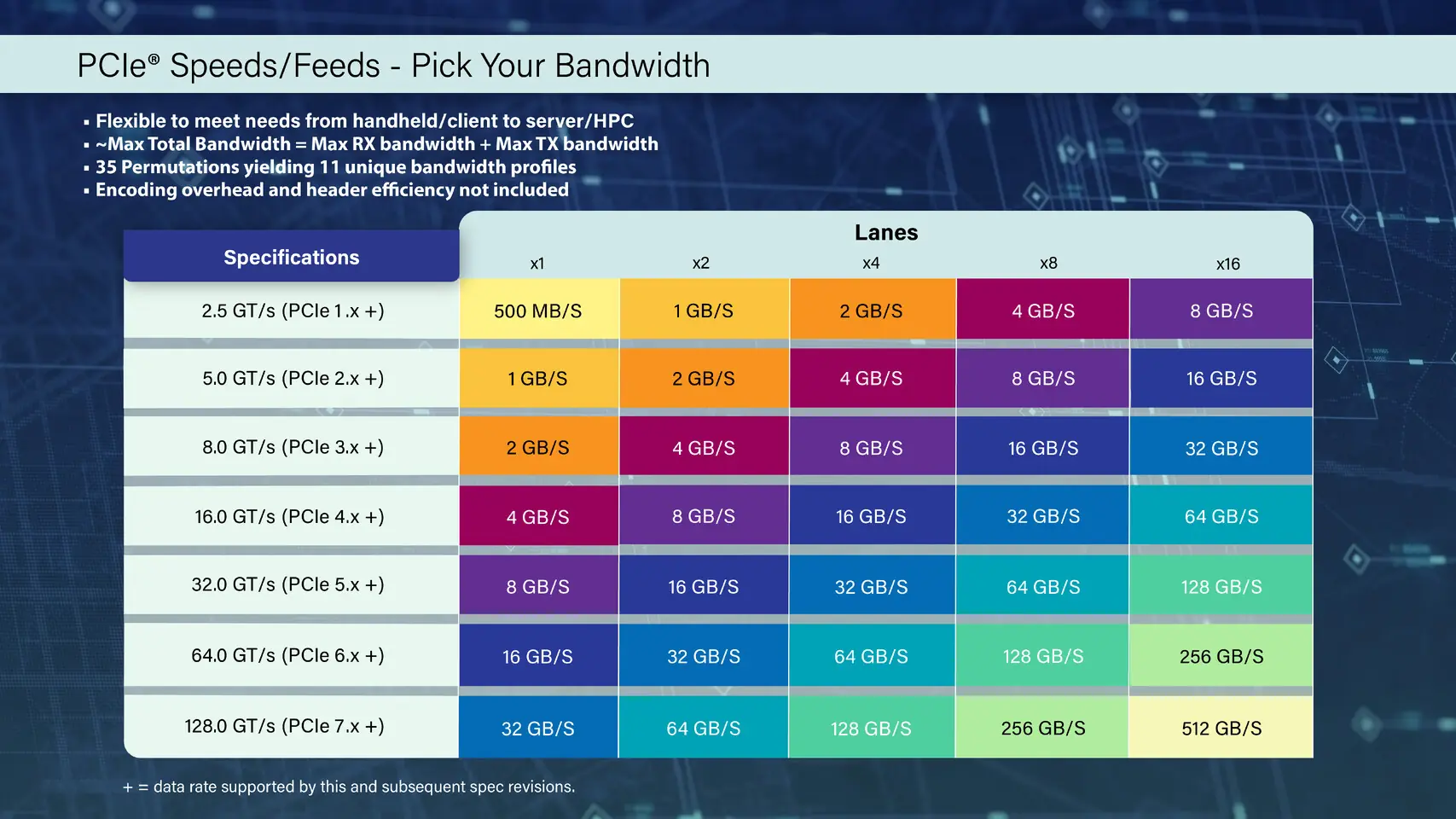
- PCIe 7.0 will deliver a raw bit rate of 128 GT/s.
- It supports up to 512 GB/s bi-directionally via x16 configuration.
- The specification utilizes PAM4 signaling for improved efficiency.
- Backward compatibility with previous PCIe generations is maintained.
- Targeted primarily at data centers and AI applications.
Overview of PCI Express 7.0
The PCIe 7.0 specification aims to address the increasing bandwidth requirements of modern computing environments, particularly in sectors like artificial intelligence, machine learning, and high-performance computing. The finalized draft, version 0.9, is now available for member review, indicating that the specification is nearing its final form.
The PCI-SIG has emphasized that no further functional changes are expected at this stage, and the full specification is on track for publication later this year. This rapid development cycle reflects the urgent need for faster interconnects to support advanced computing tasks.
Technical Specifications
The PCIe 7.0 standard introduces several key features:
- Raw Bit Rate: 128 GT/s, doubling the capacity of PCIe 6.0.
- Bi-Directional Bandwidth: Up to 512 GB/s when configured in x16 mode.
- Signaling Technology: Utilizes PAM4 (Pulse Amplitude Modulation with 4 levels) to enhance data transmission efficiency.
- Power Efficiency: Improved power management to support high-performance applications.
- Low Latency and High Reliability: Continues to meet the stringent requirements of modern data processing tasks.
- Backward Compatibility: Ensures that existing PCIe devices can still function with the new standard.
Implications for the Industry
The introduction of PCIe 7.0 is particularly significant for industries that rely on high-speed data transfer, such as cloud computing, data centers, and AI research. As workloads become more complex and data-intensive, the need for faster interconnects becomes critical. PCIe 7.0 is designed to eliminate bottlenecks that can hinder performance in these environments.
While the consumer market may not see immediate benefits, the advancements in PCIe technology will eventually trickle down, enhancing the performance of personal computing devices in the future.
Conclusion
The finalization of the PCI Express 7.0 draft is a pivotal moment in the evolution of data transfer technology. With its ambitious goals and robust specifications, PCIe 7.0 is set to redefine the capabilities of interconnect solutions, paving the way for innovations in various high-demand sectors. As the industry prepares for its launch in 2025, stakeholders are keenly observing how this new standard will shape the future of computing.
Via PCI-SIG


