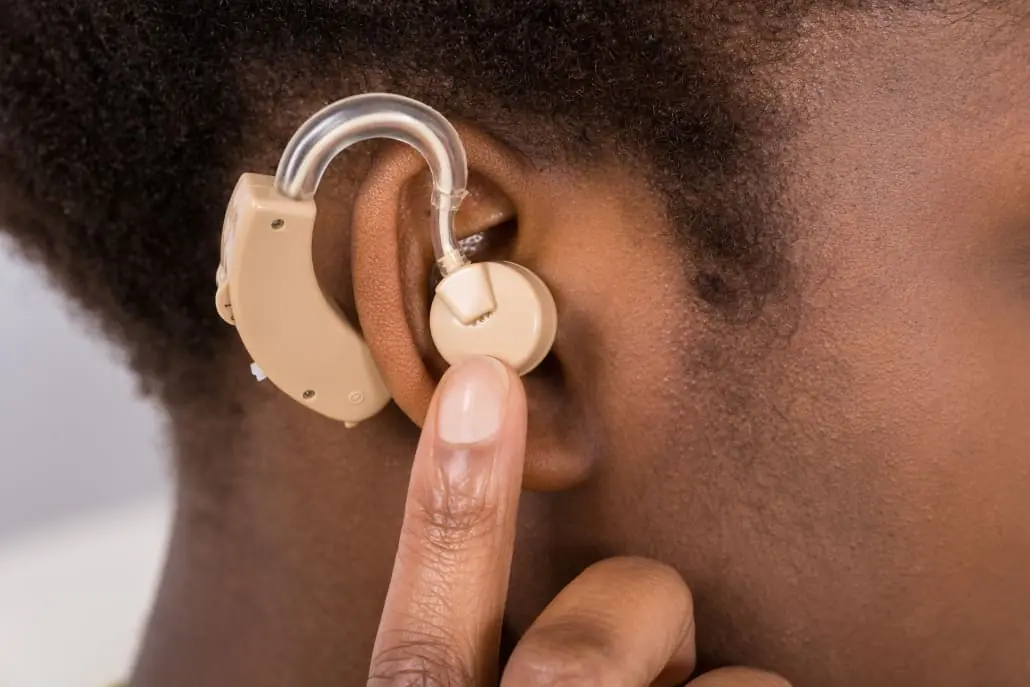
Did you know that 93% of hearing aids sold in the United States contain digital signal processing technology? This remarkable statistic highlights just how far modern hearing aid technology has advanced in recent years.
We have witnessed tremendous advancements in hearing aid technology over the past few decades. The integration of digital signal processing (DSP) technology with hearing aids in 1996 marked a pivotal shift in hearing loss treatment. Today, digital hearing instruments have propelled the industry forward, evolving from simple amplification devices into sophisticated, high-tech instruments. Additionally, the latest hearing aid technology allows audiologists to calibrate devices precisely to match the wearer’s specific type and degree of hearing loss.
Digital hearing aid technology continues to advance to this day, with more than half of hearing aids now including directional microphones that provide verifiable improvements to speech understanding in noisy environments. Furthermore, user satisfaction has risen significantly, with 71% of hearing aid users expressing overall satisfaction with their devices. Some newer models even provide up to 51 hours of use on a single charge.
In this article, we will explore how digital hearing aids work internally and uncover the hidden science that transforms sound waves into optimized signals for your brain. From real-time sound processing to AI-powered adaptations, we will examine the sophisticated technology that makes modern hearing aids so effective.
Digital Signal Processing: The Core of Modern Hearing Aids
Modern hearing aids operate more like specialized miniature computers than simple sound amplifiers. At their core lies digital signal processing (DSP) technology, which fundamentally transformed hearing assistance devices when it was first integrated in 1996.
How do digital hearing aids work internally?
Digital hearing aids capture sound through microphones that convert acoustic waves into electrical signals. These analog signals then undergo conversion into digital code through an analog-to-digital converter. The conversion involves sampling (capturing amplitude at specific time intervals) and quantization (representing each sample as binary code).
The processing power inside these tiny devices is impressive—exceeding the computing capabilities of the Apollo 11 spacecraft that landed on the moon. The flexible printed circuit board contains more than 60 different components and integrated circuits, often referred to as the “brain” of the hearing aid.
Once digitized, the signal passes through multiple processing stages:
- Frequency analysis: Splitting sound into sub-bands for precise manipulation
- Amplification and compression: Adjusting volume based on hearing loss
- Noise management: Filtering unwanted sounds
- Feedback cancelation: Preventing whistling sounds
After processing, the signal converts back to analog form through a digital-to-analog converter before reaching the speaker (receiver) that delivers the enhanced sound to the ear.
Real-time sound optimization using DSP chips
Modern digital signal processing occurs nearly instantaneously, with some systems analyzing surroundings up to 700 times per second. This real-time processing enables hearing aids to adapt continuously to changing environments.
One key feature is multi-channel Wide Dynamic Range Compression (WDRC), which allows for personalized amplification. This technology digitally compresses the wide range of sounds heard by a healthy ear into a narrower range suitable for someone with hearing loss. The number of frequency channels in modern devices ranges from 4 to 64, with each channel amplified differently according to specific hearing needs.
Most contemporary hearing aids incorporate directional technology through acoustic beamforming. Using two microphones positioned apart from each other, the system creates a “sensitivity beam” that preserves sounds from the desired direction while attenuating others. This significantly improves speech recognition in noisy environments.
The latest DSP technology now includes AI-powered features that make millions of fine-tune adjustments in real-time, moving beyond traditional preset programs like “Restaurant mode” or “Music mode”.
Directional and Noise Management Technologies
Difficulty hearing in noisy environments remains one of the biggest challenges for people with hearing loss. Fortunately, modern hearing aid technology includes sophisticated noise management systems that can significantly improve listening experiences.
Adaptive directional microphones for focused hearing
Directional microphones represent the most effective noise reduction strategy in hearing aids, providing a 3 to 4 dB signal-to-noise ratio (SNR) improvement in environments with low reverberation. Unlike omnidirectional microphones that capture sounds equally from all directions, directional microphones prioritize sounds from specific directions, typically from the front where conversations usually occur.
Modern digital hearing instruments offer several directional schemes:
- Fixed directionality excels at canceling noise located behind the user
- Adaptive directionality can simultaneously cancel multiple noise sources located in different positions
- Automatic directional systems monitor noise levels and switch modes based on the environment
Advanced systems use wireless ear-to-ear communication, allowing paired devices to synchronize their microphones and create a more focused “beam” of sound reception. This technology, sometimes called bilateral beamforming, utilizes all four microphones from both hearing aids to achieve superior directionality.
Noise reduction algorithms in digital hearing instruments
Most contemporary hearing aids employ noise reduction algorithms that work alongside directional technology. These systems typically use either modulation-based analysis or spectral subtraction.
Modulation-based systems identify speech by analyzing modulation rates and estimate SNR by evaluating modulation depth. Conversely, spectral subtraction monitors gaps between speech sounds to generate an accurate noise spectrum that can be subtracted from the signal.
The effectiveness varies based on the manufacturer’s algorithm and the software settings. Nevertheless, enabling or increasing noise reduction for specific challenging environments can notably improve listening comfort.
Feedback cancelation using phase inversion
Feedback (whistling or squealing) has historically been a major complaint among hearing aid users. The latest feedback management systems employ phase inversion technology to counter this problem.
This approach works by creating a 180° phase-inverted signal that precisely matches the feedback sound waves, effectively canceling them through destructive interference. Unlike older methods that reduced gain to prevent whistling, phase inversion eliminates feedback without compromising amplification.
Advanced systems like WhistleBlock Technology include sophisticated feedback identification modules that can instantly distinguish between true feedback and naturally occurring tones such as music, ensuring optimal sound quality under various conditions.
Connectivity and Smart Features in Hearing Aids
Beyond amplification, modern hearing aid technology now serves as a communication hub for users. Nearly all contemporary hearing aids feature Bluetooth technology, enabling direct audio streaming from various devices.
Bluetooth integration for seamless device pairing
Bluetooth-equipped hearing aids connect wirelessly to smartphones, tablets, and other audio devices. This technology allows users to stream phone calls, music, podcasts, and GPS directions directly to their hearing aids. Most devices maintain connectivity up to 30 feet from the audio source, providing flexibility during daily activities. Compatible with both iOS and Android platforms, these devices work with smartphones using Bluetooth 5.0 or later versions.
Smartphone app control and remote adjustments
Each major hearing aid manufacturer offers dedicated smartphone apps for device management. These applications enable users to:
- Adjust volume levels individually or simultaneously
- Switch between pre-programmed settings
- Customize bass, treble, and noise reduction
- Locate misplaced hearing aids
Many apps offer remote fine-tuning capabilities, allowing hearing care professionals to make adjustments without requiring office visits. Some advanced apps even track health metrics and daily activity levels.
Wireless accessories: TV streamers and table mics
TV streamers connect to television audio outputs and transmit sound directly to hearing aids. This allows users to enjoy entertainment at their preferred volume without affecting others’ listening experience. For group settings, table microphones with multiple built-in mics determine the primary speaker’s voice and stream it to the user’s devices. These accessories typically work up to 22 feet away, making them ideal for meetings, restaurants, and family gatherings.
AI and Cognitive Enhancements in Hearing Aid Technology
Artificial intelligence marks the next frontier in hearing aid evolution, with Starkey introducing the first AI-powered hearing aid in 2018. Today’s digital hearing instruments harness AI’s capabilities to deliver increasingly personalized listening experiences.
AI-based environment learning and auto-adjustments
Modern AI-powered hearing aids process environmental sounds through sophisticated algorithms that make millions of real-time adjustments. Unlike traditional devices with preset programs for specific settings, AI hearing aids analyze your daily soundscapes and fine-tune accordingly. For instance, Phonak’s AutoSense OS conducts up to 700 acoustic scans per second, constantly optimizing performance. Research shows this automatic sound management improves speech understanding by 20% in challenging environments compared to manual programs.
Real-time language translation via hearing aid apps
Certain advanced hearing aids now function as communication bridges across languages. Starkey’s Evolv AI can translate 27 languages in real-time through the Thrive Hearing app. The process works by capturing speech through your smartphone, translating it, and then streaming the result directly to your hearing aids. However, testing reveals these translation features perform best with short, clear sentences rather than conversational speech.
Health tracking and fall detection integration
The latest hearing aid technology also monitors physical wellbeing. Models like Starkey’s Evolv AI incorporate 3D inertial measurement unit sensors that:
- Track daily steps and physical activities
- Monitor heart rate during rest and exercise
- Automatically detect falls and alert emergency contacts
This integration essentially transforms hearing aids into multifunctional health devices that help maintain both auditory function and overall wellness.
Conclusion
Hearing aid technology has truly transformed from basic amplification devices into sophisticated mini-computers worn on the ear. Digital signal processing now serves as the foundation for these remarkable devices, enabling precise sound manipulation tailored to individual hearing needs. The integration of multiple channels, adaptive directional microphones, and advanced noise reduction algorithms certainly creates a more natural listening experience even in challenging environments.
Additionally, modern connectivity features have expanded hearing aids’ functionality beyond simple sound amplification. Bluetooth technology allows direct streaming from smartphones and other devices, while dedicated apps provide unprecedented control over listening preferences. This wireless ecosystem therefore extends to accessories like TV streamers and table microphones, further enhancing everyday communication.
Perhaps most impressively, artificial intelligence has revolutionized how hearing aids adapt to changing environments. Rather than relying on manual program changes, AI-powered devices now make millions of automatic adjustments based on environmental analysis and user preferences. The introduction of health tracking capabilities also transforms these devices into multifunctional wellness tools that monitor physical activity, heart rate, and can detect falls.
Undoubtedly, these technological advancements have significantly improved user satisfaction rates. The sophisticated science behind modern hearing aids demonstrates how digital innovation continues to enhance quality of life for people with hearing loss. As technology progresses, we can expect hearing aids to become even more intelligent, interconnected, and intuitive, ultimately narrowing the gap between assisted and natural hearing experiences.