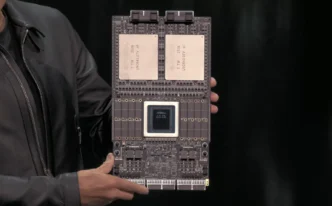
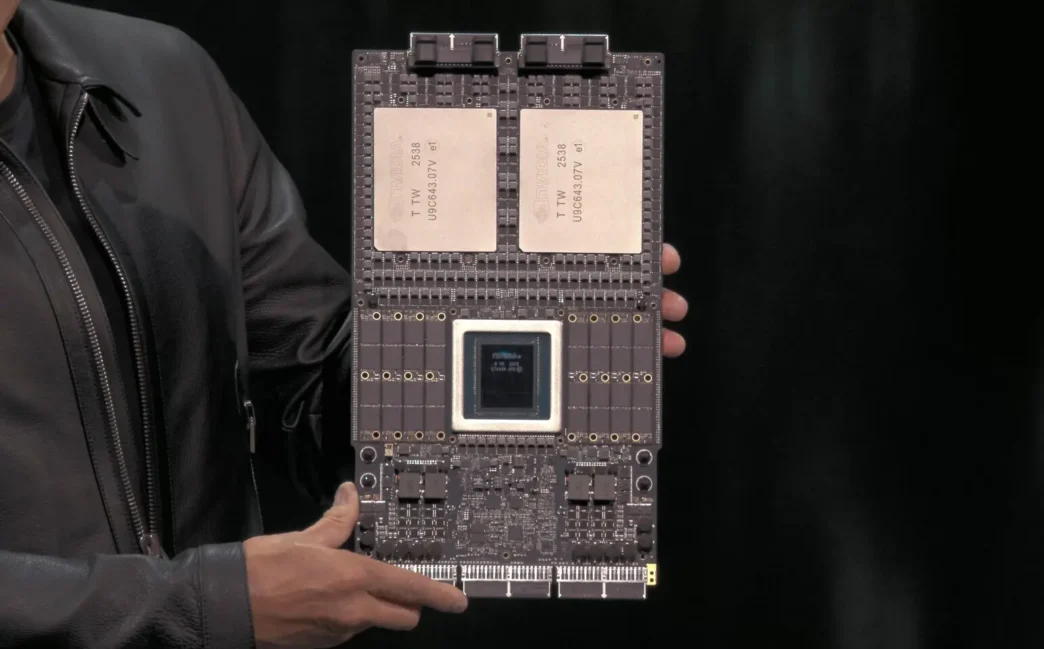
NVIDIA has officially revealed its next-generation Vera Rubin Superchip, a groundbreaking AI and HPC platform set to enter production in 2026. Unveiled at the GTC keynote in Washington D.C., the Vera Rubin Superchip represents a significant leap forward in computing power and architectural design, promising to redefine the landscape of artificial intelligence.
Key Takeaways
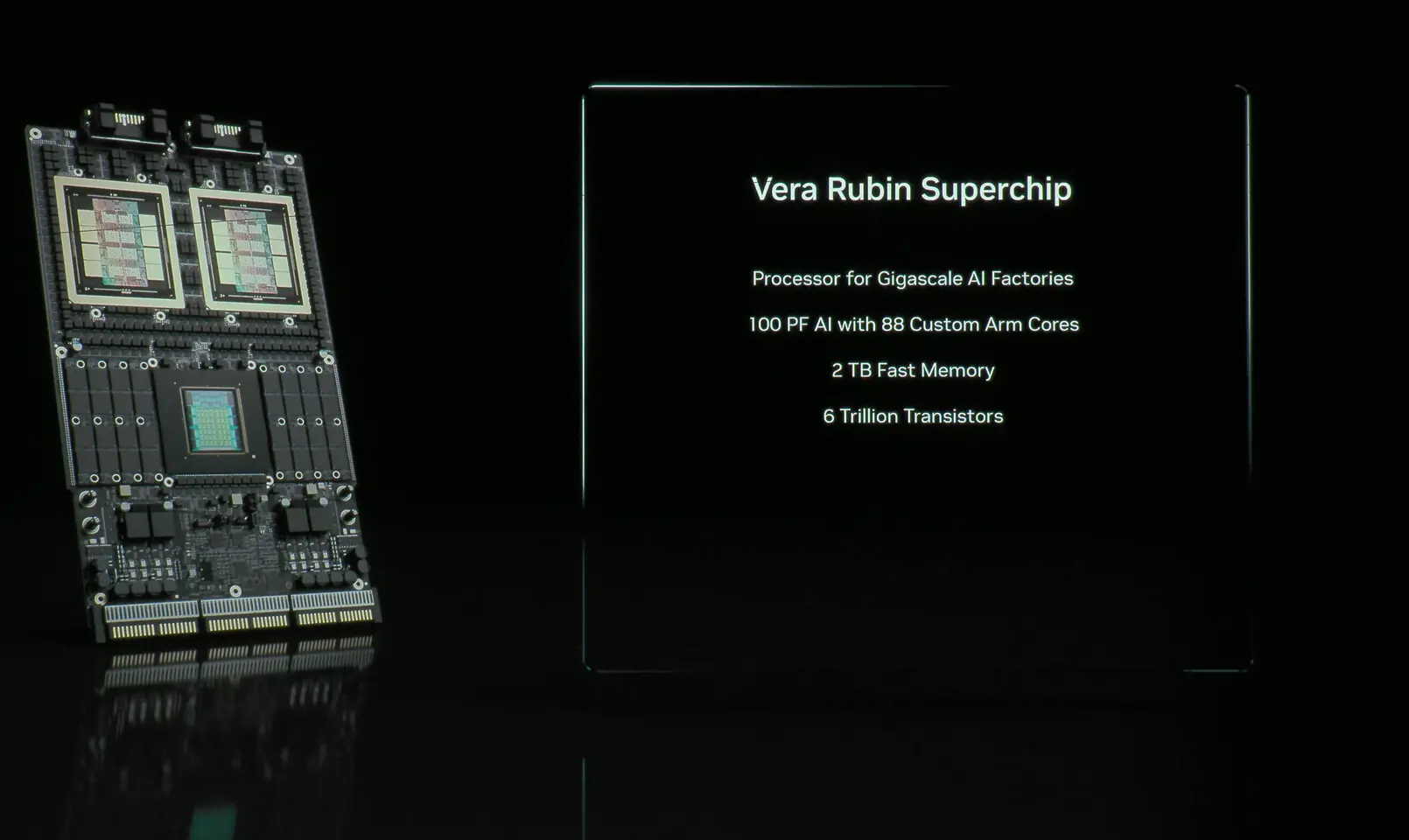
- Massive Transistor Count: The Vera Rubin Superchip boasts an astonishing six trillion transistors, dwarfing previous generations and current gaming GPUs.
- Integrated CPU and GPUs: It features Nvidia’s custom 88-core Vera CPU alongside two powerful Rubin GPUs on a single, compact board.
- Advanced Memory Technology: The chip utilizes HBM4 memory, offering substantial bandwidth for demanding AI workloads.
- Production Timeline: Mass production is slated for 2026, with systems expected to be deployed shortly thereafter.
Unveiling the Vera Rubin Superchip
Nvidia CEO Jensen Huang presented the Vera Rubin Superchip, highlighting its immense capabilities. This new platform is not just a single chip but a sophisticated superchip design that integrates a custom 88-core Arm-based Vera CPU with two Rubin GPUs. Each Rubin GPU is a marvel of engineering, featuring two reticle-sized dies and eight HBM4 memory stacks, delivering unprecedented performance for AI and High-Performance Computing (HPC) tasks.
Architectural Innovations
The Vera Rubin Superchip showcases several architectural advancements. The Vera CPU itself is a chiplet design, allowing for greater flexibility and scalability. The board eschews traditional cabled connectors for NVLink backplane connectors, enabling seamless scaling within racks. Furthermore, the integration of LPDDR system memory alongside HBM4 directly on the GPUs contributes to its compact yet powerful design.
Performance and Scalability
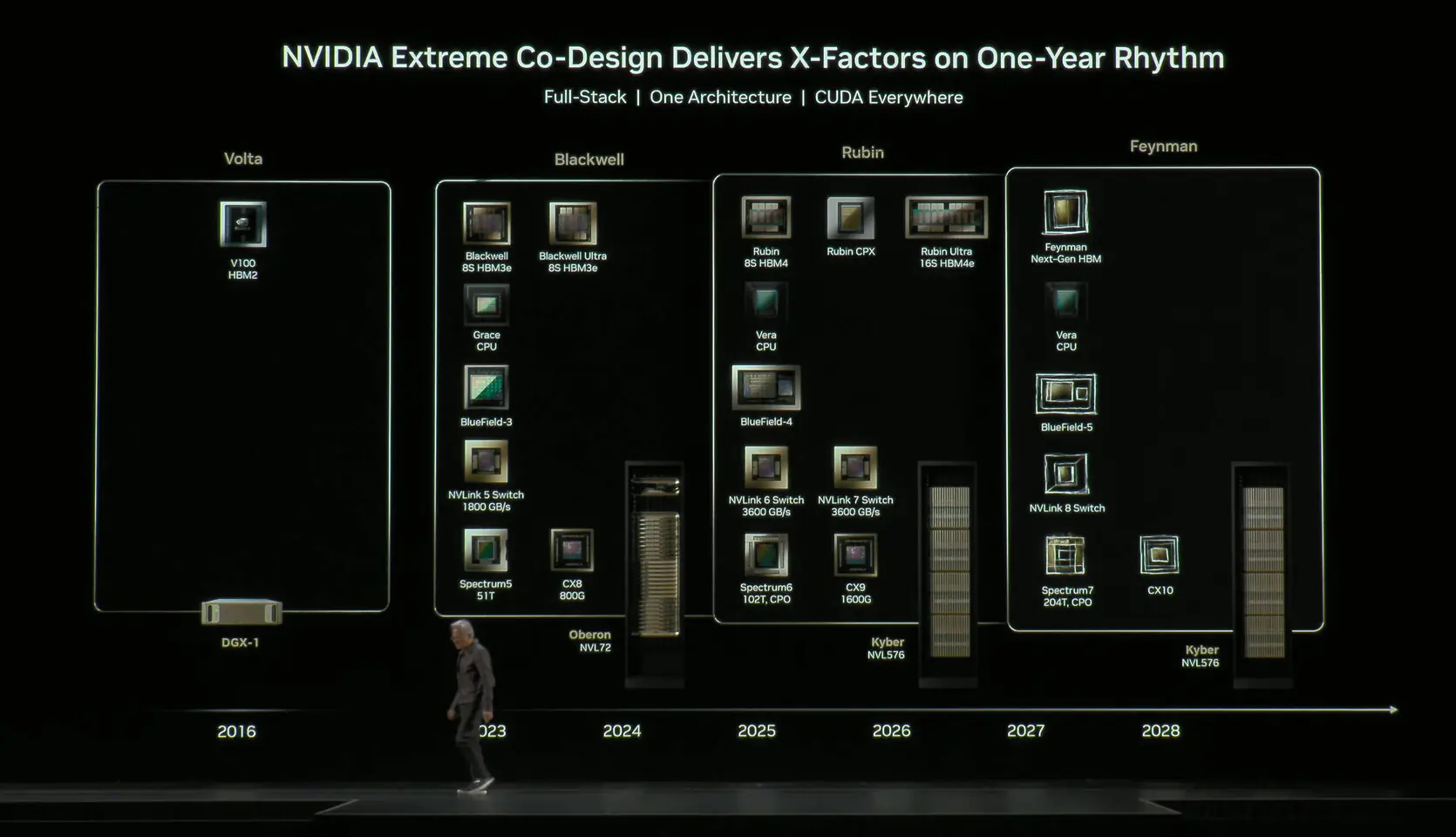
Nvidia claims the Vera Rubin Superchip will offer 100 PetaFLOPS of FP4 performance for AI. The full NVL144 system is projected to deliver up to 3.6 Exaflops of FP4 inference and 1.2 Exaflops of FP8 training, a substantial improvement over previous generations. Nvidia also previewed the Rubin Ultra, a more powerful configuration expected in late 2027, which will scale to four Rubin GPU dies per package with 1TB of HBM4e memory.

Production and Future Outlook
With production scheduled for 2026, the Vera Rubin Superchip is poised to become a cornerstone of future AI infrastructure. Nvidia’s commitment to continuous innovation is evident, with plans already in motion for the next architecture, codenamed ‘Feynman,’ expected around 2027-2028. The introduction of Vera Rubin marks another significant milestone in Nvidia’s pursuit of pushing the boundaries of computational power.
Via NVIDIA