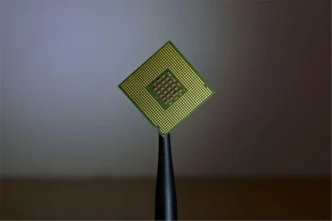

Manufacturers from all over the world are unable to keep up with increasing demands for memory chips, a surge created by the tech giants’ race to develop advanced AI.
Scaling AI operations requires the most powerful processors and memory chips out there, and the surge is having an impact on more than just competing AI pioneers needing hardware to run the planned operations.
Many of the components needed for training AI are similar to those used in consumer electronics. We’re already seeing RAM prices soar – in the future, we can expect other consumer electronics using memory chips to see a price hike.
Key Takeaways
- The AI frenzy is driving the world’s biggest companies to invest in the necessary hardware to fuel the growth and development of new and better AI technology.
- The shortage could affect almost every type of electronic memory, including flash chips used in USB drives and smartphones, as well as HBM required for computer GPUs and AI chips.
- Although experts can’t say for certain when the prices will peak or how long shortages will last, increased prices are expected to affect the consumer market for at least a couple of years, with prices increasing significantly in 2026 compared to the already observed increases this year.
The Rising Need for Memory Chips
A rising demand for chips represents our world’s move towards a digital future where everything is online and AI-powered. Information, entertainment, and services are today commonly accessed online, and the need for memory chips and processors is crucial in almost every aspect of our lives. Much of modern technology rests on many of the same underlying building blocks: memory and processor chips.
With the latest gaming applications, Americans get access to the biggest assortment of online casino games with the least effort. A move from physical locations to online casinos is often more environmentally friendly, but it also increases the dependence on servers and other digital technology.
Other forms of entertainment, like online streaming, rely on much of the same technology. Even seemingly unrelated tools like certain smart technologies for agriculture require much of the same technology.
The shortage driven by AI-development chokes supply for other devices making use of memory chips, especially DRAM (Dynamic Random Access Memory), including smartphones and IoT devices, crucial for the continued technological advancement and digital equity.
At the same time, uncertainty regarding future demand complicates decisions for chipmaker executives and industry leaders.
As the demand goes up, manufacturers wrestle with whether to expand manufacturing to meet demand or remain stable and wait out the craze. Expanding capacity could take years and might lead to an investment that doesn’t pay off if the demand is then already lowered.
Among the electronic devices predicted to see a price hike are not just laptops and smartphones, but also any other technology using processors and memory chips. This could include gaming consoles, storage devices, smart home appliances, and even modern cars.
Price Predictions and Future Outlook
As artificial intelligence and consumer-electronics companies compete for resources, a shortage with price increases is imminent; what’s harder to predict is how long the shortage will last and how high prices will rise.
The South Korean DRAM manufacturer SK Hynix has stated that the shortfall will last through late 2027, while Lu Weibing, president of Xiaomi, says that supply chain pressure will in 2026 be “far greater than this year” and that there will be a significant increase in retail prices for consumer electronics.
Stephen Wu of Carthage Capital investment fund predicts that “consumers and enterprises should expect higher memory prices, longer lead times, and more take-or-pay contracts through at least early 2026.
And consumer electronics could just be the start.
Sanchit Vir Gogia, CEO of technology advisory firm Greyhound Research, is one of several experts who think the shortage could have globally far-reaching consequences:
“The memory shortage has now graduated from a component-level concern to a macroeconomic risk,” he warns. He points out that the supply chain cannot meet the physical requirements of the extreme AI expansion companies and nations are pushing towards.