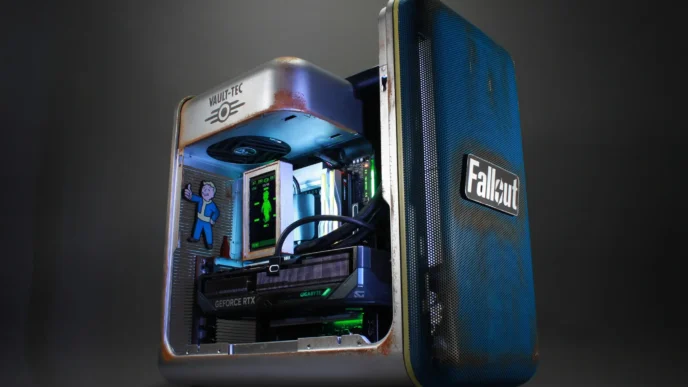
There’s a specific kind of magic in the first time you press the power button on a machine you built with your own hands. Honestly, it’s a bit of a rush. You spend hours researching parts, worrying about static electricity, and carefully seating the processor. When those fans finally spin up and the screen flickers to life, it feels like a genuine achievement. For many of us, this hobby starts in a bedroom or a garage, fueled by a desire for better frame rates or a faster workstation. Maybe it’s the hum of the laptop at midnight while you’re deep in a forum. But at some point, a question starts to form. If you can navigate the complexities of a motherboard and troubleshoot a blue screen at 2 AM, could you actually do this for a living?
The transition from a hobbyist PC builder to a professional in the IT world is a path many have walked, but it’s not always as linear as it seems. Building a computer teaches you the foundations of hardware and the logic of how components talk to each other. However, a career in IT involves much more than just swapping out RAM or applying thermal paste.
And that’s the real hurdle.
It requires a shift in mindset from solving individual problems for yourself to managing systems and infrastructure for an entire organization. I guess you could say it’s about moving from the “me” to the “we.”
The good news is that the core traits of a successful builder are exactly what hiring managers look for in entry-level roles. You’ve already got the curiosity, the patience for troubleshooting, and the technical literacy that others might lack. Honestly, you probably have more grit than someone who just reads the textbooks. The challenge lies in translating those “basement skills” into a professional language that businesses understand. Have you ever wondered whether your mechanical sympathy for hardware can actually scale to meet the demands of a corporate network?
The Foundation of Troubleshooting
In the world of professional IT, troubleshooting is the bread and butter of your daily life. When you’re building a PC, you learn the process of elimination by necessity. If the system doesn’t boot, check the power cables, then the RAM seating, then the BIOS settings.
This systematic approach is the exact same methodology used by systems administrators and help desk technicians. And that’s the point.
When you move into a professional role, the stakes simply get higher. Instead of one computer not posting, it might be a server that keeps an entire department from working. You know, that feeling of a hundred people waiting on you. But the logic remains the same. You start with the simplest variables and work your way up. Professionals who started as builders often have an edge here because they aren’t afraid to look under the hood. They understand the technology’s physical reality, which helps them visualize how data moves through the hardware.
Expanding Your Software Horizon
While building a PC is a hardware-centric activity, the professional IT world is dominated by software and virtualization. To bridge the gap, you’ll need to take that same curiosity you had for graphics cards and apply it to operating systems and networking protocols. Most modern IT environments rely heavily on cloud services and virtual machines.
So, where do you start?
Start by experimenting with different environments at home. If you’ve only ever used one operating system, try installing another on a spare partition. Learn how to use command-line interfaces. Being comfortable in a terminal is often the dividing line between a casual user and a professional. You don’t need to be an expert on day one, but you do need to show that you can operate outside of a standard graphical user interface. This shows potential employers that you’re adaptable and willing to learn the tools of the trade. And honestly, it’s kind of fun once you get the hang of it.
The Importance of Documentation
One of the biggest culture shocks for a hobbyist entering the professional world is the need for documentation. When you build a PC for yourself, you might keep the manuals in a drawer, but you rarely write down exactly what you did to fix a driver conflict. In a professional setting, if it isn’t documented, it didn’t happen. It’s a hard lesson to learn, believe me.
IT professionals work in teams. If you fix a recurring issue on a workstation but don’t record the steps you took, the next technician who encounters the problem will have to start from scratch. But learning to write clear, concise notes about your technical work is a vital skill. It turns your individual knowledge into a resource for the entire company. This habit of documentation also helps you when you need to update your credentials. When you use a free resume maker to highlight your experience, having a record of the specific problems you solved makes it much easier to quantify your value to a recruiter.
Certifications and the Language of IT
While your hands-on experience is invaluable, the professional world often requires some form of validation. Certifications are the industry’s way of ensuring you’ve got a standardized baseline of knowledge. For a PC builder, the most logical starting point is often a foundational certification in hardware and software.
Do these tests really matter as much as real-world experience?
In many ways, yes. These exams cover things you might already know, like hardware components, but they also introduce you to professional standards for security, networking, and operational procedures. Earning a certification proves to an employer that you’ve got the discipline to study and pass a rigorous test. It acts as a bridge, taking your self-taught skills and giving them a formal seal of approval. It also helps you learn the “corporate” names for things you might’ve been doing instinctively for years.
Soft Skills and the Human Element
Perhaps the most overlooked part of the transition is the shift toward customer service. In IT, the “users” are your customers. Whether you’re working at a help desk or managing a data center, you’re ultimately there to help people do their jobs. This requires a high level of empathy and communication.
A PC builder is used to working alone, focusing on the machine. An IT professional must be able to explain technical issues to non-technical people without being condescending. Can you keep your cool when a user is frustrated over something that seems simple to you? You’ve got to be able to listen to a user describe a problem in vague terms and translate that into a technical solution. This “human” side of tech often determines how quickly you move up the career ladder. Technical skills can be taught, but a helpful and professional attitude is a choice you make every day. You know, just being a decent person goes a long way.
Making the Leap
Turning your passion into a career is a marathon, not a sprint. It starts with acknowledging that while you know a lot, there’s still much to learn about how businesses use technology. Keep building, keep breaking things, and keep learning. The transition from the workbench to the office is about more than just a paycheck. It’s about taking something you love and finding a way to make it useful for others.
If you can maintain that sense of wonder you felt the first time you built a computer, you’ll find that a career in IT is incredibly rewarding. You get to solve puzzles every day and stay at the forefront of the tools that shape our world. The journey from hobbyist to professional is challenging, but for those who truly love the craft, there’s no better way to spend a workday.