


Graphics card prices have taken another sharp turn upward. TechSpot’s latest tracking across 10 countries shows a 15% average increase from July to August 2026, with Nvidia’s GeForce lineup rising faster than AMD’s Radeon cards. The RTX 5090 is the most extreme example, reaching 136% above its launch MSRP globally.
Key takeaways
- GPU prices rose 15% on average in one month.
- GeForce cards increased 19%, compared with 11% for Radeon models.
- The RTX 5090 now costs about $4,900 in the US, or 145% above its $1,999 MSRP.
- The RTX 5060 Ti 16GB is 53% above MSRP globally and 70% higher in the US.
- The overall market is 28% above launch MSRP, excluding the RTX 5090.
Nvidia cards are taking the biggest hit
Nvidia’s RTX 50-series experienced broad price increases across entry-level, midrange, and high-end models. The RTX 5060 is now around $450 in the US, 51% above its $299 MSRP, while the RTX 5070 has reached approximately $800, or 46% above launch pricing.
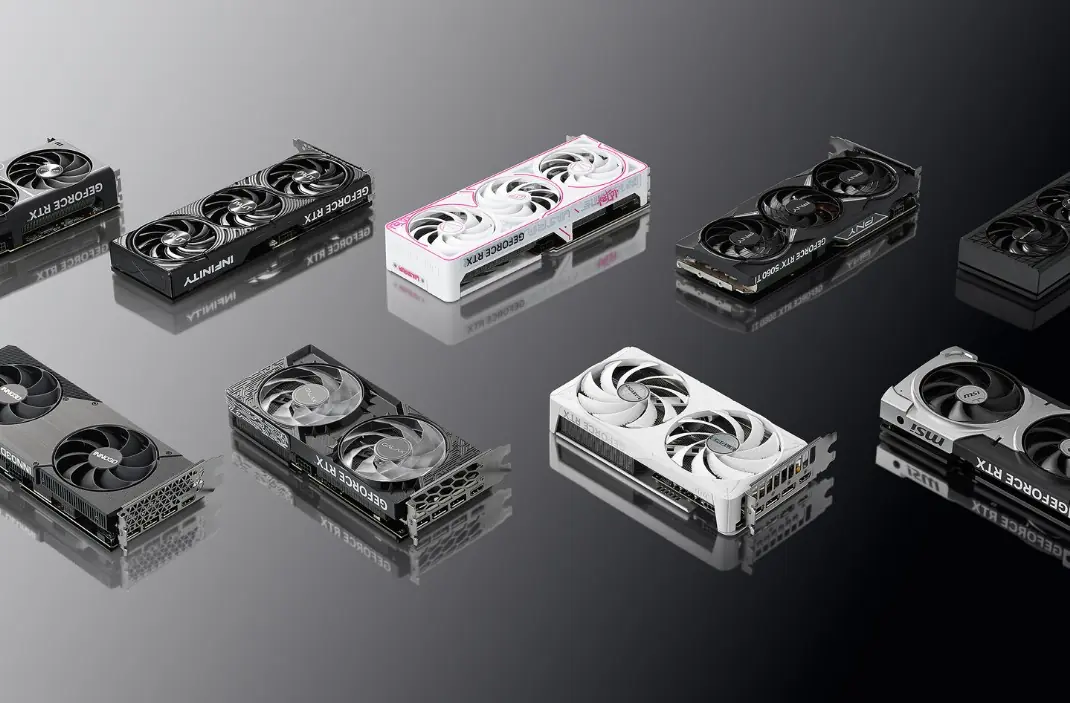
The RTX 5080 is selling for about $1,550 in the US, 55% above MSRP. The RTX 5070 Ti is also heavily inflated at $1,050, representing a 40% US premium and a 44% global premium.
The RTX 5060 Ti shows how strongly memory capacity is affecting pricing. Its 16GB model costs about $730 in the US, compared with roughly $500 for the 8GB version. Globally, the 16GB card is 53% above MSRP, while the 8GB model is 14% above MSRP.
The RTX 5090 has moved into workstation territory
Nvidia’s flagship RTX 5090 has risen another 20% in a month. The lowest in-stock US price tracked was approximately $4,900, compared with its $1,999 launch MSRP. Across the surveyed regions, the card averages 136% above MSRP.
Its 32GB of memory and strong AI performance appear to be increasing demand beyond traditional gaming. At this price, the RTX 5090 is difficult to view as a conventional gaming upgrade and is increasingly priced like specialized workstation hardware.
Radeon remains the better value for now
AMD’s Radeon lineup has not escaped the increase, but its 11% monthly rise is considerably smaller than GeForce’s 19%. The RX 9060 XT 16GB is 28% above MSRP globally, while the RX 9070 XT is 21% higher.
The RX 9070 is one of the most stable options tracked, reaching about $630 in the US and just 13% above MSRP globally. With 16GB of VRAM, it currently offers stronger value than several similarly priced GeForce models. However, continued memory-cost pressure could push Radeon prices higher later in 2026.
AI demand is pressuring consumer hardware
The reported driver is competition for memory, particularly GDDR7, which is being directed toward AI-focused hardware. Nvidia’s newer consumer cards use GDDR7, while AMD’s current Radeon models generally use GDDR6, helping explain the difference in price movement.
TechSpot’s figures represent the lowest verified in-stock price in each region rather than an average premium model price. Regional availability varies significantly, so PC builders should compare local listings and consider Radeon or Intel Arc alternatives before buying. For now, waiting remains sensible unless a system upgrade is essential.