The gaming hardware industry has always thrived on speed — faster processors, more cores, higher clock rates, more powerful GPUs. But the latest evolution isn’t measured in megahertz or teraflops. It’s measured in trust.
Blockchain technology, once confined to digital finance, is now transforming how gaming components are produced, verified, and distributed. From CPU supply chains to GPU resale markets, blockchain is quietly rewriting the rules that define ownership, authenticity, and transparency.
What started as a financial experiment has become the backbone of a new generation of technology — one that treats every chip, every transaction, and every gamer as part of a decentralised, verifiable ecosystem.
When Trust Becomes Code
Buying gaming hardware used to rely on assumption. You trusted that the graphics card you ordered was genuine, that your CPU was under warranty, and that your reseller was legitimate. But the rise of counterfeits, grey-market imports, and manipulated serial numbers has eroded that confidence. Blockchain changes this dynamic by replacing promises with proof.
Manufacturers can now embed blockchain identifiers directly into components, creating digital fingerprints that track every unit from fabrication to installation. Every GPU, motherboard, or memory module can be verified instantly through a public ledger, ensuring authenticity without relying on third parties.
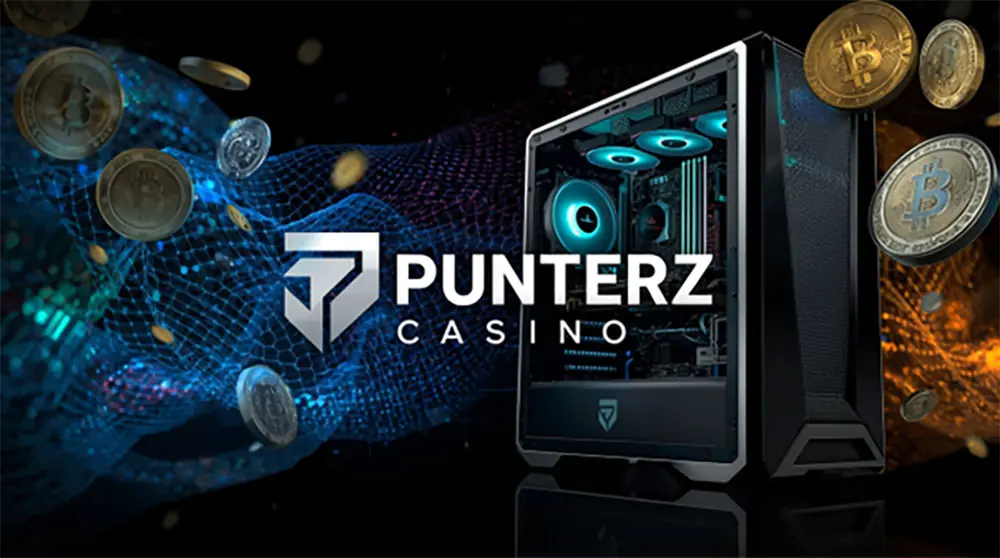
This principle mirrors the decentralised fairness already seen in online entertainment platforms like Punterz Casino, where transparency and verification are coded directly into the system. Trust isn’t claimed — it’s built into the logic itself.
Cryptocurrency as a New Checkout for Gamers
For years, the purchase of gaming components has been constrained by traditional banking systems: transaction delays, cross-border fees, and regional pricing disparities. Cryptocurrency is dismantling these barriers.
With crypto wallets, gamers can pre-order GPUs, processors, or accessories from global vendors almost instantly. Payments process in seconds, without conversion costs or financial middlemen. Manufacturers and retailers benefit too, as transaction efficiency reduces overhead and opens new international markets.
This decentralised payment model reflects what’s already happening in iGaming ecosystems such as Punterz Casino, where blockchain enables frictionless transactions across currencies and borders. The result in both industries is the same — more freedom, more speed, and fewer restrictions.
Digital Passports and Tokenised Components
Imagine a future where every GPU or processor comes with a digital ownership certificate — an immutable blockchain record that verifies authenticity, warranty status, and even usage history. That’s not science fiction anymore; it’s becoming a practical implementation in hardware production.
These “hardware NFTs” eliminate counterfeiting and make warranty management seamless. A buyer can confirm a product’s origin and legitimacy before purchase, while a manufacturer can track quality control data long after production.
This system not only protects consumers but also supports sustainability by enabling verified recycling and resale. It’s the same philosophy of transparency that powers blockchain-driven gaming environments like Punterz Casino — where fairness and traceability replace opacity and guesswork.
Smart Contracts: Automating Service and Support
Beyond authenticity, blockchain’s next major impact lies in automation. Smart contracts — self-executing programs stored on the blockchain — can streamline everything from distribution to customer support.
Imagine a motherboard manufacturer issuing a warranty as a smart contract: if the component fails within a defined period, the contract automatically verifies the claim and triggers a replacement shipment. No forms, no delays, no intermediaries.
This same mechanism already enhances trust in online gaming, where platforms like Punterz Casino use smart contracts to automate payouts, bonuses, and promotions. In both cases, automation removes human error and bias, leaving only fairness enforced by code.
Transparent Supply Chains and Fairer Markets
The global shortage of semiconductors in recent years revealed how fragile the hardware supply chain can be. Production delays, shipping bottlenecks, and inflated pricing shook the entire tech ecosystem. Blockchain offers a fix through transparent logistics.
By recording every transaction and shipment in a decentralised ledger, all stakeholders — manufacturers, distributors, and consumers — gain access to the same verified data. This eliminates hidden markups, prevents counterfeits from entering the chain, and ensures accountability at every stage.
Transparency, once a marketing slogan, becomes a structural feature. It’s the same logic that underpins blockchain casinos and fintech platforms, where every transaction is visible, traceable, and impossible to manipulate.
Loyalty Reimagined: Tokens Instead of Points
In the hardware market, loyalty programs have long been uninspired — static reward points, limited-time discounts, or predictable giveaways. Blockchain allows something far more dynamic.
Instead of generic loyalty points, users could earn tradeable digital tokens for purchases, product reviews, or technical contributions such as benchmarking results. These tokens could be exchanged for accessories, upgrades, or even sold within an open marketplace.
Such tokenised ecosystems echo the community-based loyalty structure of Punterz Casino, where engagement is rewarded transparently, and participation carries tangible value. The result is a new kind of relationship between consumers and brands — one built on mutual investment rather than marketing.
The Merging of Technology, Finance, and Gaming
The once-separate worlds of hardware and blockchain are now merging. The same GPUs designed for high-end gaming also drive blockchain computation and AI modelling. The technology stack powering decentralised networks has become inseparable from the devices gamers use every day.
Manufacturers are already designing chips optimised for blockchain validation and cryptographic workloads. At the same time, gamers are becoming investors — using their hardware not only for play, but also for participation in decentralised systems.
This convergence shows how deeply blockchain’s logic is shaping the future of interactive technology. The next frontier of gaming hardware won’t be measured just by performance benchmarks, but by how effectively it integrates into a transparent, user-driven digital economy.
The Future: Hardware with a Human Code
Blockchain’s integration into the gaming hardware ecosystem represents more than a technological shift — it’s a philosophical one. The industry is evolving from selling performance to selling trust.
Manufacturers will build transparency into every chipset. Retailers will operate within open supply chains. Users will hold verified ownership of their machines — and their data.
It’s the same trajectory that defines the rise of decentralised entertainment platforms like Punterz Casino: systems that replace opaque operations with visible fairness, turning technology into a medium of integrity.
The future of gaming hardware won’t just be faster. It will be smarter, more transparent, and fundamentally human — powered not only by silicon, but by the code of trust.