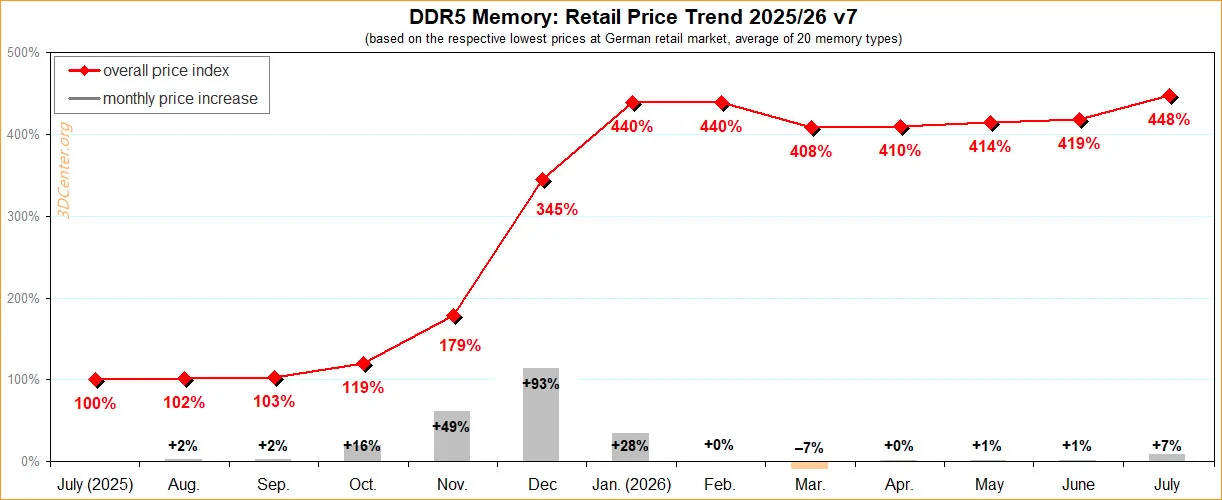
DDR5 memory prices have experienced a significant 7% increase throughout July 2026, pushing costs to unprecedented levels. This upward trajectory continues a year-long trend that has seen prices quadruple since July 2025. Driven by intense demand in the AI and data center sectors, the market shows little sign of immediate cooling.
Key takeaways
- DDR5 memory prices rose by 7% in July 2026 alone.
- Current costs are approximately 448% higher than they were in July 2025.
- Industry experts warn that supply chain instability could persist for another decade.
- High demand for AI and NAND flash memory is contributing to the broader hardware price inflation.
A year of relentless price hikes
The memory market has been defined by volatility and consistent growth over the past twelve months. Following a period of stagnation and minor price dips earlier in the year, July signaled a return to aggressive inflation. This latest surge cements DDR5 as a premium component, with the average cost now sitting at over four times the price recorded just one year ago. For consumers, this represents a significant barrier to entry, effectively making high-performance memory kits a luxury item for many PC builders.
Long-term outlook and supply chain challenges
The outlook for the near future remains grim, according to industry leaders. ADATA Chairman Chen Li-bai has suggested that the DRAM supply chain may require up to a decade to reach a state of true stabilization. Much of this pressure is attributed to the insatiable demand for computing power, NAND flash, and DRAM from the AI and server industries. As these sectors continue to prioritize massive infrastructure investments, the consumer market is often left to absorb the resulting supply shortages and price premiums.
Impact on the PC enthusiast community
PC DIY enthusiasts are feeling the brunt of these market shifts, facing not only higher costs for memory but also increased prices for GPUs and other essential hardware. The current environment has led many to reconsider their upgrade paths, with some opting to maintain older hardware for longer durations or even revisiting legacy computing platforms. As the industry braces for what many fear will be a long-term shift in pricing norms, the community remains skeptical about whether market corrections will provide relief before 2030.
Via 3DCenter