


The storage math stopped working somewhere around 2022. A single major release now lands between 80 and 150 gigabytes before the first patch arrives, and a 1TB drive that once held a comfortable rotation of six or seven titles now holds three and a page file. Most people notice this only when the capacity bar in Windows turns red. By then the drive has usually been struggling for weeks, quietly, in ways that surface as longer load screens rather than as error messages.
Why the Last Ten Percent Behaves Differently
A solid state drive does not overwrite data in place. It writes into empty blocks and marks the old ones for cleanup later, which means it needs a standing supply of empty blocks to write into at any given moment. When that supply runs thin, the controller has to pause and consolidate scattered valid data before it can accept anything new. Most consumer drives also run a fast write cache carved out of the same flash, and the size of that cache shrinks as the drive fills. Sequential writes that hold 6,000 MB/s on a fresh drive can collapse by an order of magnitude on one with 20GB left.
Free space, then, is not storage you have failed to use. It is working room. The distinction becomes obvious at the moment a PC games download finishes and the installer has to unpack forty or fifty gigabytes of compressed data in a single sustained burst, while the drive is simultaneously trying to reclaim blocks it never got around to clearing. That is the worst possible moment to be running on fumes.
Delete in Order of Regret, Not Size
The instinct is to sort by size and remove whatever sits on top of the list. That works, and it also removes the things you are most likely to want back within a fortnight. A better first pass targets data that regenerates itself: shader caches, crash dumps, old Windows update rollbacks, and the redundant language packs that several launchers install by default. Shader caches alone can run to several gigabytes per title and rebuild automatically on the next launch, at the cost of an hour of stutter. Windows contributes its own share. The hibernation file scales with installed memory, so a machine with 32GB of RAM can be holding roughly that much in a single hidden file it never uses if the system only ever sleeps or shuts down properly.
After those come the installers. Launchers routinely keep a downloaded archive after unpacking it, which means some titles quietly occupy their footprint twice. It is the same accumulation habit that leaves a phone stuffed with fun mobile games nobody has opened since spring, except that here each duplicate costs tens of gigabytes rather than a few hundred megabytes. Clear the download cache before touching anything you would have to fetch again over a slow connection. Doing any of this blind is the common mistake. A directory size utility takes two minutes to scan a drive and routinely turns up a forgotten capture folder or a modding workspace sitting on more space than the three titles somebody was about to remove.
Moving Beats Reinstalling
If a second drive already exists in the machine, most launchers can relocate an installed title without a full reacquisition, preserving saves and configuration files in the process. A mechanical drive is a perfectly reasonable destination for anything turn based or a few years old, where the load penalty is real but modest outside of open world streaming. For current releases the cleaner answer is a second NVMe drive, and reviewers who have tested in practice tend to find that real world figures sit well below the headline numbers on the box.
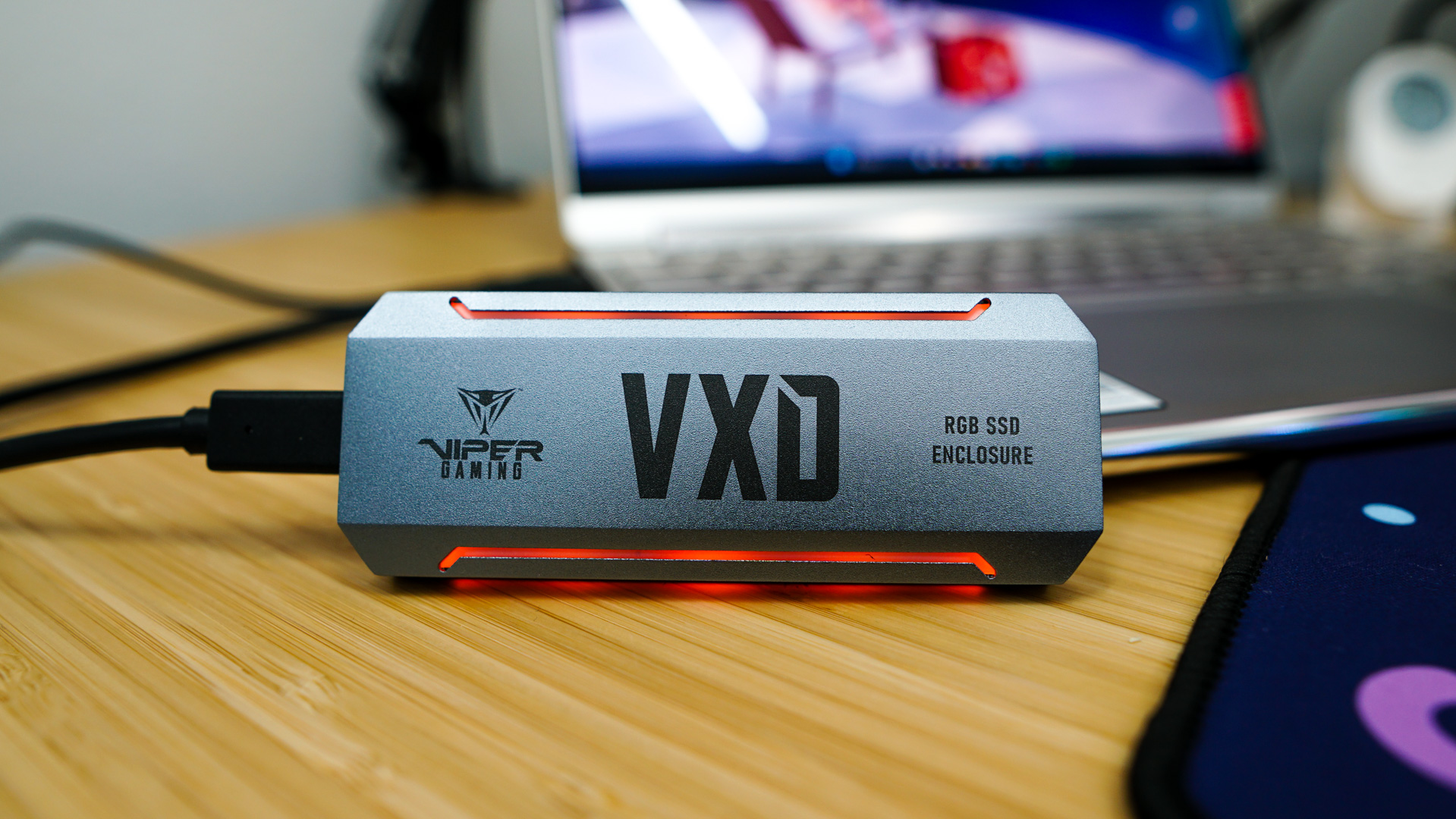
External storage is the third route and the least understood one. A USB 3.2 Gen 2 enclosure tops out near 1,000 MB/s, far below internal NVMe throughput but comfortably above any spinning disk, and for a library you rotate through seasonally that ceiling rarely decides anything. Bus stability matters more. A title running off a connector that drops out mid session can corrupt a save in a way that no amount of sequential speed compensates for.
There is one genuine exception worth knowing about. Newer releases that stream assets continuously and decompress them on the graphics card assume an internal drive with low latency, and those are the titles most likely to show visible texture pop when run from an enclosure.
What the Drive Already Knows About Itself
Before spending money, read the drive’s own telemetry. Every modern NVMe device keeps a health log reporting a percentage used figure that climbs as the flash consumes its rated write cycles, alongside counters for total data written, power on hours and temperature. NVM Express, the industry body that maintains the specification, documents these fields and notes that endurance is quoted on datasheets either as terabytes written or as drive writes per day. A drive sitting at nine percent used after three years is not your bottleneck.
Wear is also not the same thing as failure, and failure is rarer than forum threads imply. Backblaze publishes quarterly reliability data drawn from its own storage fleet, and its analysis of 341,263 hard drives for the first quarter of 2026 put the annualised failure rate at 1.24 percent for the period, against a lifetime figure of 1.39 percent. Those are mechanical drives rather than flash, but the shape of the finding travels: storage in a well cooled desktop generally becomes too small long before it becomes untrustworthy. Capacity, not mortality, is what forces the decision.
The Headroom Worth Defending
Whatever gets deleted, relocated or replaced, an empty drive was never the objective. The objective is a drive that does not arrive back at this point in nine months.
Fifteen to twenty percent free is a sensible working floor, enough to keep the write cache at a usable size and give the controller somewhere to do its housekeeping. Set the launcher to install to the secondary drive by default, keep one title’s worth of slack on the boot drive at all times, and the red capacity bar stops being an annual event.