


NVIDIA has officially disclosed technical details for its upcoming Vera CPU, designed specifically to address the unique demands of agentic AI. Moving beyond traditional cloud-focused designs, the Vera CPU features the custom Olympus core, prioritizing single-threaded responsiveness and high memory bandwidth to accelerate complex AI workflows and data-heavy infrastructure.
Key takeaways
- Custom Olympus core architecture optimized for agentic AI workloads.
- Monolithic design to reduce latency and eliminate the “chiplet tax.”
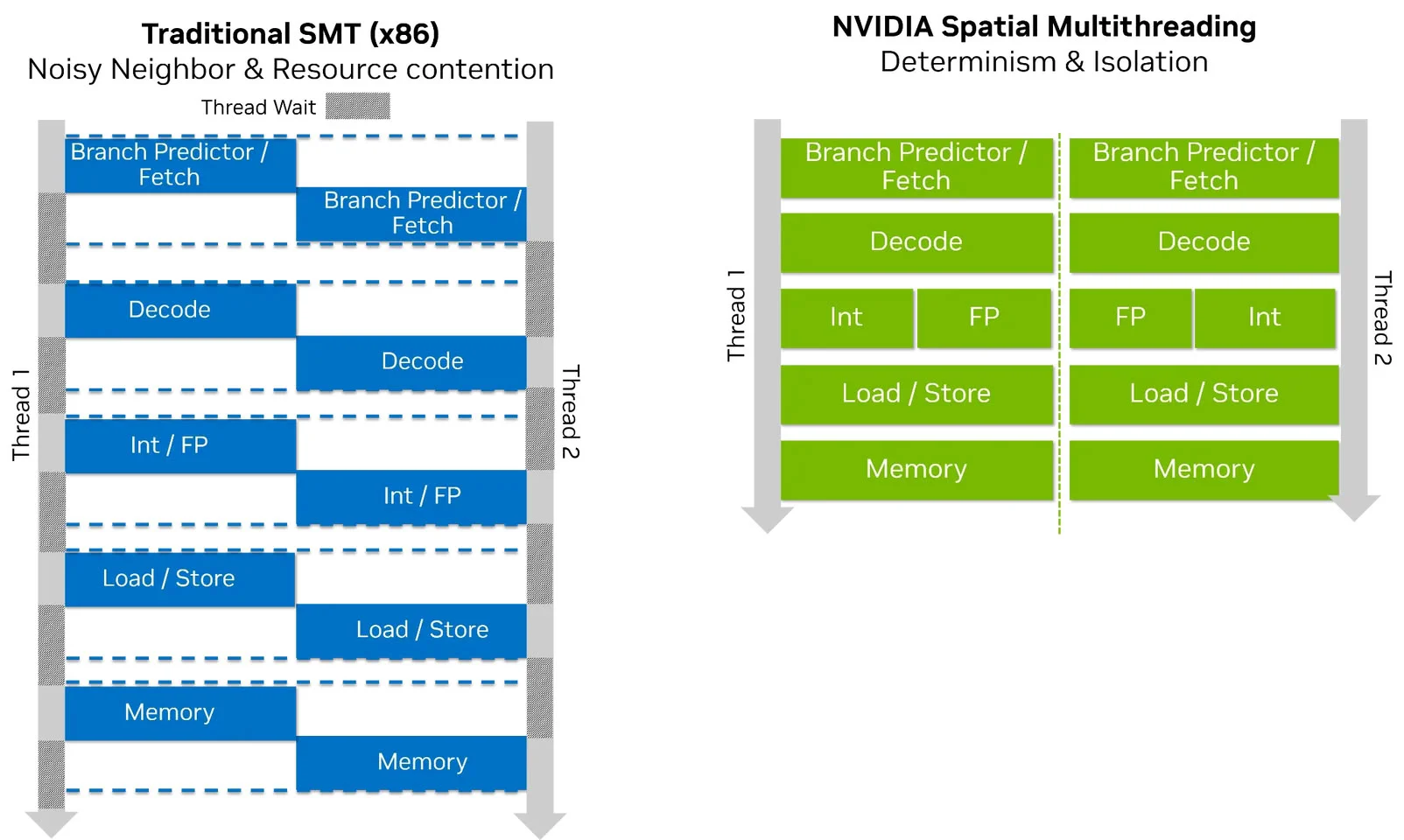
- Support for Spatial Multithreading and high-bandwidth LPDDR5X memory.
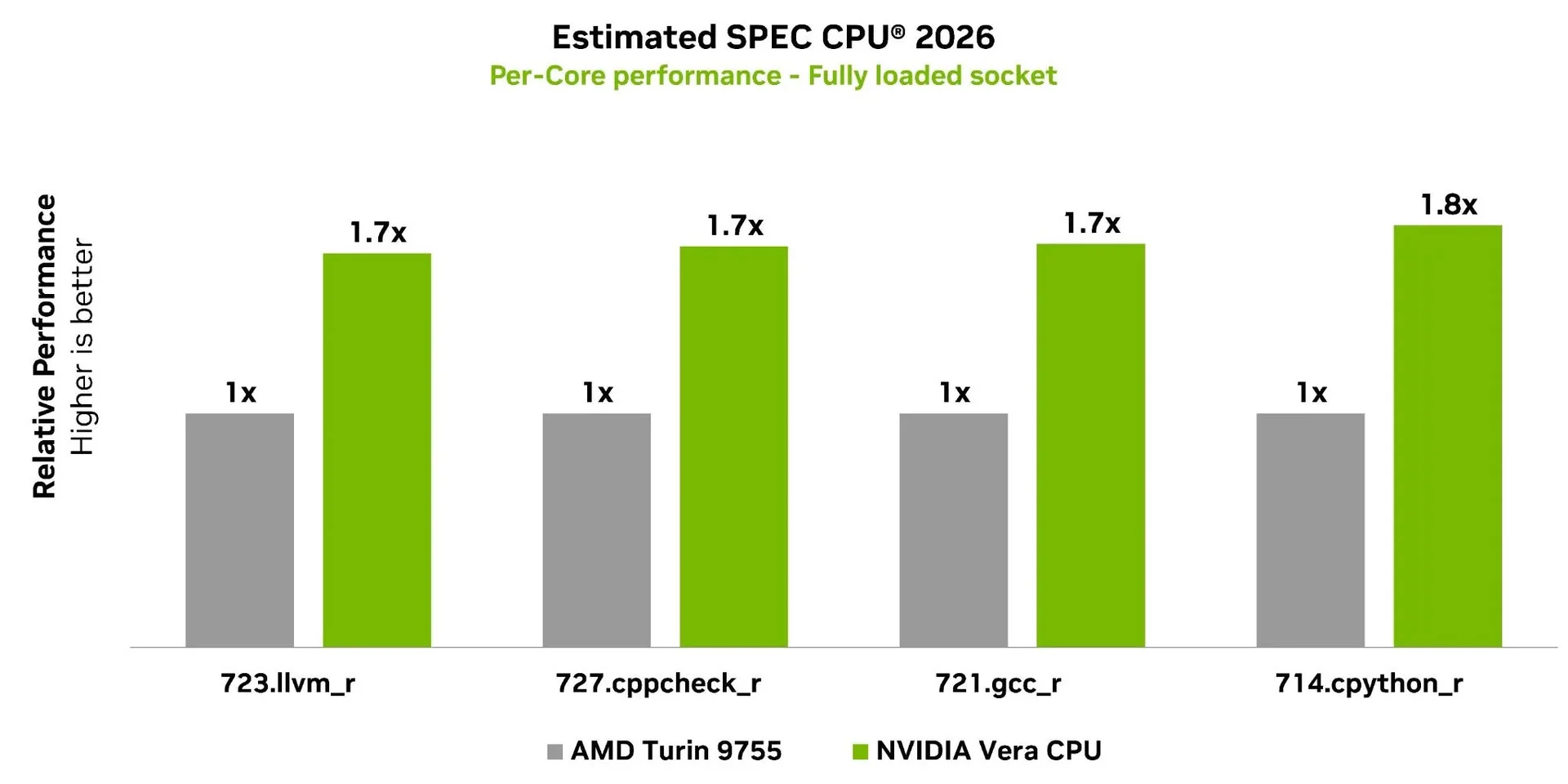
- Performance focused on sustained per-thread progress under full socket load.
Redefining the data center CPU
Unlike traditional server CPUs that prioritize core density and throughput for uniform cloud workloads, the Vera CPU is built for the era of agentic AI. These systems require CPUs to act as the “babysitter” for AI agents, handling frequent transitions between code execution, tool orchestration, and database interaction. NVIDIA argues that this shift necessitates a design focused on per-core responsiveness and latency, rather than simply maximizing the number of cores available.
The Olympus core architecture
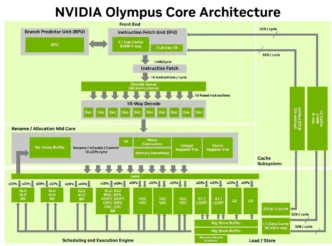
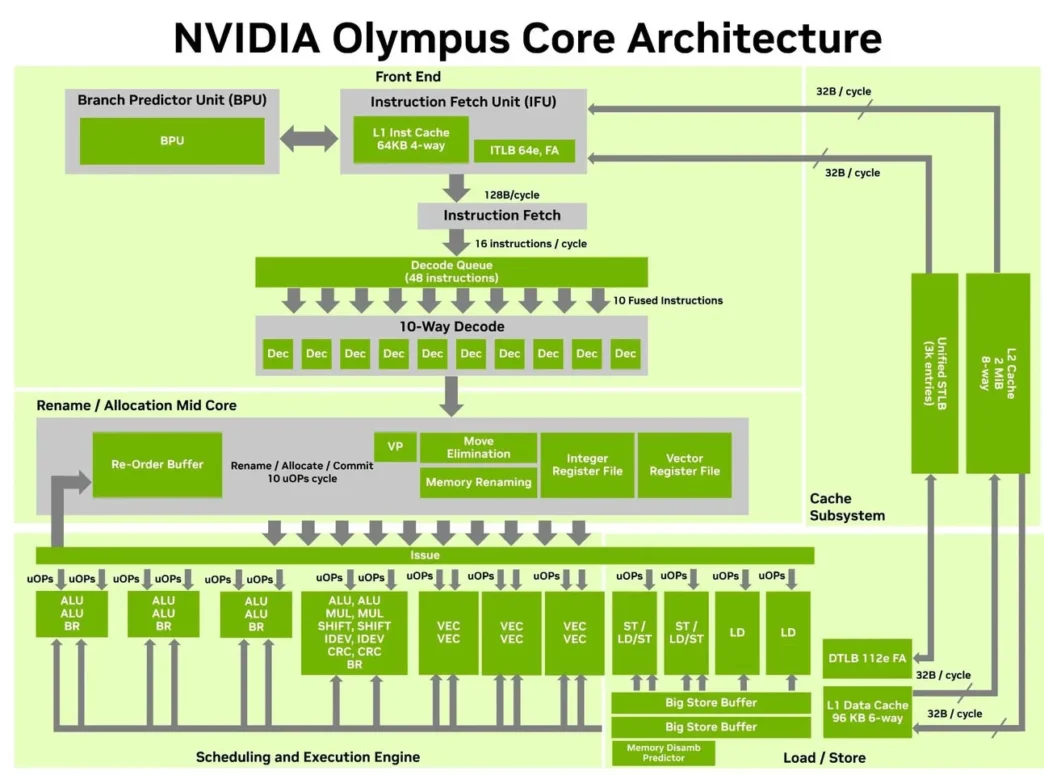
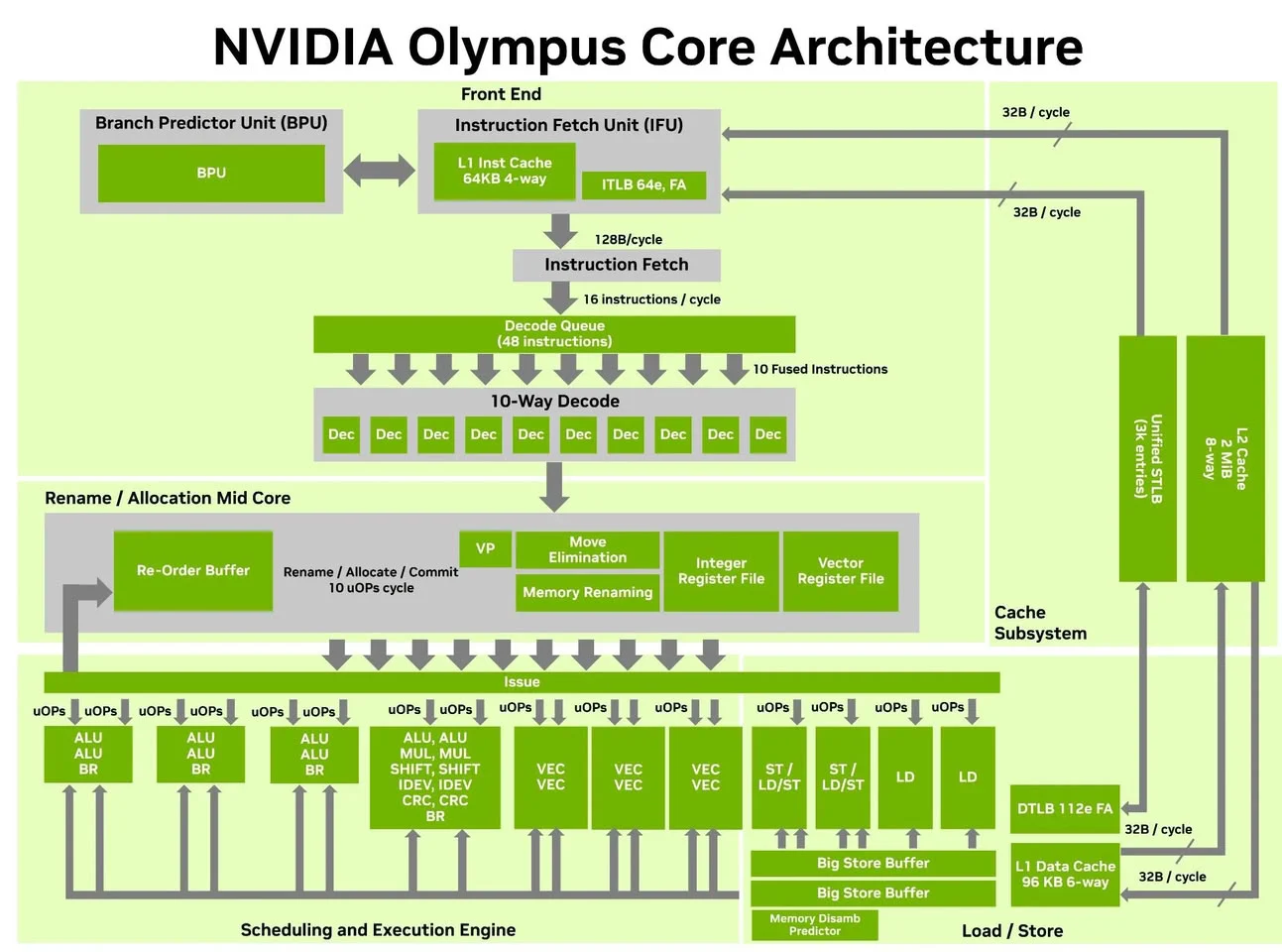
At the heart of the Vera CPU lies the Olympus core, a custom-designed engine built for high instructions-per-cycle (IPC) throughput. The core features a massive 10-wide instruction decoder and an advanced neural branch predictor, which helps the system maintain efficiency through irregular, branch-heavy software paths. To further maximize productivity, the mid-core utilizes memory renaming and value prediction, allowing the CPU to resolve dependencies and execute instructions even when data is still being fetched from memory.
Memory and fabric innovations
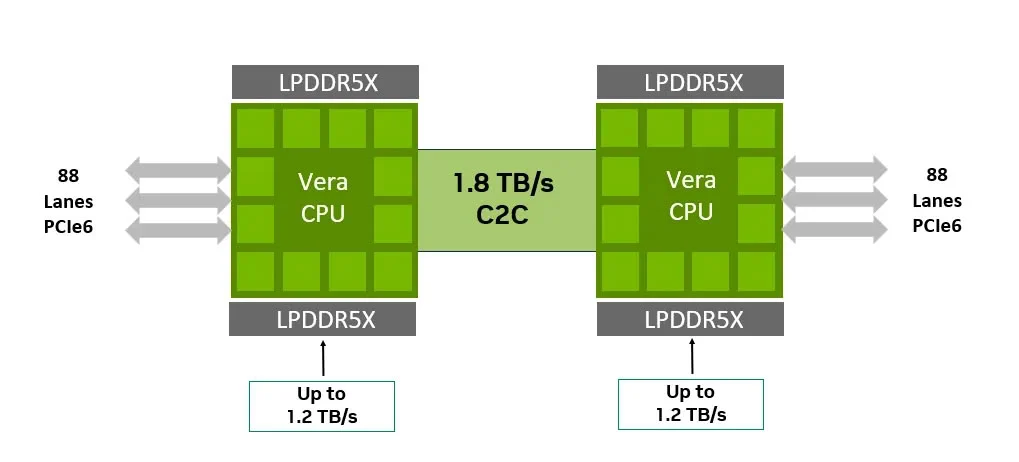
NVIDIA has moved away from standard server DIMMs, opting for SOCAMM2 LPDDR5X memory modules. This subsystem delivers up to 1.2 TB/s of aggregate bandwidth, providing the necessary throughput to keep the Olympus cores supplied with data during intensive workloads. By utilizing a monolithic die design rather than a chiplet-based approach, NVIDIA avoids the latency penalties associated with crossing die boundaries, ensuring more predictable performance across the entire processor.
Market positioning and competitive landscape
With Vera, NVIDIA is positioning itself as a direct challenger to established server CPU giants like Intel and AMD. By integrating the CPU into a cohesive AI-factory ecosystem alongside its Rubin GPUs, NVIDIA aims to provide a vertically integrated solution for AI labs. While independent benchmarking will ultimately determine its success against existing x86 architectures, the Vera CPU marks a significant strategic pivot toward specialized silicon tailored for the next generation of autonomous AI agents.
Via NVIDIA