
The next generation of computer memory, DDR6, is on the horizon, with major manufacturers like Samsung, Micron, and SK Hynix targeting a 2027 launch. This new standard promises significantly higher speeds and improved efficiency, aiming to meet the escalating demands of AI, high-performance computing, and data-intensive workloads. Early specifications indicate data rates starting at 8,800 MT/s and potentially reaching up to 17,600 MT/s, nearly doubling the capabilities of current DDR5 memory.
Key Takeaways
- Launch Target: DDR6 is slated for a 2027 release.
- Speed Improvements: Expect initial speeds of 8,800 MT/s, scaling up to 17,600 MT/s.
- Architectural Shift: A new 4×24-bit sub-channel design replaces DDR5’s 2×32-bit structure for better signal integrity.
- New Form Factor: CAMM2 modules are expected to replace traditional DIMMs to accommodate higher speeds and densities.
- Target Applications: AI, HPC, and data centers will be primary beneficiaries.
Revolutionizing Memory Performance
DDR6 is engineered to overcome the limitations of DDR5, which is approaching its practical speed ceilings. The new 4×24-bit sub-channel architecture is a key innovation, distributing data across narrower channels to enhance signal integrity and reduce issues like reflection and crosstalk. This design is crucial for achieving the projected data rates, which are expected to offer double or even triple the throughput of DDR5.

The Rise of CAMM2
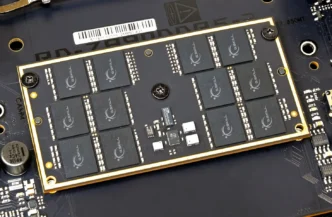
To support these advancements, the industry is embracing the CAMM2 (Compression Attached Memory Module) form factor. This new design, pioneered in some Dell systems, replaces traditional socketed DIMMs with a lower-profile, high-density connector. CAMM2 offers improved signal routing and lower impedance, allowing for cleaner signal transmission and potentially higher memory capacities. This shift is also expected to free up valuable board space, enabling more flexible system designs.
Industry Collaboration and Timelines
Leading memory manufacturers Samsung, Micron, and SK Hynix are actively collaborating with CPU giants Intel and AMD, as well as GPU leader NVIDIA, to ensure seamless integration. The initial DDR6 specification draft was completed in late 2024, with the LPDDR6 draft following in Q2 2025. Platform testing and validation are scheduled for 2026, paving the way for server deployments in 2027. Consumer availability is expected to follow as production ramps up.
Impact on AI and HPC
The significant bandwidth increase offered by DDR6 is particularly vital for demanding applications such as large-scale AI model training, real-time inference servers, and high-performance computing (HPC) clusters. These workloads require rapid data access, and DDR6 is poised to deliver the necessary performance gains, while also offering improved power efficiency per bit transferred.
Pricing and Adoption
As with previous memory technology transitions, early DDR6 modules are expected to come with a premium price tag, similar to the initial cost of DDR5. This suggests that initial adoption will likely be concentrated in hyperscale data centers and specialized AI research environments where the performance benefits justify the higher cost. As manufacturing scales and the technology matures, pricing is anticipated to become more accessible to the broader consumer market.
Via CTEE