
Microsoft’s recent practices regarding data collection for AI training have sparked significant controversy. The company has enabled default settings that allow the scraping of user data from popular applications like Word and Excel, making it difficult for users to opt out. This has raised concerns about privacy and the ethical implications of using personal data for AI development.
Key Takeaways
- Microsoft has enabled data scraping from Word and Excel by default for AI training.
- Opting out of data collection is a complex, multi-step process.
- The Recall feature, which records user activity, has faced criticism for security vulnerabilities.
- Automatic OneDrive backups are now enabled by default during Windows installations.
- Users are increasingly concerned about their data privacy and the implications of AI training.
Data Collection Practices
Microsoft’s data collection practices have evolved, with the company now using user-generated content from its Office suite to train AI models. This practice is enabled by default, meaning users must actively choose to opt out. The process involves navigating through several settings, which can be cumbersome and confusing.
- Data Scraping: Microsoft collects data from Word and Excel documents to enhance its AI capabilities, providing features like design recommendations and editing suggestions.
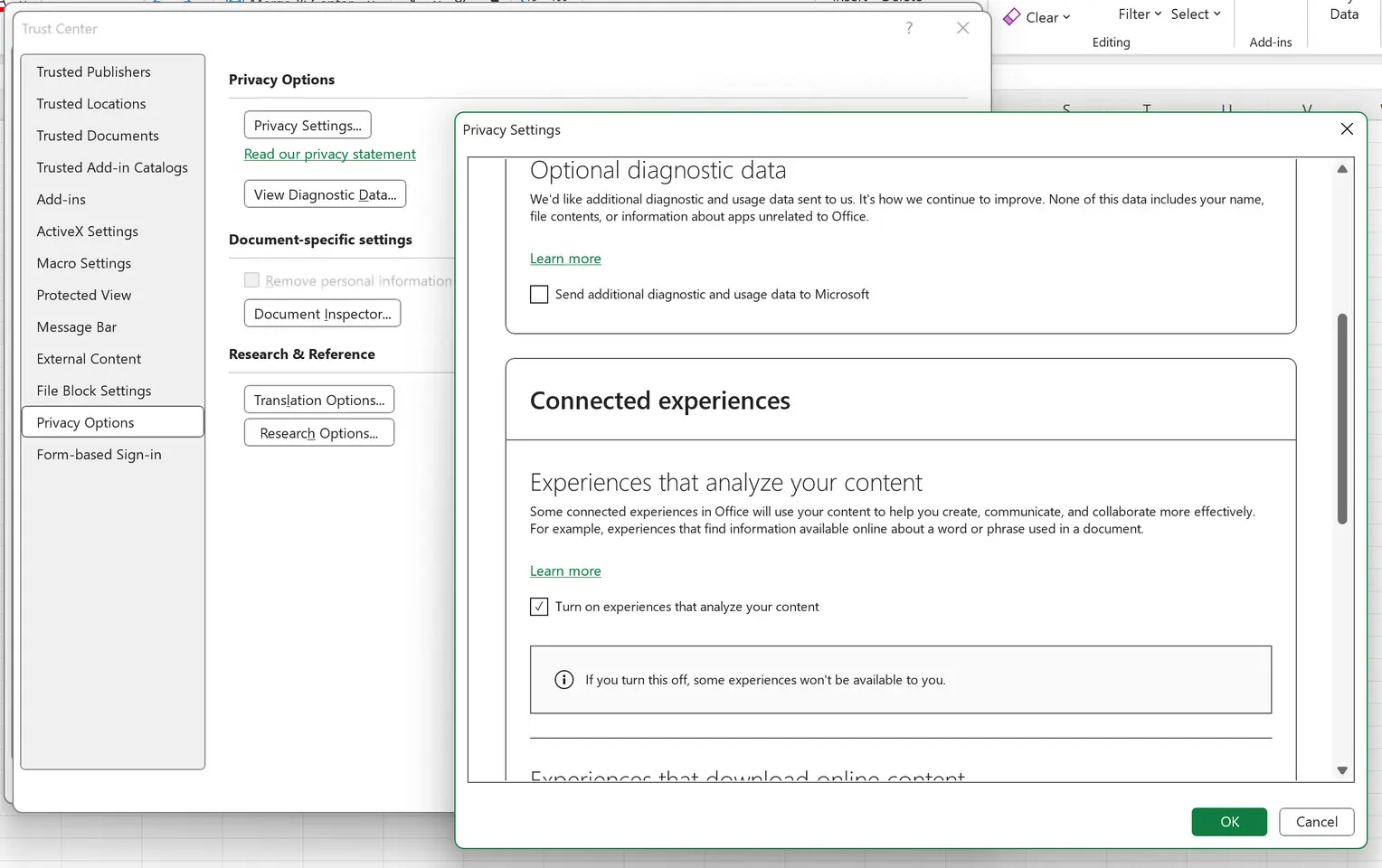
- Opt-Out Complexity: Users must go through multiple steps in the settings menu to disable data collection, which includes unchecking a box in the Privacy Options.
- Legal Implications: A clause in Microsoft’s Services Agreement grants the company a broad license to use user content, raising concerns about ownership and privacy.
How to Opt Out
Data collection is enabled by default, ff you would like to opt out you’ll need to go to: File > Options > Trust Center > Trust Center Settings > Privacy Options > Privacy Settings > Optional Connected Experiences, and unchecking the box.
The Recall Feature Controversy
The Recall feature, introduced as part of Microsoft’s Copilot initiative, has also come under fire. This feature captures screenshots and user activity, aiming to create a searchable archive of user actions. However, security experts have raised alarms about the potential for sensitive information to be exposed.
- Security Risks: The data collected by Recall is stored in an unencrypted format, making it vulnerable to unauthorized access.
- User Trust: Critics argue that the feature undermines user trust in Microsoft’s commitment to privacy and security.
- Recent Changes: In response to backlash, Microsoft has made Recall an opt-in feature rather than a default setting, requiring users to actively choose to enable it.
Automatic OneDrive Backups
In a move that has frustrated many users, Microsoft has made OneDrive backups automatic during clean installations of Windows. This change means that users are greeted with unexpected desktop icons and files, which can be intrusive for those who prefer a clean setup.
- User Experience: Many users have expressed dissatisfaction with the lack of choice regarding OneDrive backups, feeling that Microsoft is pushing them into its ecosystem.
- Comparison with Competitors: Unlike Microsoft, other tech companies like Apple and Google offer opt-in backup options, allowing users to decide whether they want to use cloud services.
Conclusion
As Microsoft continues to integrate AI into its products, the challenges surrounding data collection and user privacy are becoming increasingly prominent. Users are urged to be vigilant about their data and to take the necessary steps to protect their privacy. The ongoing debate highlights the need for clearer policies and more user-friendly options regarding data usage in AI training.
Via Tom’s Hardware