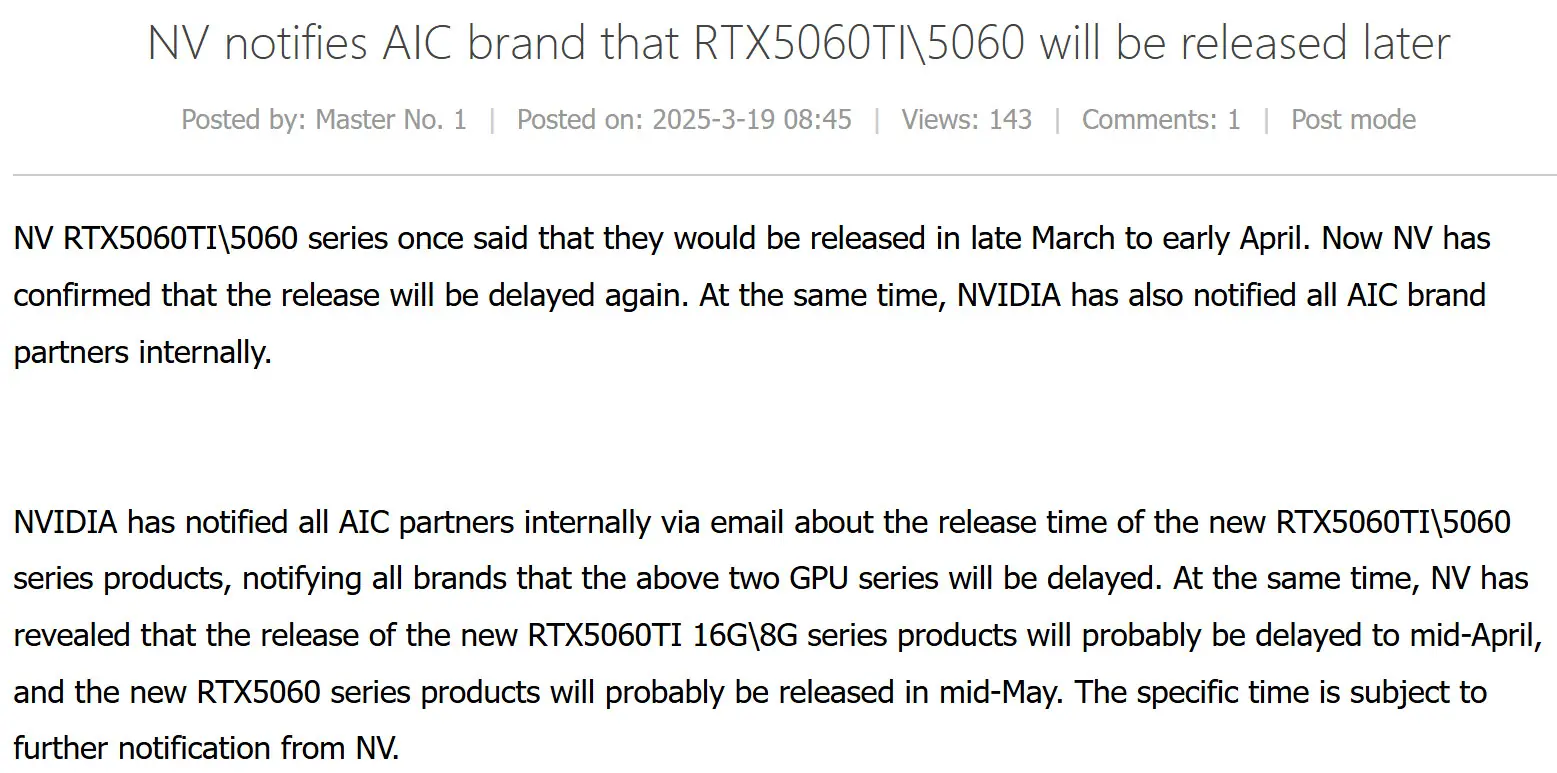
NVIDIA has reportedly pushed back the launch of its highly anticipated GeForce RTX 5060 Ti and RTX 5060 graphics cards, now set to debut in mid-April and mid-May, respectively. This decision comes as the company aims to address stock issues and ensure a smoother launch for consumers.
Key Takeaways
- The RTX 5060 Ti is now expected to launch in mid-April 2025.
- The RTX 5060 will follow a month later, in mid-May 2025.
- The delay is likely due to stock constraints and the need for better preparation.
- NVIDIA aims to avoid a repeat of the problematic RTX 5070 launch.
Reasons Behind The Delay
NVIDIA’s decision to postpone the launch of the RTX 5060 series appears to be influenced by several factors:
- Stock Issues: The company has faced challenges in maintaining adequate stock levels for its previous GPU launches, leading to frustration among consumers.
- Market Competition: With AMD’s upcoming RX 9060 series poised to enter the market, NVIDIA may be recalibrating its strategy to ensure competitive pricing and availability.
- Quality Assurance: The delay allows NVIDIA to conduct further testing and verification of the GPUs, ensuring that they meet performance expectations without issues like overheating or power connector failures.
New Launch Timeline
The revised launch schedule for the RTX 5060 series is as follows:
| GPU Model | Expected Launch Date | VRAM Options | TDP |
|---|---|---|---|
| RTX 5060 Ti | Mid-April 2025 | 8GB / 16GB | 180W |
| RTX 5060 | Mid-May 2025 | 8GB | 150W |
Implications for Gamers
The delay may have mixed implications for gamers:
- Positive: A longer wait could mean better stock availability at launch, reducing the chances of inflated prices and scarcity.
- Negative: Gamers eager to upgrade may find themselves waiting longer, especially as the current GPU market remains tight.
Conclusion
While the delay of the RTX 5060 Ti and RTX 5060 may be disappointing for some, it reflects NVIDIA’s commitment to delivering a quality product and addressing the ongoing supply chain challenges. As the launch dates approach, consumers will be watching closely to see if NVIDIA can meet the demand and expectations set by its previous GPU releases.