
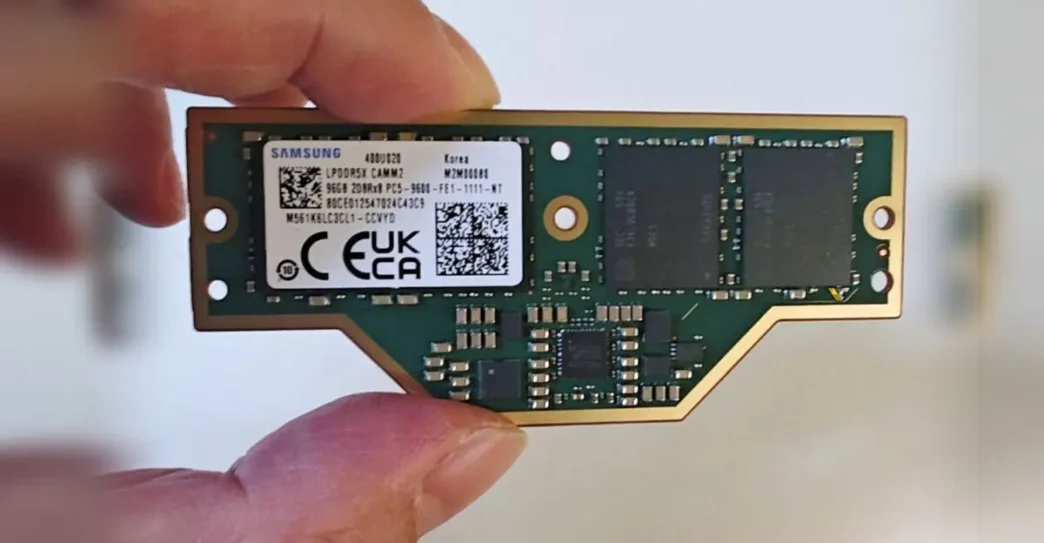
A new benchmark in laptop memory has emerged with the sighting of Samsung’s 96GB LPCAMM2 module, boasting an impressive speed of 9600 MT/s. This cutting-edge memory was showcased by a Lenovo product manager, hinting at its integration into upcoming high-performance laptops. The LPCAMM2 standard promises enhanced performance and efficiency for mobile devices.
Key Takeaways
- Samsung’s 96GB LPCAMM2 module with LPDDR5X-9600 speeds has been pictured.
- Lenovo product manager shared the image, indicating upcoming integration.
- The module is not yet in mass production but is expected soon.
- This advancement supports Intel’s Core Ultra Series 3 “Panther Lake” processors.
A New Standard in Laptop Memory
The LPCAMM2 (Low Power Compression Attached Memory Module) is a standardized, replaceable memory format designed to offer LPDDR-like power efficiency while retaining the ability for upgrades, a feature often lost with soldered RAM. This new Samsung module represents a significant leap in capacity and speed for this form factor.
Unprecedented Capacity and Speed
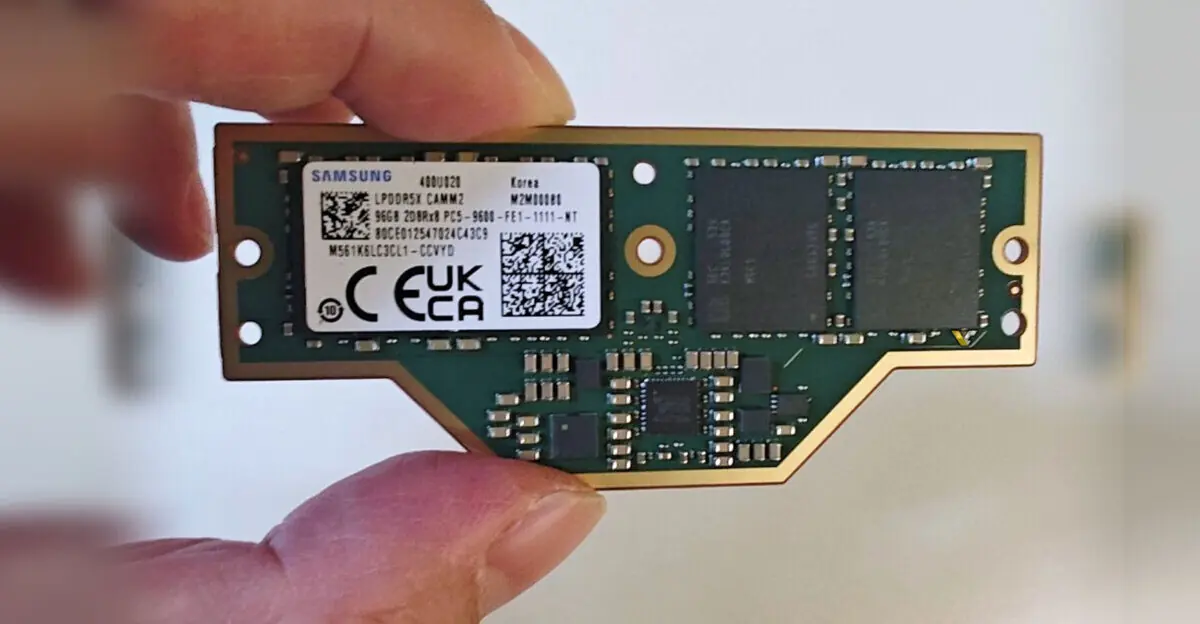
The pictured Samsung module boasts a substantial 96GB capacity, a notable increase from current LPCAMM2 offerings which typically top out at 64GB. Coupled with its LPDDR5X-9600 speed, it promises a substantial boost in data transfer rates. This speed is natively supported by Intel’s upcoming Core Ultra Series 3 “Panther Lake” mobile processors, suggesting a strong synergy between the new memory and next-generation CPUs.
Future Integration and Availability
While the module has been pictured and its specifications confirmed, it has not yet entered mass production. However, sources indicate that mass production is expected to commence soon. Lenovo’s involvement suggests that their upcoming laptops, particularly those featuring Intel’s Panther Lake platform, are likely candidates for adopting this high-capacity, high-speed memory. The LPCAMM2 standard is poised to become a key component in future thin and powerful laptops, offering a compelling alternative to traditional SO-DIMM modules.
Via Weibo