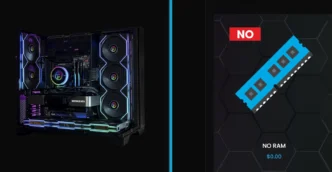
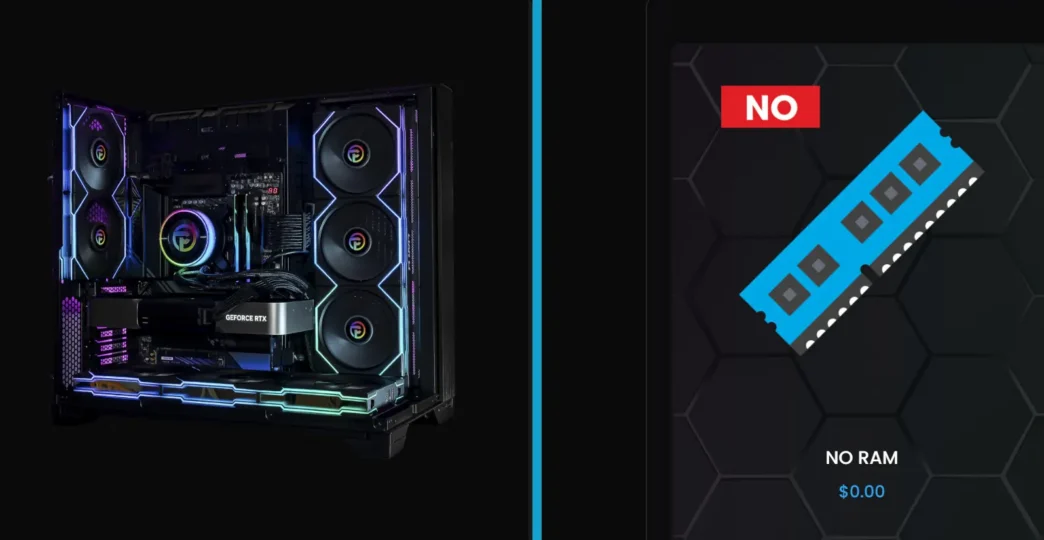
System integrators are beginning to offer pre-built PCs without RAM modules, a significant shift driven by escalating memory costs and persistent shortages. This move allows customers to either utilize existing RAM or purchase it separately, aiming to mitigate the immediate financial impact of the volatile DRAM market. Companies like Paradox Customs and MAINGEAR are now providing options for customers to supply their own memory kits.
Key Takeaways
- Rising DDR5 prices and shortages are forcing system integrators to adapt.
- Companies are offering “Bring Your Own RAM” (BYO RAM) options for pre-built PCs.
- This approach aims to reduce immediate costs for consumers and sidestep sourcing issues for builders.
- Potential concerns include compatibility, testing, and post-purchase support.
The RAM Crisis and Its Impact
The DRAM market has seen significant price hikes, particularly for DDR5 memory, since early 2024. Certain high-performance modules are experiencing extended shipment delays, with a 32GB DDR5 kit now costing around $400. This surge in memory prices constitutes a substantial portion of a PC’s total cost, prompting system integrators to seek alternative solutions.
A New Approach to Pre-Built PCs
Traditionally, system integrators select and validate all components to ensure compatibility and provide streamlined after-sales support. However, the current shortage is making it difficult for these companies to secure RAM at predictable prices. To address this, Paradox Customs and MAINGEAR have introduced options where customers can purchase pre-built systems without pre-installed RAM. This allows buyers to source their own memory, potentially finding better deals or using kits they already own.
Shifting Responsibilities and Potential Concerns
This new model blurs the line between fully supported custom builds and DIY kits. While it reduces the system integrator’s exposure to volatile inventory, it also shifts some responsibility to the end-user. Concerns arise regarding compatibility issues, boot failures, system instability, and the responsibility for memory training and BIOS tuning. Previously, integrators handled these aspects, ensuring optimized performance. With customers supplying their own RAM, these assurances may no longer apply, potentially leading to increased troubleshooting for the buyer.
Future Implications
If memory shortages persist into 2026, this trend could extend to other components like storage or cooling solutions. This could fundamentally alter the value proposition of pre-built PCs, which are often chosen for their hassle-free, fully supported nature. For enthusiasts comfortable with selecting and installing their own RAM, this offers a way to control costs. However, for those seeking a completely turnkey solution, it introduces an additional setup step and potential complexities.