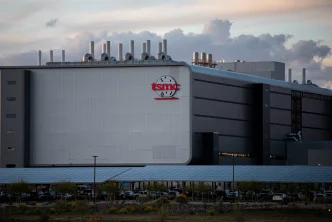

TSMC’s new fabrication plant in Arizona has made headlines by achieving a 4% higher yield compared to its comparable facilities in Taiwan. This milestone, announced by TSMC U.S. President Rick Cassidy during a recent webinar, marks a significant step in the company’s efforts to expand semiconductor manufacturing in the United States, particularly under the CHIPS Act initiative.
Key Takeaways
- TSMC’s Arizona fab yields 4% more than Taiwanese counterparts.
- The facility is set to begin volume production in early 2025.
- TSMC is receiving $6.6 billion in federal funding to support its U.S. operations.
- The company plans to invest a total of $65 billion in the Arizona site.
TSMC’s Arizona Facility Overview
The Arizona fab, located in Phoenix, is TSMC’s first manufacturing site in the United States. Despite facing challenges such as labor shortages and cultural differences, the facility has successfully achieved production yields comparable to those in Taiwan. This achievement is particularly noteworthy given that TSMC typically reserves its most advanced facilities for its home country.

The company began engineering wafer production using 4nm process technology in April, with results described as “highly satisfactory” by CEO C.C. Wei. The Arizona site is expected to play a crucial role in TSMC’s global production strategy, especially as the U.S. aims to bolster its semiconductor supply chain.
Challenges and Solutions
TSMC encountered several hurdles while establishing its Arizona operations:
- Labor Shortages: A lack of construction workers and engineers delayed the project.
- Cultural Differences: Alleged cultural clashes between Taiwanese and American workers contributed to operational challenges.
To address these issues, TSMC has relocated hundreds of Taiwanese engineers to Phoenix and sent U.S. engineers to Taiwan for training. This cross-training aims to bridge the gap and ensure a smoother operational flow.
Future Plans for Expansion
Looking ahead, TSMC has ambitious plans for its Arizona site:
- Volume Production: Expected to start in early 2025.
- Second Fab: Planned to focus on 2nm process technology, with production starting in 2028.
- Third Fab: Aimed at advanced 2nm and beyond processes, projected to begin operations by 2030.
In total, TSMC’s investment in Arizona is projected to create approximately 6,000 jobs, along with opportunities for 20,000 construction workers.
Implications for the Semiconductor Industry
The success of TSMC’s Arizona fab is a significant win for the U.S. semiconductor industry. It demonstrates that high-quality chip manufacturing can be achieved on American soil, which is vital for reducing reliance on overseas production. The U.S. government has been actively supporting this initiative through substantial funding and tax incentives, aiming to revitalize domestic semiconductor manufacturing.
As TSMC continues to ramp up its operations in Arizona, the implications for the global semiconductor supply chain could be profound, potentially leading to increased competition and innovation in the industry. This development not only strengthens TSMC’s position but also enhances the U.S.’s role in the global semiconductor landscape.