
Microsoft has finally introduced native NVMe SSD support in Windows Server 2025, an opt-in feature poised to significantly boost storage performance. This long-awaited update addresses a critical bottleneck, as previous versions relied on converting NVMe commands to slower SCSI protocols, hindering the potential of modern solid-state drives.
Key Takeaways
- Native NVMe support eliminates legacy translation layers, directly optimizing performance for modern SSDs.
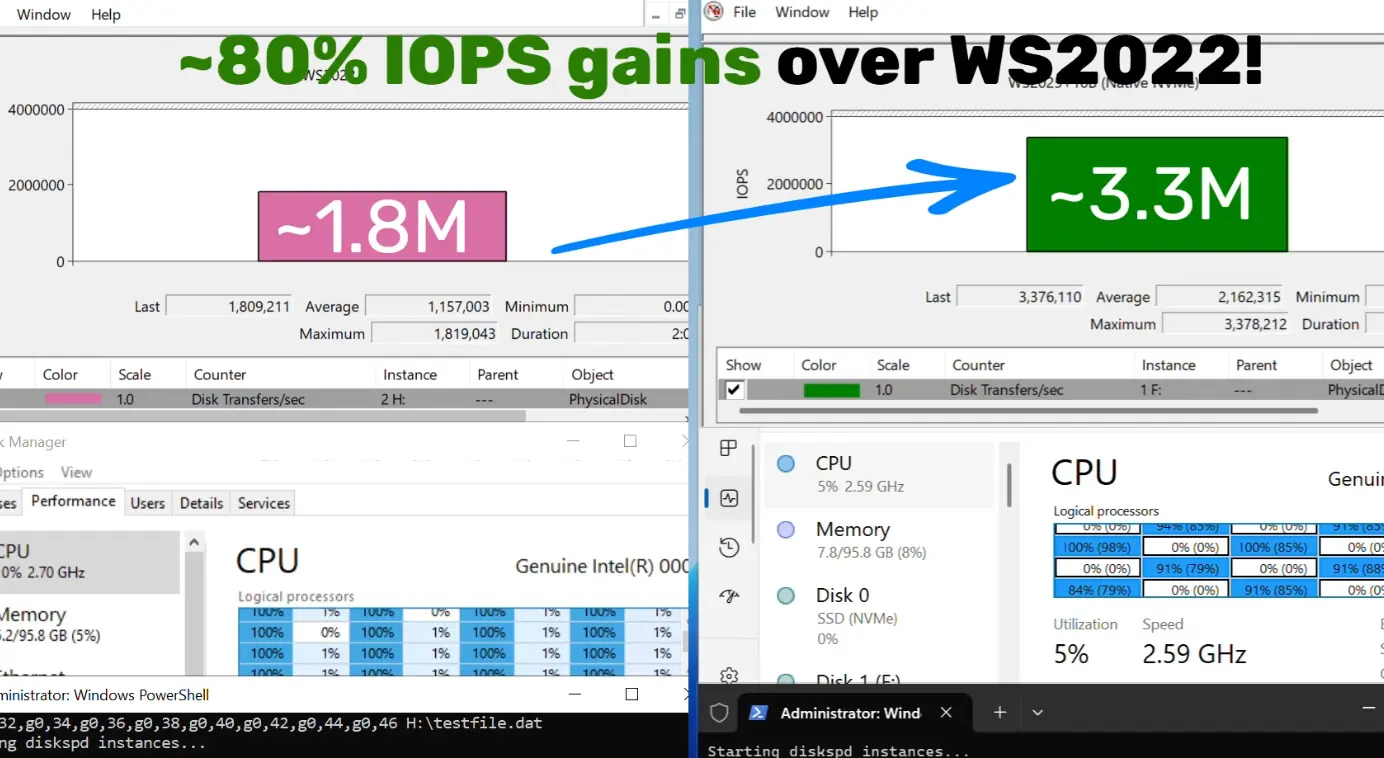
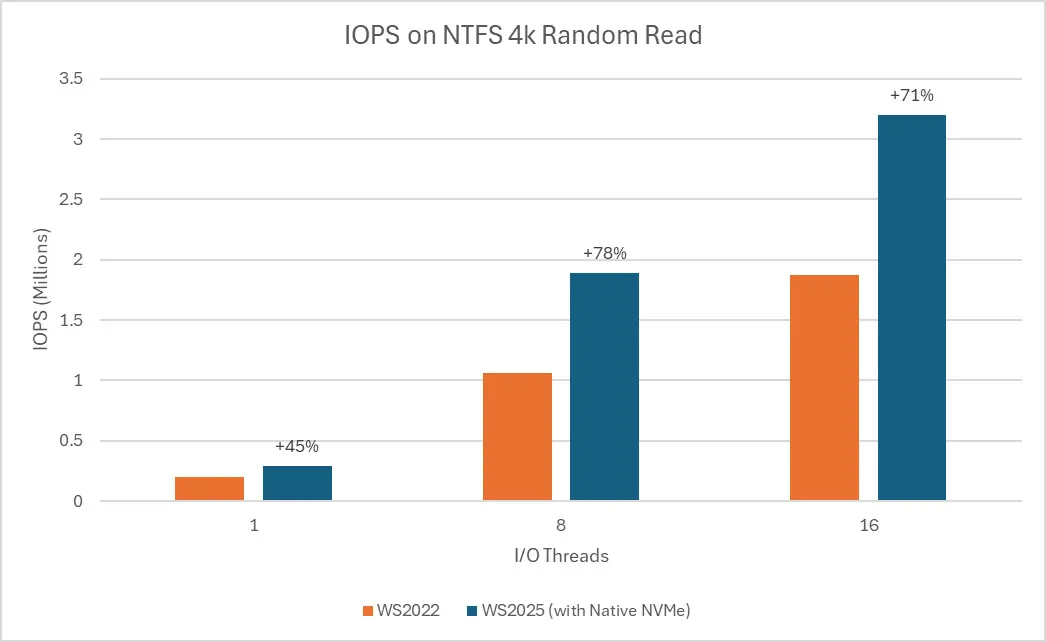
- Significant improvements in IOPS (up to 3.3 million on PCIe Gen 5 SSDs) and reduced latency are expected.
- This update brings Windows Server storage capabilities in line with Linux and other operating systems that have supported NVMe natively for years.
- While currently opt-in for Windows Server 2025, native NVMe support is anticipated to eventually reach client versions of Windows.
A Decade in the Making
For over 12 years, NVMe SSDs have been available, yet Windows Server has continued to process their commands through a SCSI translation layer. This method, originally designed for slower, mechanical hard drives with limited command queuing, created unnecessary overhead and latency, preventing NVMe drives from reaching their full potential. Windows Server 2025’s new native NVMe path fundamentally redesigns the I/O processing stack to leverage the full capabilities of NVMe, including its support for tens of thousands of queues and commands.
Performance Unleashed
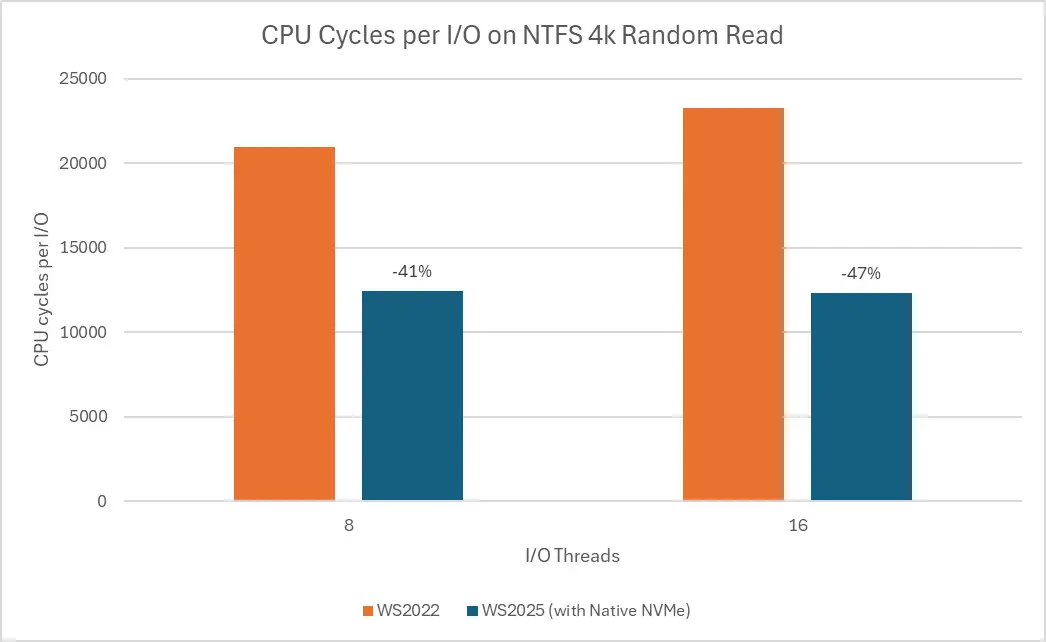
Microsoft claims that this new native support can lead to substantial performance gains, including up to 78% higher IOPS and up to 47% reduction in CPU cycles per I/O compared to Windows Server 2022 when using the in-box StorNVMe.sys driver. This translates to faster transaction times for applications like SQL Servers, quicker virtual machine boots, and accelerated file server operations. The streamlined I/O paths are designed to be lock-free, further enhancing efficiency and reducing latency.
The Future of Windows Storage
This move is being hailed by Microsoft as a “storage revolution” and a “new foundation for Windows Server storage, built for the future.” While the native NVMe support is an opt-in feature in Windows Server 2025, enabled via a registry key, its inclusion marks a significant step forward. The company has also indicated that similar improvements are being considered for client versions of Windows, with potential integration into future updates for Windows 11, though no concrete timeline has been provided.