For the majority of consumers, a basic laptop, the latest mobile device, or a gaming console provides the power required to complete the tasks being asked of them. This covers everything from casual gaming, day-to-day duties like banking and grocery shopping, and most work tasks.
However, in an age where reliance on digital technology is becoming essential for many, there are times when a bit more power is needed to ensure the best performance.
Gaming
Dedicated gaming consoles are designed to manage the titles released on them, and mobile gaming is also on the rise. These options are useful for people who don’t want the stress or hassle of trying to find the right platform for the games they love to play.
Mobile devices and consoles will have standard hardware that is suitable for casual gaming, with many mobile game titles also exploring cloud functionality to reduce the amount of data that is taken up.
Players can enjoy a variety of straightforward platform and puzzle games, to more immersive mobile gaming experiences. Online gambling apps are another option that is popular among consumers who want to enjoy their favorite casino games on the move.
More serious gamers might look at gaming PCs as an alternative to consoles and mobile devices, with prebuilt options ideal for those just getting into it, while building a tailored gaming PC is something that more experienced players might look at to enhance their experience.
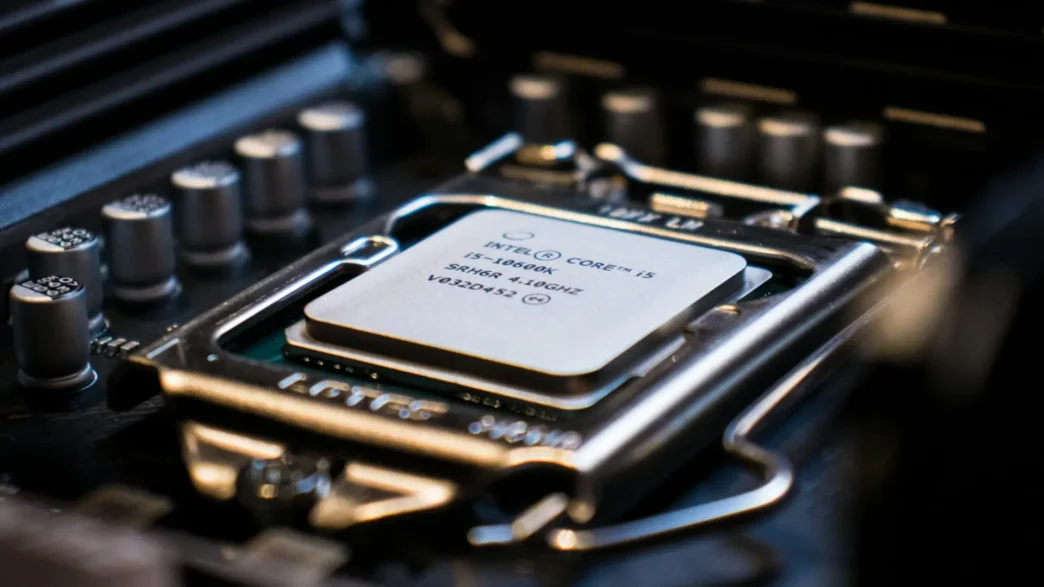
Two key factors for PC gaming are the Central Processing Unit (CPU) and the Graphics Processing Unit (GPU). The CPU is often referred to as the brain of the computer and runs operating systems, manages files, and carries out other general-purpose tasks. A good gaming CPU will typically have 8 cores and 16 threads, with 6 cores and 12 threads considered a decent minimum.
Players who want to experience a high-quality gaming experience with sharp and reactive graphics will need a GPU that can handle the content, with 4K gaming needing 16GB or more to handle the demand.
Power requirements for high-end gaming can run as high as 1200 W, with typical levels somewhere between 300 W to 800 W.
Crypto Trading
Crypto trading is regarded as a low-power activity, as the activity is typically software-based. Mobile crypto trading apps are the most efficient, drawing between 3W to 6W while trading. This goes up to between 15W and 60W for laptops and 80W to 250W for PCS.
Crypto trading platforms offer consumers a secure way to buy and sell new and established cryptocurrency projects. The potential for returns has drawn a lot of consumers to this option, but the industry is still considered to be a high-risk investment option because of its volatility.
There are alternative platforms available for consumers, like coinfutures.io, where customers don’t buy or sell; instead, they can earn money by predicting future price increases or drops.
Crypto Mining
Crypto mining is significantly more power-intensive than crypto trading, with specialized rigs required, which can draw anything from 1kW to 3kW. Depending on the scale of the project, where multiple rigs are installed. The complex proof-of-work process in mining requires a lot of power, and global crypto mining is estimated to account for between 155 TWh to 172 TWh every year, which is around 0.4% of the world’s energy demands.
Basic Office Work
The power required for work is dependent on the line of work the person is in. Basic office work, which covers web browsing, word processing, and spreadsheet management, can be easily completed using standard laptops and will have a power draw of between 15 W to 60 W.
Desktop use for similar projects can result in a power draw of between 100 W to 250 W, depending on the activities being carried out.
Content Creation
Content creation is a more intensive activity that will require a high-core CPU and a powerful GPU to work to a high standard. A power draw of between 400 W to 1000 W will be typical, but this will differ depending on the software being used and its requirements.
3D modelling, video editing, and other creative endeavours will all have a variety of software options and additional hardware that can be used, which will all impact how much power is used.
AI/ML Training
Artificial intelligence and machine learning are two key technologies that are transforming how people gather and analyze data and how industries are streamlining processes. In order for AI and ML systems to work effectively, they must be trained to gather information and use it in the desired manner.
The use of specialized hardware like powerful GPUs and Tensor Processing Units (TPUs) allows complex models to perform parallel computations. High-speed networking, the storage of massive datasets, cooling systems, and the potential to scale infrastructure are all big parts of the AI/ML training industry.
A single AI/ML training workstation will typically have a power draw of between 500W to 1500W, while large data centres will have GPU racks that can draw between 10kW to 50kW each.
Conclusion
The unique power needs of different types of computing make it difficult to estimate the exact power requirements for each, with different hardware and software across different brands and setups all having an impact.
Technological developments have resulted in many modern devices having the capability of carrying out a variety of tasks, and developers are constantly exploring ways to make these devices more efficient.
As well as being conscious of the cost of high-powered devices and computing actions, there is also the growing demand for more environmentally friendly ways to enjoy them.