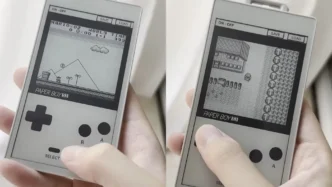
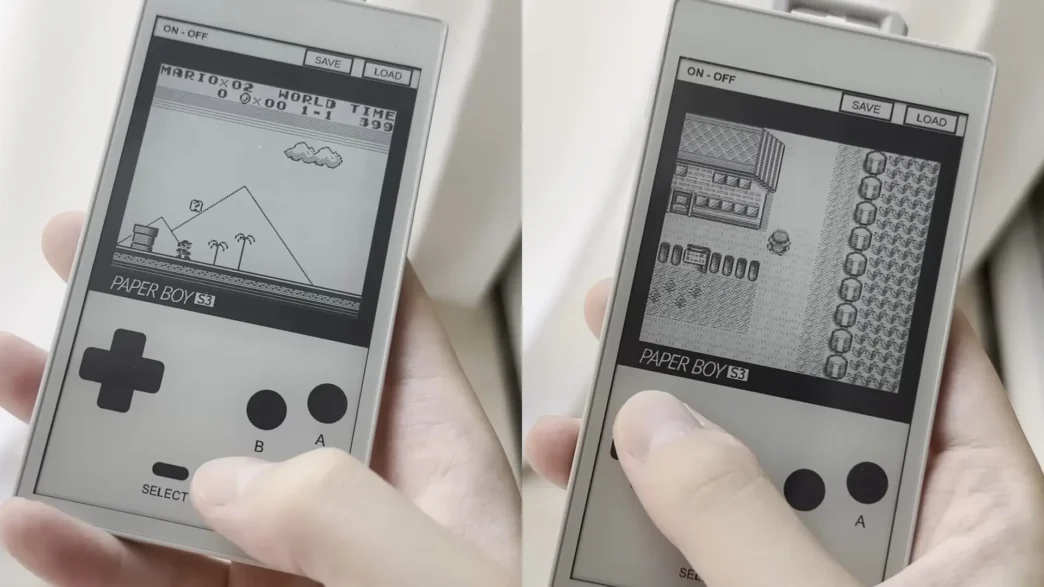
Engineer Wenting Zhang has pushed the boundaries of hardware hacking by converting the discontinued M5Stack PaperS3 development kit into a fully functional 60Hz Game Boy emulator. Despite its humble origins as an e-ink prototyping board, the project successfully leverages the ultra-low-cost ESP32-S3 microcontroller to deliver a sharp, playable retro experience.
Key technical highlights
- Hardware: M5Stack PaperS3 featuring an ESP32-S3 dual-core microcontroller.
- Display: 960×540 resolution e-ink screen, upscaled to support 160×144 emulation.
- Performance: Achieves 60Hz refresh rates, overcoming traditional e-ink display ghosting.
- Software: Includes Bluetooth LE controller support and touchscreen quick-save/load functionality.
Engineering a console from scrap
Wenting Zhang, known for his expertise in high-refresh e-ink displays, utilized the PaperS3 board to prove that limited embedded hardware can handle sophisticated emulation. The secret lies in treating pixels as independent display regions rather than refreshing the entire panel. By scaling the Game Boy’s native 160×144 resolution up to the board’s native 960×540 grid, Zhang created a razor-sharp output that uses dithering to mimic the original grayscale palette.
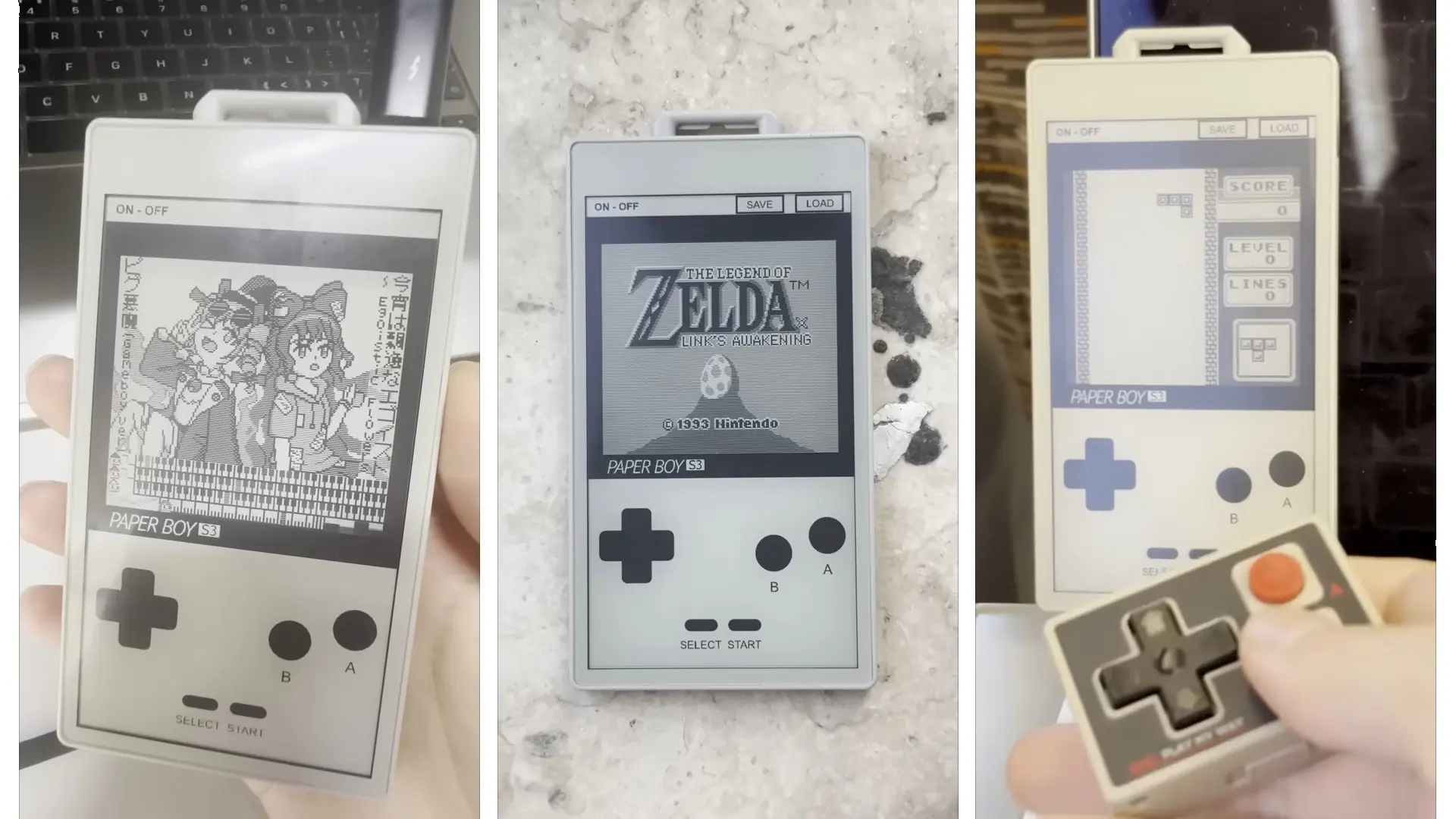
This rendering process consumes nearly all of the second processor core on the ESP32-S3, while the first core is dedicated entirely to managing the emulator. While unconventional, the setup delivers a smooth 60Hz experience that contrasts sharply with the sluggish, ghosting-heavy performance typically associated with e-ink technology.
Limitations and future potential
While the project is a technical marvel, it faces several practical hurdles. The PaperS3 hardware has been discontinued by the manufacturer, making it difficult for enthusiasts to source. Because the device lacks native audio hardware, the project relies on a simple piezo buzzer, requiring complex software manipulation to replicate Game Boy sound effects accurately. Furthermore, the absence of haptic feedback on the touchscreen interface, combined with the heavy power consumption of high-frequency e-ink refreshes, creates a unique, if unpolished, user experience.
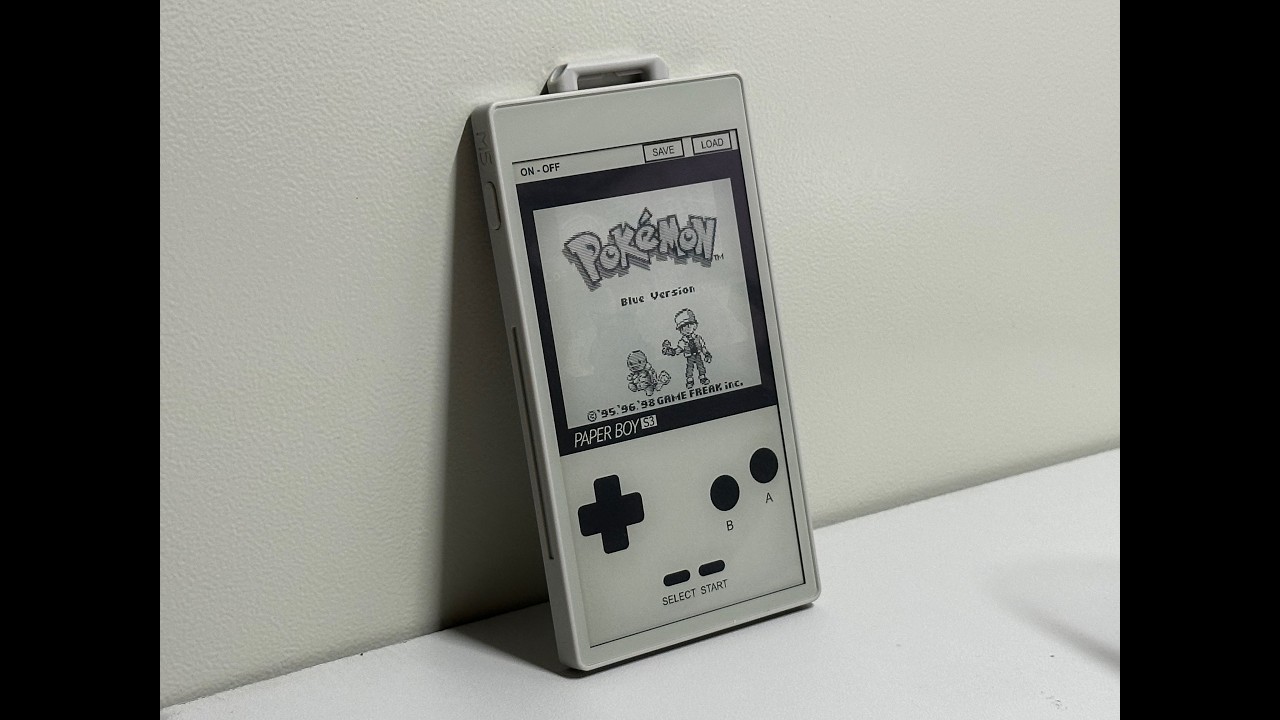
Despite these constraints, the “Paper Boy S3” project serves as a brilliant proof-of-concept for the creative reuse of niche hardware. It demonstrates how open-source software can breathe unexpected life into dormant development components. Interested makers can access the firmware through the M5Burner application platform.
Via Tom’s Hardware