


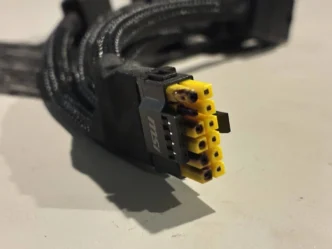
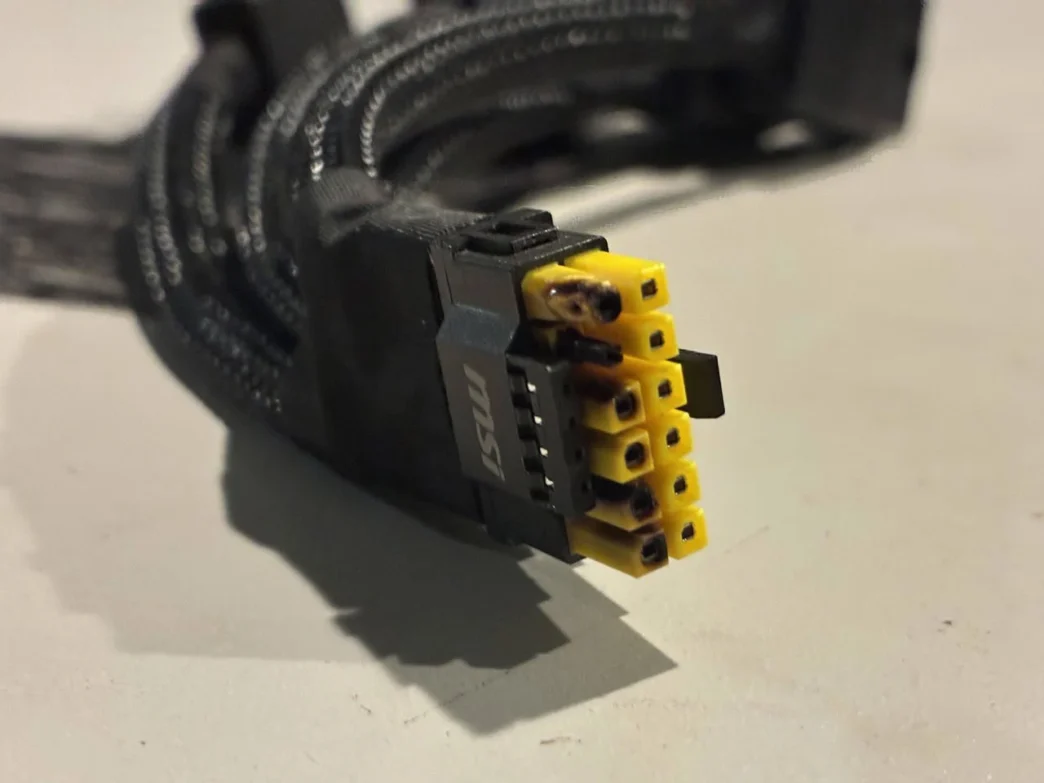
An MSI GeForce RTX 5090 Gaming Trio OC reportedly stopped working after an enthusiast tested NVIDIA’s DLSS 5 neural-rendering technology in NBA 2K27. GPU monitoring showed the card drawing more than 600 watts for an extended period before its 16-pin power connector overheated, melted, and fused with the cable.
Key takeaways
The incident is based on a user report rather than an independently verified failure analysis, but the power readings and photographs have drawn attention from the PC hardware community.
- GPU-Z reportedly recorded a peak board power draw of 613.5W.
- The card’s MSI-rated power specification is 575W.
- DLSS 5 increased reported consumption from approximately 450W to above 600W.
- The damaged 16-pin connector showed melted plastic and scorched terminals.
- The report does not prove that DLSS 5 alone caused the failure.
What reportedly happened
The owner, identified online as “erek,” was testing DLSS 5 in NBA 2K27, currently the only game with official support for the feature. According to the report, the RTX 5090 normally consumed about 450W in the user’s previous workload. Enabling neural rendering raised consumption above 600W, with readings reportedly remaining near 610W rather than appearing as a brief transient spike.
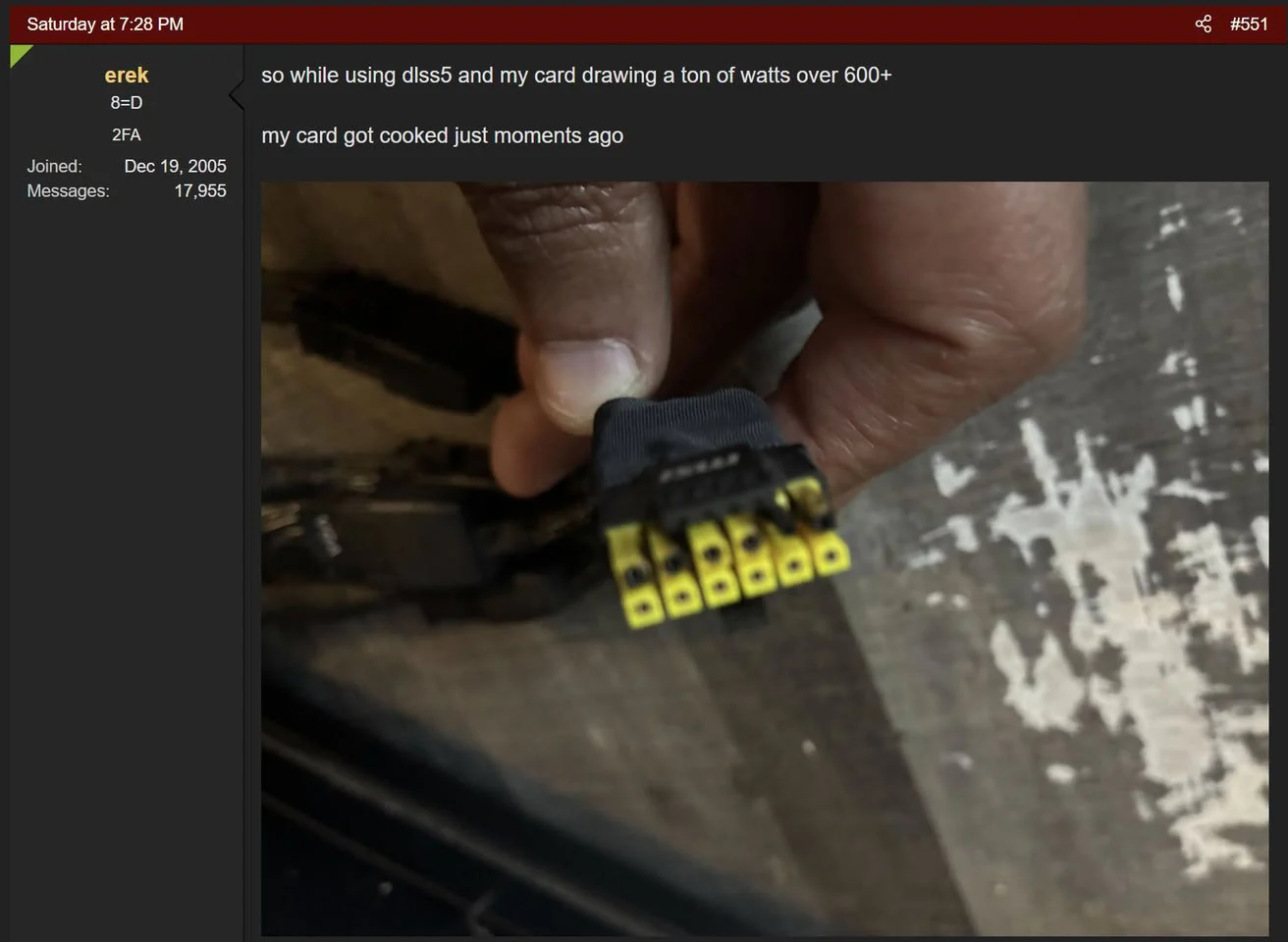
The card eventually became unstable and stopped operating. After noticing a burning smell, the user found that the MSI-branded power connector had suffered substantial heat damage. The plug was reportedly difficult to remove because melted plastic had bonded the cable to the graphics card socket.
Why the power reading needs context
A 613.5W GPU-Z reading represents total board power, not power delivered solely through the 16-pin connector. An RTX 5090 can also draw power through the PCIe slot, which supplies a portion of the card’s total electricity demand. Therefore, the report does not establish that more than 600W traveled through the connector itself.
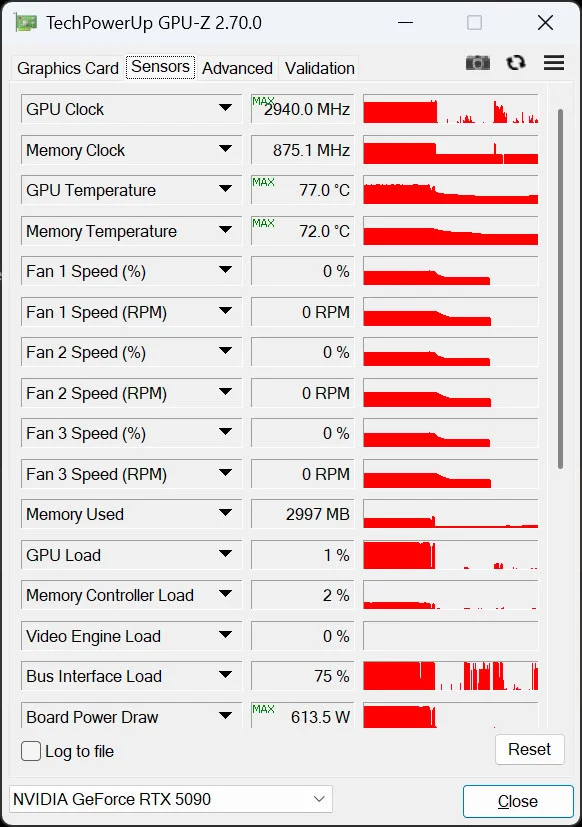
Even with that distinction, the reading is well above MSI’s 575W rating for the Gaming Trio OC. Sustained high current can increase heat at the connector, particularly if contact resistance is elevated by an incomplete insertion, damaged terminal, poor cable routing, or an uneven connection.
DLSS 5 may be a contributor, not the sole cause
DLSS 5’s 3D-guided neural rendering adds another demanding workload to the GPU. Independent testing cited in the reports found substantial increases on RTX 5090 models, including power rising from roughly 417W to 547W on a Founders Edition card in one game. A heavily overclocked model reportedly reached even higher levels.
However, RTX 5090 connector failures have also been reported under conventional gaming and stress-test workloads. With only one documented case directly associated with DLSS 5, it is too early to conclude that the rendering feature caused the connector to melt. The more cautious interpretation is that DLSS 5 may have exposed or intensified an existing weakness in a high-power connection.
What RTX 5090 owners should consider
Owners should ensure the 12V-2×6 connector is fully seated, avoid sharply bending the cable near the plug, and use the power cable and power supply configuration recommended for their graphics card. Any unusual odor, discoloration, excessive heat, or system instability warrants shutting down the PC and inspecting the connection before further use.
NVIDIA has not publicly attributed this reported failure to DLSS 5 or announced a broader corrective action. For ThinkComputers readers tracking high-end GPU reliability, the episode reinforces the importance of monitoring both performance gains and power behavior as neural-rendering features become more demanding.
Via VideoCardz