


ASUS has announced the ROG XG Station 3, an open-frame external GPU dock that connects laptops to desktop graphics cards over Thunderbolt 5. It supports up to 80 Gbps of bidirectional bandwidth, laptop charging up to 140W and a range of current GPUs. Buyers will need to provide their own compatible power supply; ASUS has not announced pricing or availability.
Key takeaways
The ROG XG Station 3 combines an eGPU connection with laptop charging and additional ports, while leaving the graphics card exposed for cooling and display. Its Thunderbolt 5 bandwidth and support for ASUS BTF cards are key features, but the dock does not include a power supply.
- Thunderbolt 5 provides up to 80 Gbps bidirectional bandwidth, with Bandwidth Boost reaching 120 Gbps for high-volume video traffic.
- It supports Nvidia GeForce RTX 50 and RTX PRO 6000, AMD Radeon RX 9000 and Intel Arc graphics cards.
- The upstream port delivers up to 140W of USB Power Delivery; the downstream port supports up to three daisy-chained 4K displays.
- Users must supply an SFX or SFX-L power supply. ASUS has not provided a price or release date.
Thunderbolt 5 and GPU support
The XG Station 3 is ASUS’s latest entry in its external GPU dock lineup, which began with the original XG Station in 2007. Thunderbolt 5 offers up to 80 Gbps of two-way bandwidth, double Thunderbolt 4’s rated link speed. Bandwidth Boost can provide up to 120 Gbps in one direction for demanding video traffic. The dock is also reported to work with Thunderbolt 4 systems, though those connections operate at up to 40 Gbps.
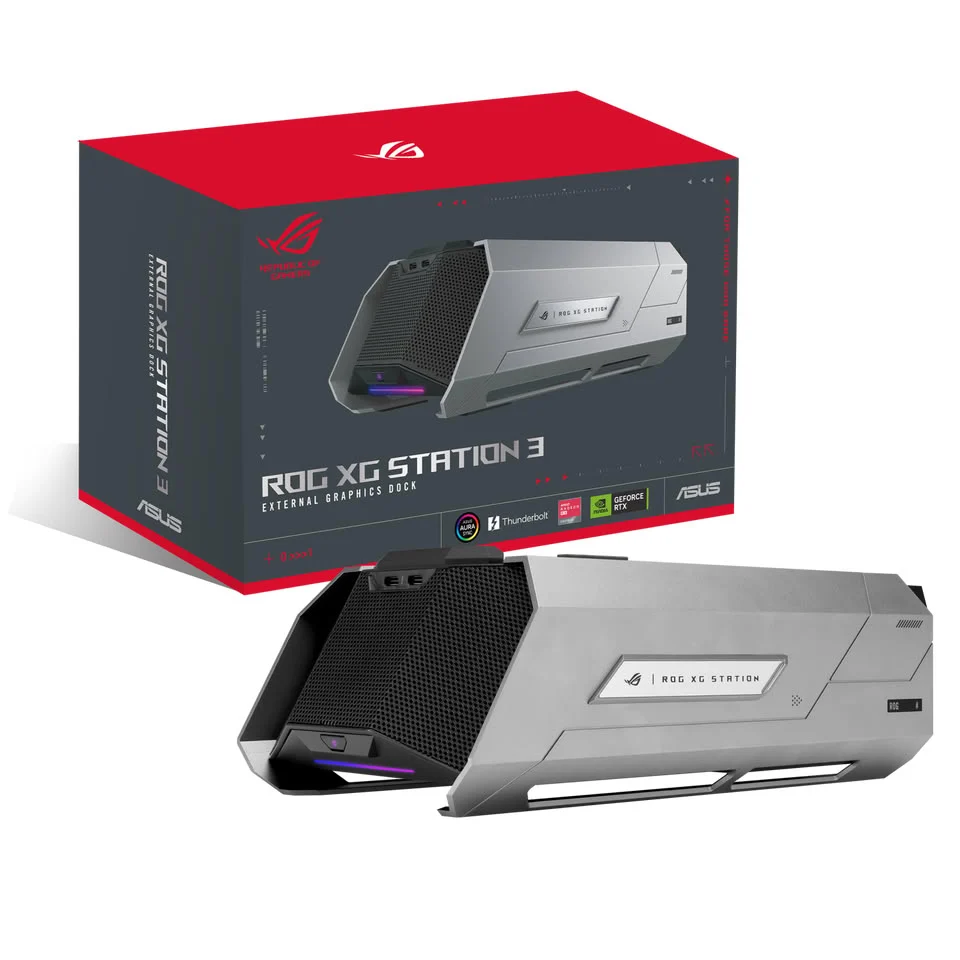
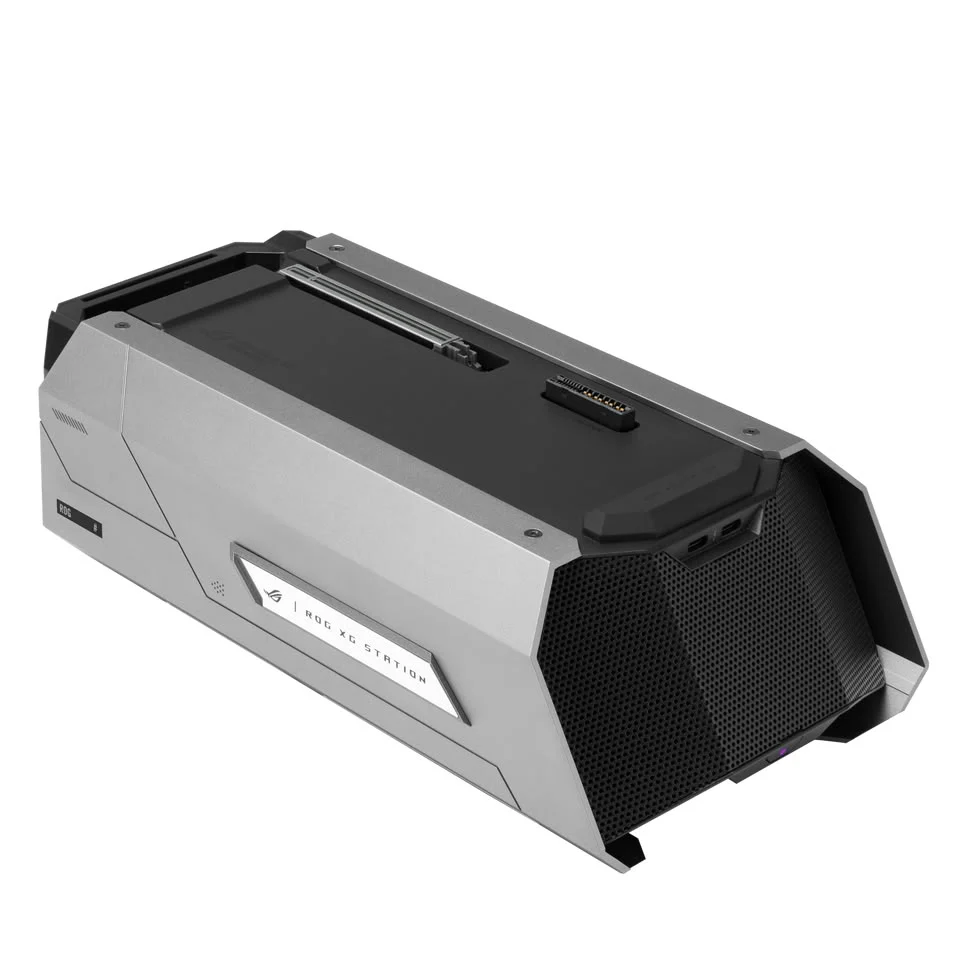
ASUS lists support for graphics cards across Nvidia’s GeForce RTX 50 and RTX PRO 6000 families, AMD’s Radeon RX 9000 series and Intel Arc. The open-frame design leaves the installed card unobstructed, and Aura Sync lighting can coordinate the dock’s RGB illumination with compatible ASUS hardware. As with other eGPU setups, the connection does not make a laptop’s graphics performance identical to a desktop PC: reports note that PCIe tunneling over Thunderbolt 5 is limited to 64 Gbps, which can constrain high-end cards.
BTF support and connectivity
A GC-HPWR slot adds support for ASUS BTF 2.5 graphics cards, which can draw power through a concealed connector rather than a visible GPU power cable. Standard graphics cards are supported too, but their power cable will remain visible. This gives builders a choice between conventional cards and compatible BTF models.
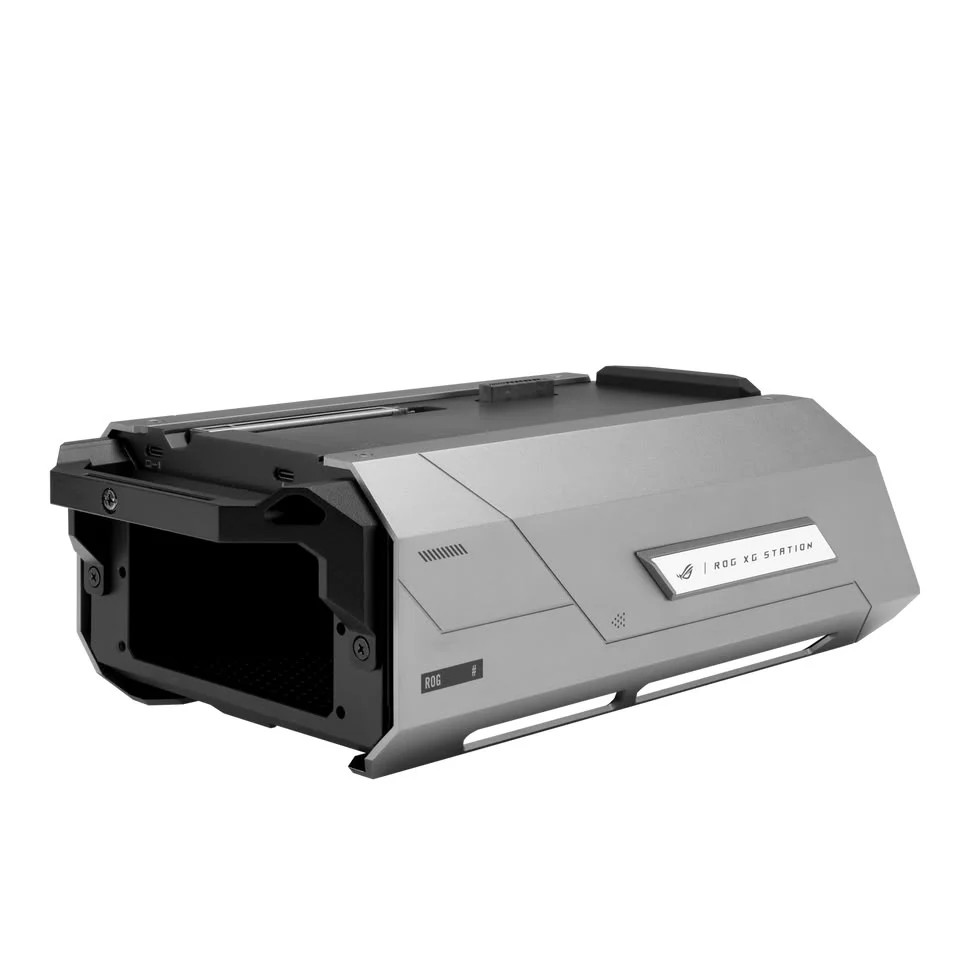
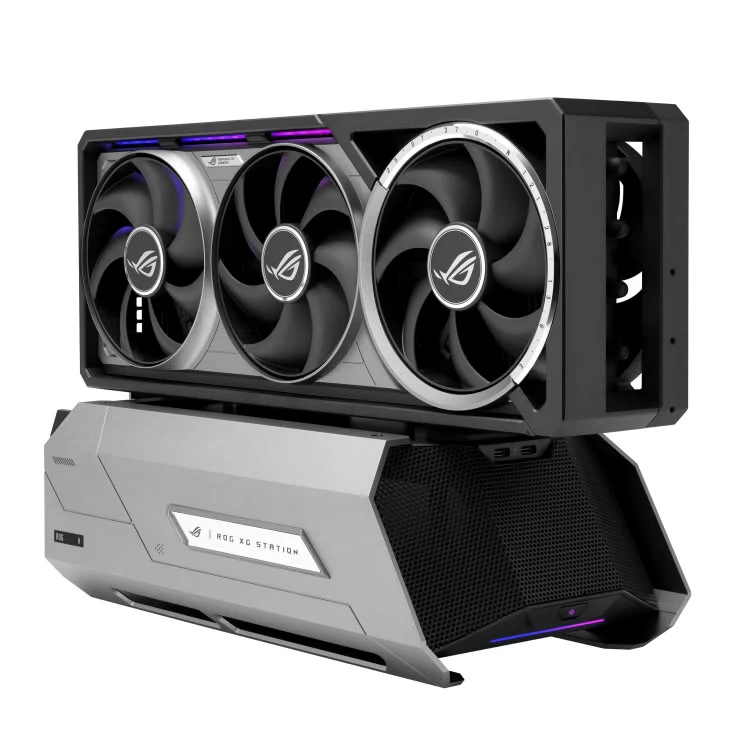
The upstream Thunderbolt 5 port connects to the laptop and provides up to 140W of USB Power Delivery. A second, downstream Thunderbolt 5 port can connect USB-C displays and support up to three 4K monitors through daisy-chaining, while supplying up to 36W to connected devices. Two additional USB-C ports offer data transfer speeds up to 10 Gbps.
Power supply and availability
Unlike a complete, ready-to-use enclosure, the XG Station 3 ships without a PSU or graphics card. Owners must install an SFX or SFX-L unit sized for their GPU, adding a separate component and cost to the setup. ASUS has not announced pricing or a release date, so the dock’s overall value will depend partly on those details and the cost of a suitable power supply.
Via ASUS ROG