


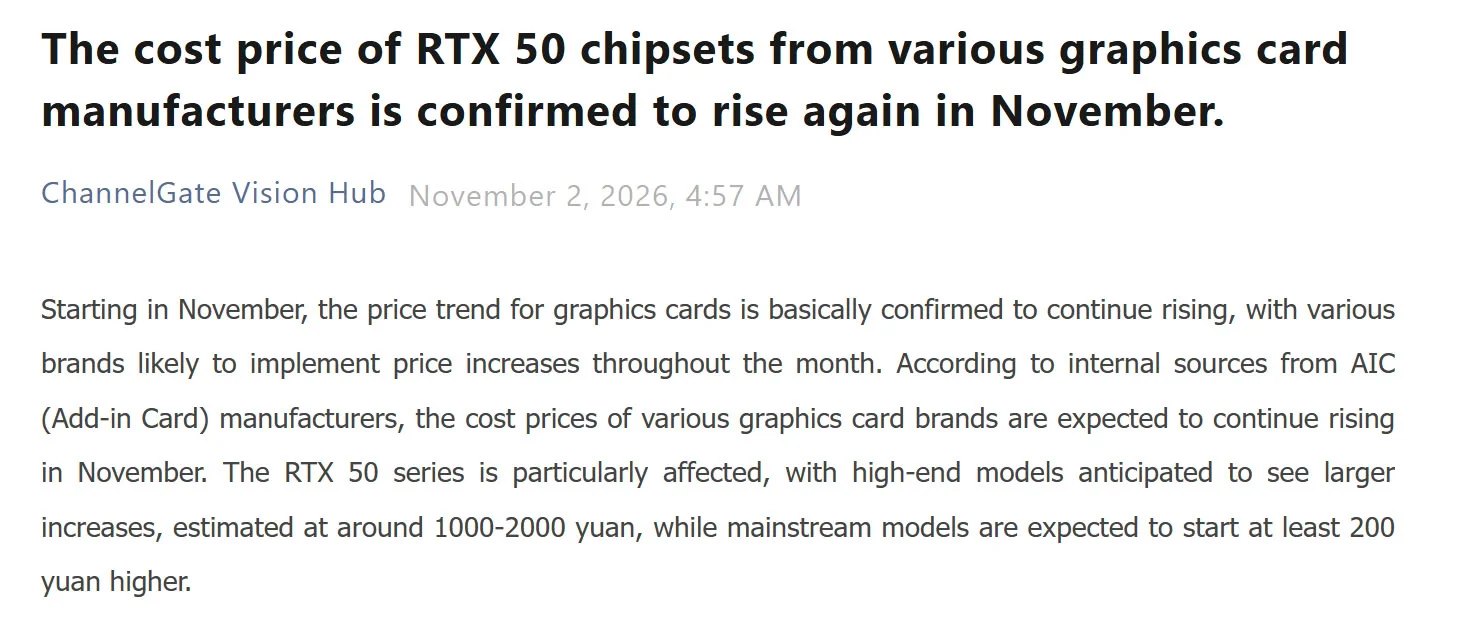
NVIDIA’s RTX 50-series graphics cards are facing another reported round of price increases, with the largest adjustments in China approaching $500. Reports citing board partners say higher factory or distributor costs are being introduced this month. The changes could feed through to retail prices, but they are not an official NVIDIA MSRP increase, and the scale may vary by market.
Key takeaways
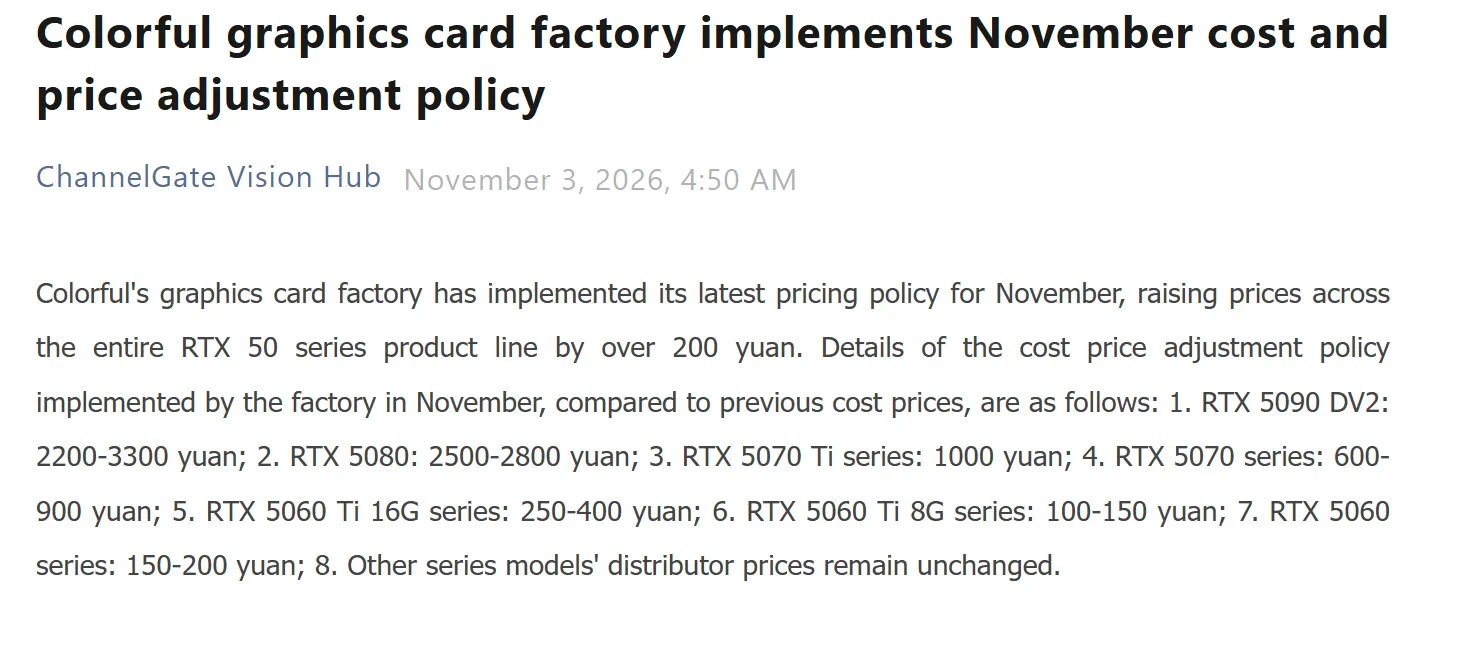
The reported adjustments span the RTX 5090 D V2 through the RTX 5060, with larger increases concentrated on higher-end cards.
- The RTX 5090 D V2 is reportedly up by as much as 3,300 yuan, or about $495.
- The RTX 5080 increase is reported at up to 2,800 yuan, about $420.
- These are manufacturer or distributor cost adjustments in China, not confirmed global retail price changes.
- NVIDIA has not announced a change to RTX 50-series MSRPs.
Reported increases span the lineup
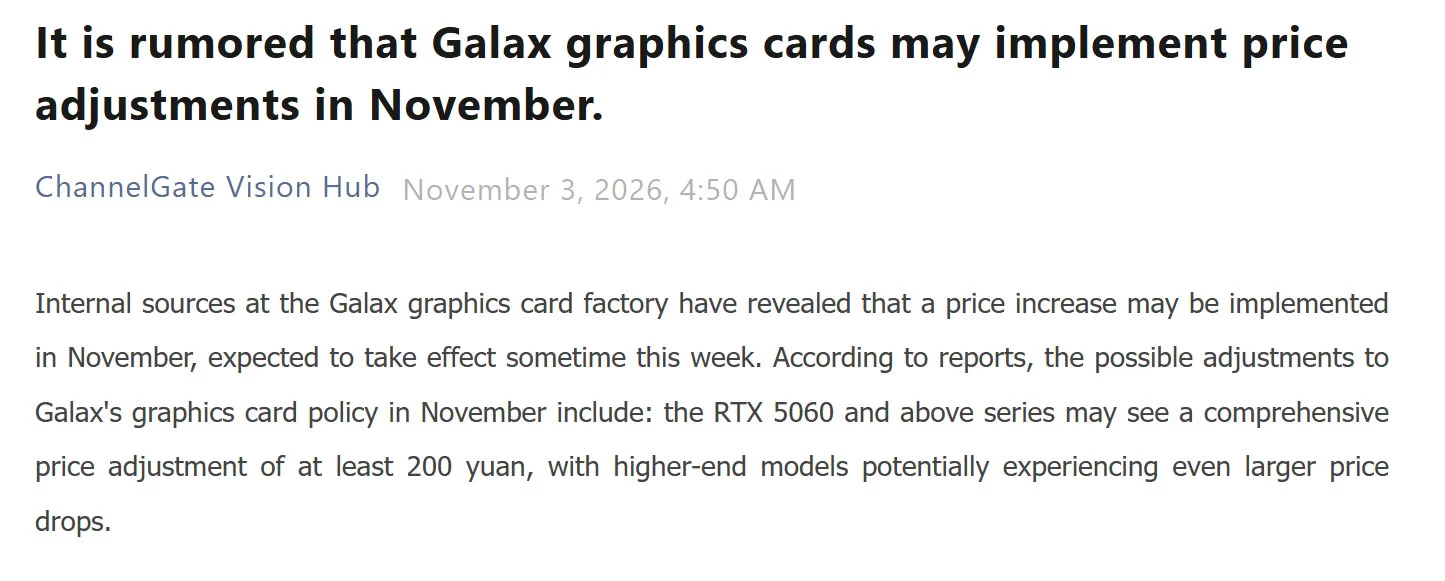
Chinese industry reports say Colorful has implemented new November pricing, while GALAX is reportedly preparing adjustments. The reported figures are increases to factory or distributor pricing; retailers may pass them on to buyers, but the final change at checkout will depend on the market and seller.
| Graphics card | Reported increase in China | Approximate US-dollar equivalent |
|---|---|---|
| RTX 5090 D V2 | ¥2,200–¥3,300 | $330–$495 |
| RTX 5080 | ¥2,500–¥2,800 | $375–$420 |
| RTX 5070 Ti | ¥1,000 | $150 |
| RTX 5070 | ¥600–¥900 | $90–$135 |
| RTX 5060 Ti 16GB | ¥250–¥400 | $37–$60 |
| RTX 5060 Ti 8GB | ¥100–¥150 | $15–$22 |
| RTX 5060 | ¥150–¥200 | $22–$30 |
Retail prices are already far above launch levels
The reported cost adjustments arrive amid elevated retail pricing. In US listings cited in recent coverage, an RTX 5090 Founders Edition remained at its $1,999 list price but was out of stock, while a Gigabyte AORUS model was listed at $3,340. A PNY RTX 5080 was listed at $1,579 against its $999 launch MSRP. These examples show current street prices, not a new NVIDIA price schedule.
No official NVIDIA MSRP change confirmed
The reports attribute the increases to constrained memory supply and higher component costs, but those explanations have not been confirmed by NVIDIA. They also do not establish that the China adjustments will be applied at the same level worldwide. For PC builders and gamers, the key distinction is between higher costs reported within the supply chain and the price a retailer ultimately charges.
Via ChannelGate