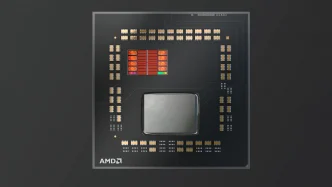

Early streamer tests for the highly anticipated Battlefield 6 have revealed significant performance differences between AMD’s Ryzen processors and Intel’s Core i9, particularly highlighting the impact of AMD’s 3D V-Cache technology. These initial benchmarks suggest a substantial advantage for AMD CPUs in delivering high frame rates, even when paired with top-tier GPUs.
Key Takeaways
- AMD’s Ryzen 7 9800X3D shows a significant performance lead over Intel’s Core i9-14900K in early Battlefield 6 tests.
- The 3D V-Cache technology on AMD CPUs is a key factor in achieving higher frame rates and lower latency.
- These early results suggest that AMD processors may offer a more optimal experience for high-refresh-rate gaming in Battlefield 6.
- While impressive, these are pre-release benchmarks and final performance may vary.
Ryzen 7 9800X3D Dominates Battlefield 6 Performance
Recent leaked benchmarks from early Battlefield 6 streamer tests indicate that AMD’s Ryzen 7 9800X3D processor significantly outperforms Intel’s Core i9-14900K. In tests conducted at 1440p resolution with an NVIDIA RTX 5080 GPU and 32GB of DDR5-6400 memory, the Ryzen 7 9800X3D achieved frame rates exceeding 300 FPS, with some reports showing averages between 330-370 FPS. This setup also demonstrated exceptionally low system latency, ranging from 6.7 ms to 8.5 ms.
BATTLEFIELD 6 Average fps performance was very good, NUMBERS/SPECS BELOW
330-370fps gpu
310-330fps cpu
6.7-8.5 PCL LatencyNot allowed to show screenshots but for those asking, 9800x3d + 6400 1:1 2133 32gb + 5080 3200mhz core AND no optimized nvidia driver.
— Bruhskey (@bruhskey) August 1, 2025
In contrast, when the same system configuration was used with an Intel Core i9-14900K, performance dropped by approximately 110 FPS. This substantial difference is attributed to the larger L3 cache on AMD’s X3D processors, which appears to be highly beneficial for the Frostbite engine used in Battlefield 6. The 9800X3D’s architecture effectively reduces CPU-related latency and frame-time spikes, crucial for maintaining smooth gameplay in demanding titles.
AMD’s 3D V-Cache Advantage
Sources suggest that Battlefield 6’s engine is optimized to leverage the large L3 cache found in AMD’s X3D processors. This cache allows for faster access to critical game data, such as physics calculations and asset streaming, which are intensive in games like Battlefield. The Ryzen 7 9800X3D, with its substantial cache, provides a tangible benefit by minimizing data-fetch delays, leading to a smoother and more responsive gaming experience.
Comparison with Previous Generations
While the focus is on the latest hardware, AMD’s previous generation X3D processors, like the Ryzen 7 5800X3D, have also shown a strong performance advantage in cache-sensitive games compared to their Intel counterparts. This trend indicates that AMD’s approach to CPU design, particularly with the integration of 3D V-Cache, is consistently beneficial for gaming performance.
Console and PC Optimization
Beyond PC performance, developers are working to ensure Battlefield 6 delivers a stable 60 FPS experience across all consoles, including the Xbox Series S. A dedicated Performance Mode will allow players on both Xbox and PlayStation to exceed 60 FPS on compatible displays. On PC, frame rates are expected to scale with hardware, with enthusiasts able to push performance well beyond console capabilities. The game will also support various upscaling technologies like DLSS and FSR to maintain visual fidelity without compromising frame rates.
Via Tom’s Hardware