


Corsair HX750i Power Supply Overview
Corsair power supplies have always been sleek and stylish, but not overdone or flashy. The HX750i holds true to this and has a simplistic design. The unit has the standard ATX power supply size and is all black with some blue accents throughout.
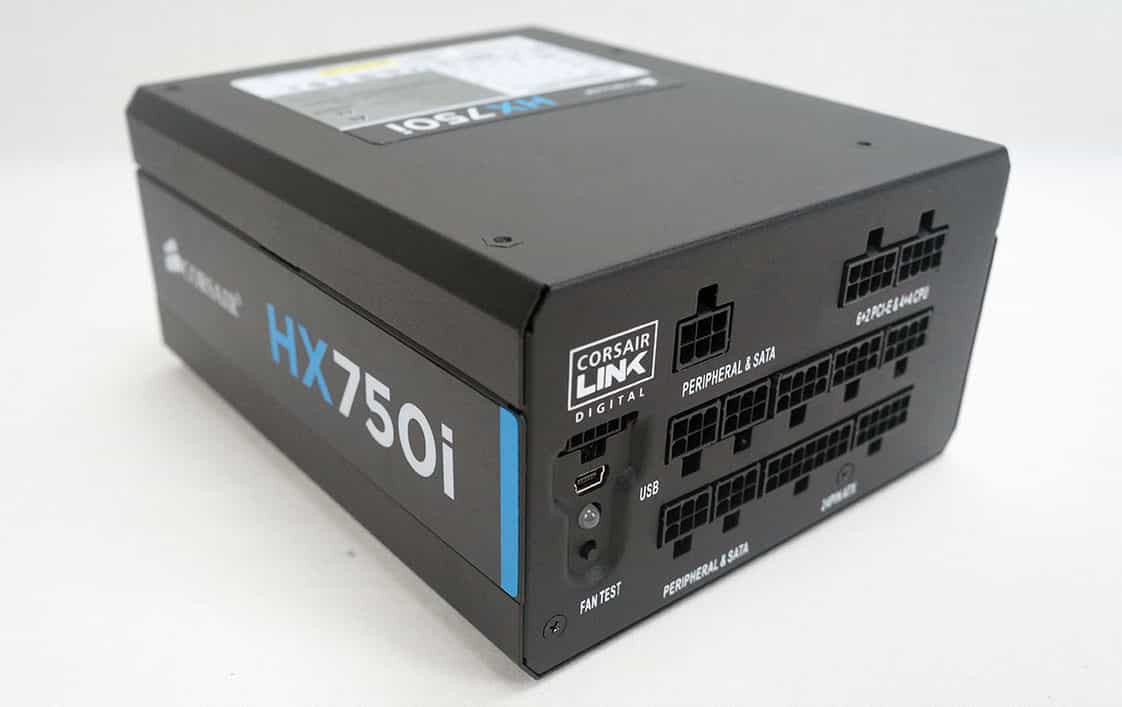
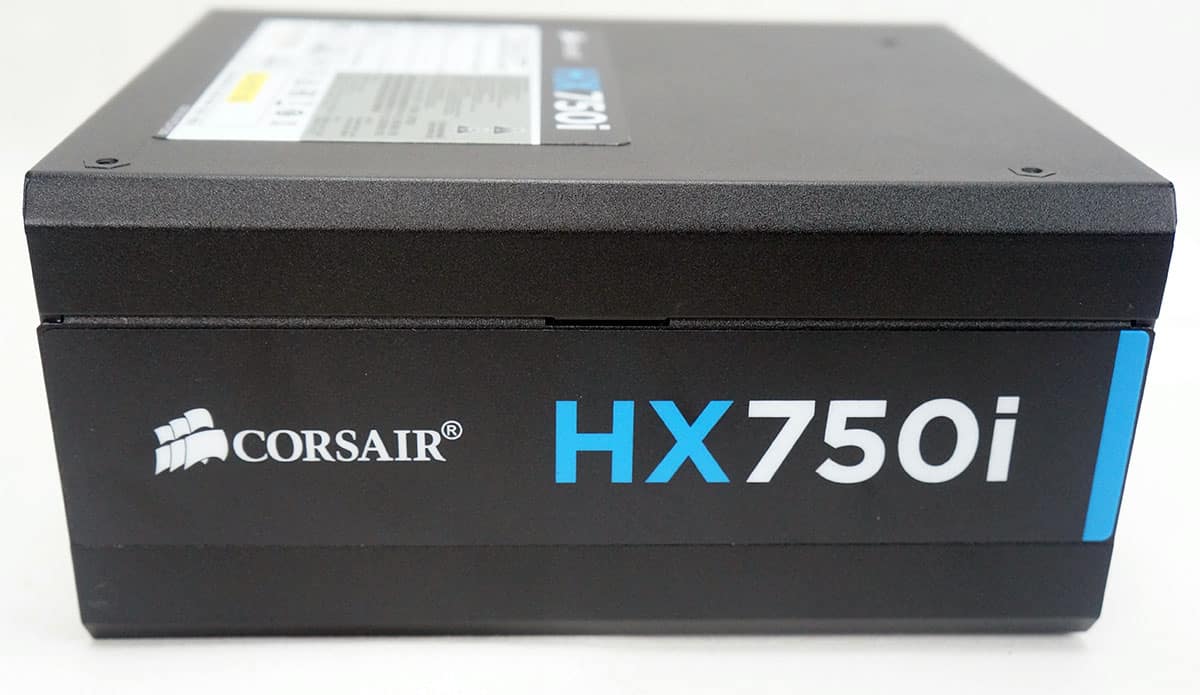
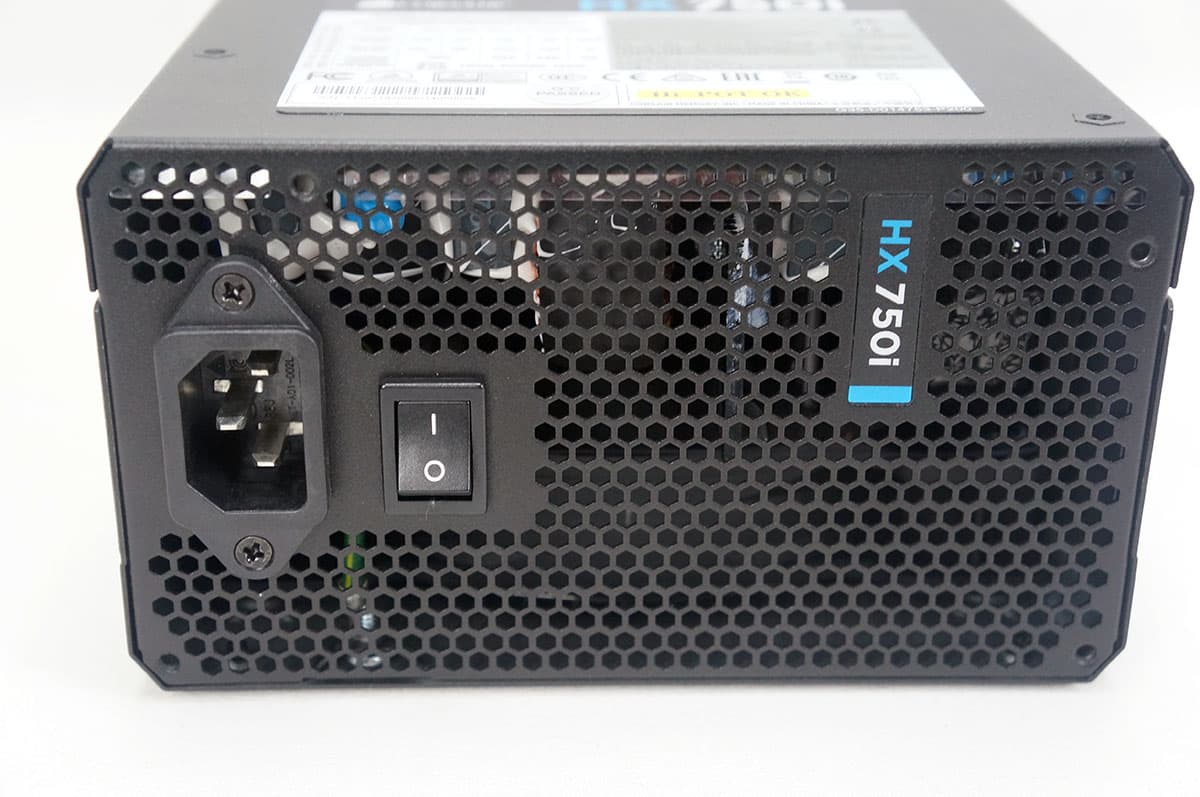
On each side of the unit you have a sticker that has the Corsair logo as well as the HX750i emblem. No matter which way you have the unit mounted people will know that you are rocking a HX750i unit.
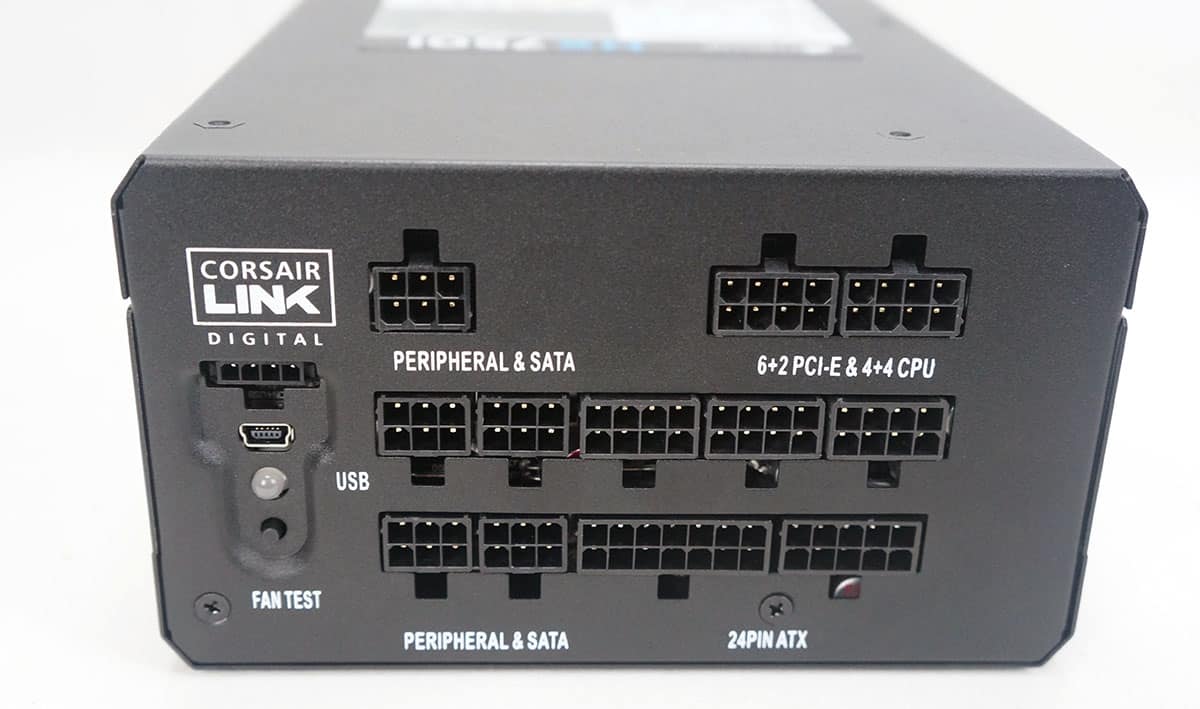
As I mentioned earlier this unit is 100% modular so there are no cables attached to it at all. At the front of the unit you will find all of your modular connections (which are labeled), Corsair Link connections and a fan test button.
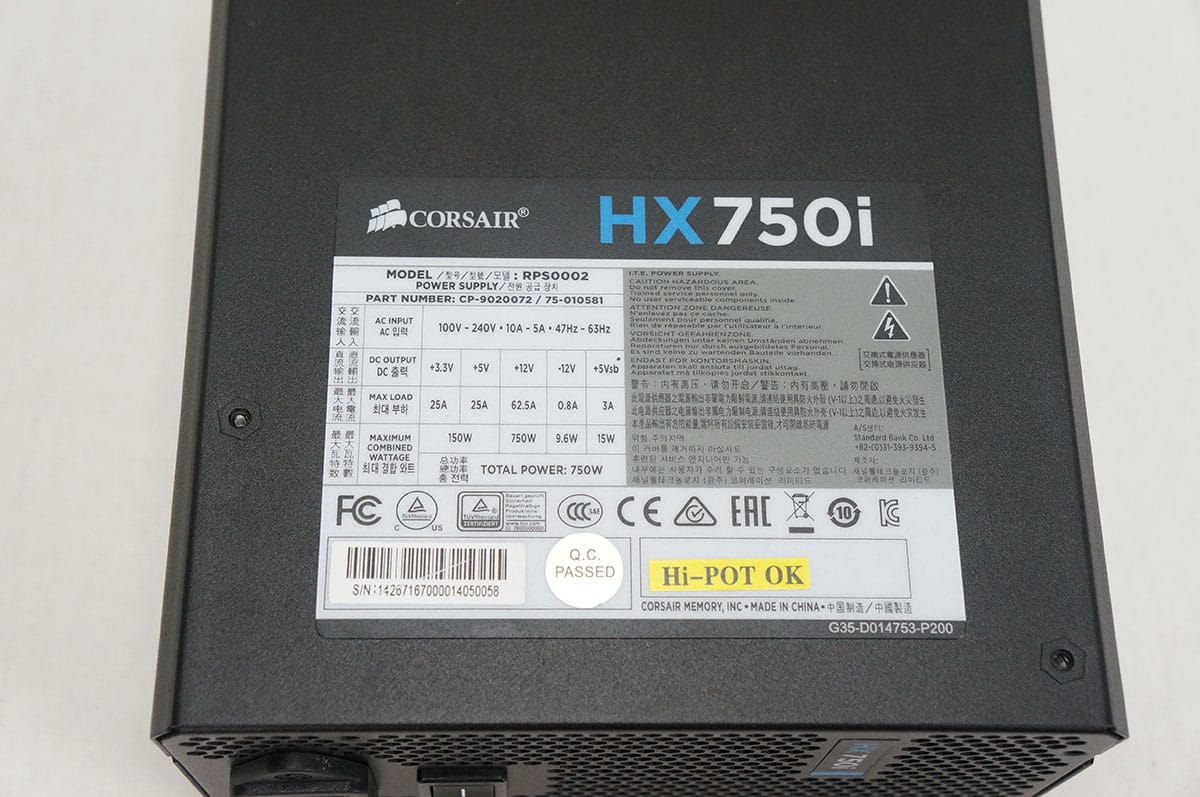
At the top of the unit you have a sticker that tells your input, output, max load and max combined wattage.
The back of the unit has a honeycomb design that will allow air to flow freely throughout the unit. Also on the back we have the power connection and power button.
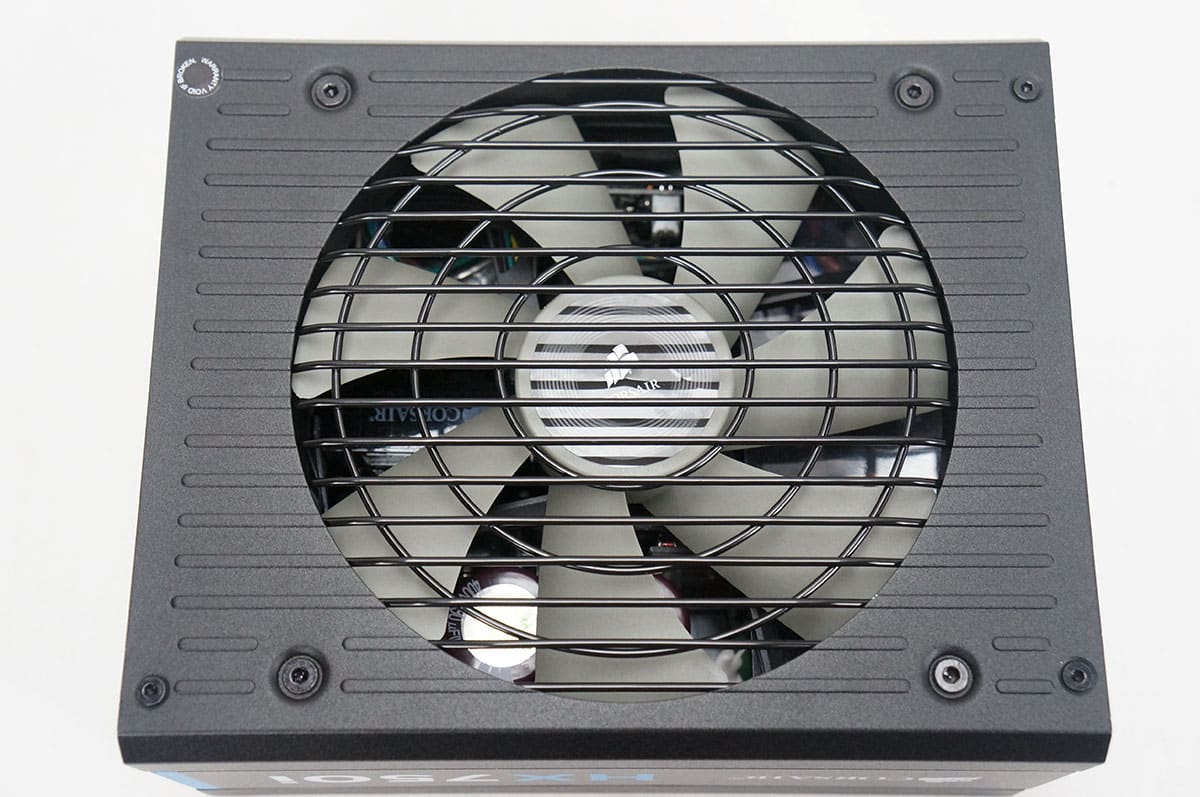
Flipping the unit over to the bottom we can see the 140 mm cooling fan. The fan features a zero RPM mode, which means it will not spin up until the temperature inside the power supply gets to a certain point. This mode is turned on by default, but can be changed in the Corsair Link software.



I have an H100i cooler, and I have always had major issues with the Corsair Link software. You say here that it is a great piece of software. What version did you use, and where did you get it?
Dan it worked just fine on my system. The version was 2.7.5339 and I downloaded it from Corsair’s website: http://www.corsair.com/en-us/support/downloads
Thanks. I think the last one I had was 2.5, and that had horrible issues with Win8.1.
I don’t get it (I really don’t); all these company’s are coming out with newer – more efficient and digital to boot – PSU’s, yet still include an ancient floppy drive connector…why?
I get what you are saying, although with the power supply other devices do use that connector like fan controllers and hard drive enclosures.
Well, some people still do use floppy drives, as mysterious as that may be. My dad still uses his LS-120 drive.
As for that Z97-K/CSM, the CSM portion stands for “Corporate Stable Model.” Many corporate workstations still use PCI devices, and their business relies on that PCI device. So, Asus putting out a motherboard that will be around a while (the CSM part) and has PCI slots means those corporations can rely on having the support they need. Back when PCIe first came out, when most mainstream motherboards had one AGP connector and 5 or 6 PCI connectors, and ISA had been gone for more than three years, I knew of a couple corporate systems that still used ISA and EISA cards, and those businesses relied on those systems. A significant portion of their business would be significantly impaired if those systems went down for any reason.
I remember one system in particular that was hooked to a high speed document scanner through an EISA card to a motherboard with a Pentium III Xeon. This system would scan the documents into a system where the customers service department could call them up to confirm a transaction took place, and the circumstances around it. If that system had gone down for any reason, they would have in excess of 10,000 documents per day stacking up that they needed to store. Eventually, they did add a second system for redundancy, but that one system performed on its own for over three years. It wasn’t smart, but it was what they did. These days, they’ve replaced that with databases and computerized interfaces, but back then it had to take place on paper before it could be computerized.
psu manufacturers should provide means to run water pump without power on the motherboard, so its possible to fill the tubes without overheating the cpu. also would be nice to provide powering of fans when motherboard has been switched off, but components are still hot. and you should measure voltage ripple amplitude and voltage spikes when powering on and off the psu hard at the back. i know, it takes an osciloscope to read millisecond x millivolt scale. but at least do tell if the psu is noisy (air outtake) and how cool/warm is it at 80% (or more) power draw.