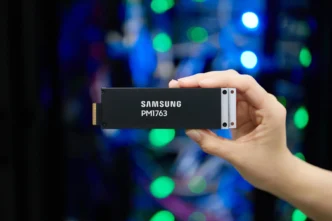
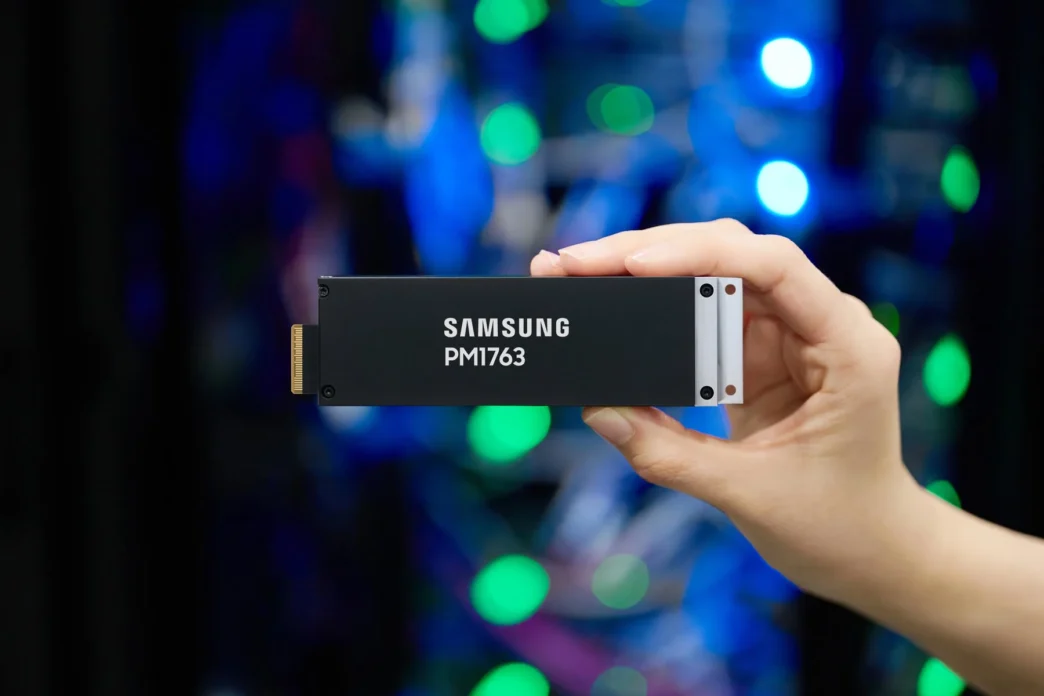
Samsung Electronics has officially launched mass production of the PM1763, a cutting-edge PCIe 6.0 enterprise SSD designed specifically for the rigorous demands of AI and high-performance computing (HPC) server environments. This breakthrough storage solution promises to significantly reduce data latency and accelerate model-loading times in massive AI systems.
Key takeaways
- PCIe 6.0 interface for industry-leading data transfer speeds.
- 16TB model reaches 28,400 MB/s read and 21,900 MB/s write speeds.
- Optimized for liquid-cooled server architectures.
- Enhanced security with post-quantum cryptography support.
Redefining storage performance for AI
The PM1763 represents a major leap forward in storage technology, specifically engineered to handle the massive datasets required for modern AI training and inference. By utilizing Samsung’s 9th-generation V-NAND and a newly developed 4-nanometer controller, the drive delivers more than twice the performance of the previous PM1753 model. This massive bandwidth allows for the transfer of a 40GB large language model in approximately 1.4 seconds, drastically reducing the latency between processors and accelerators to improve overall AI processing efficiency.
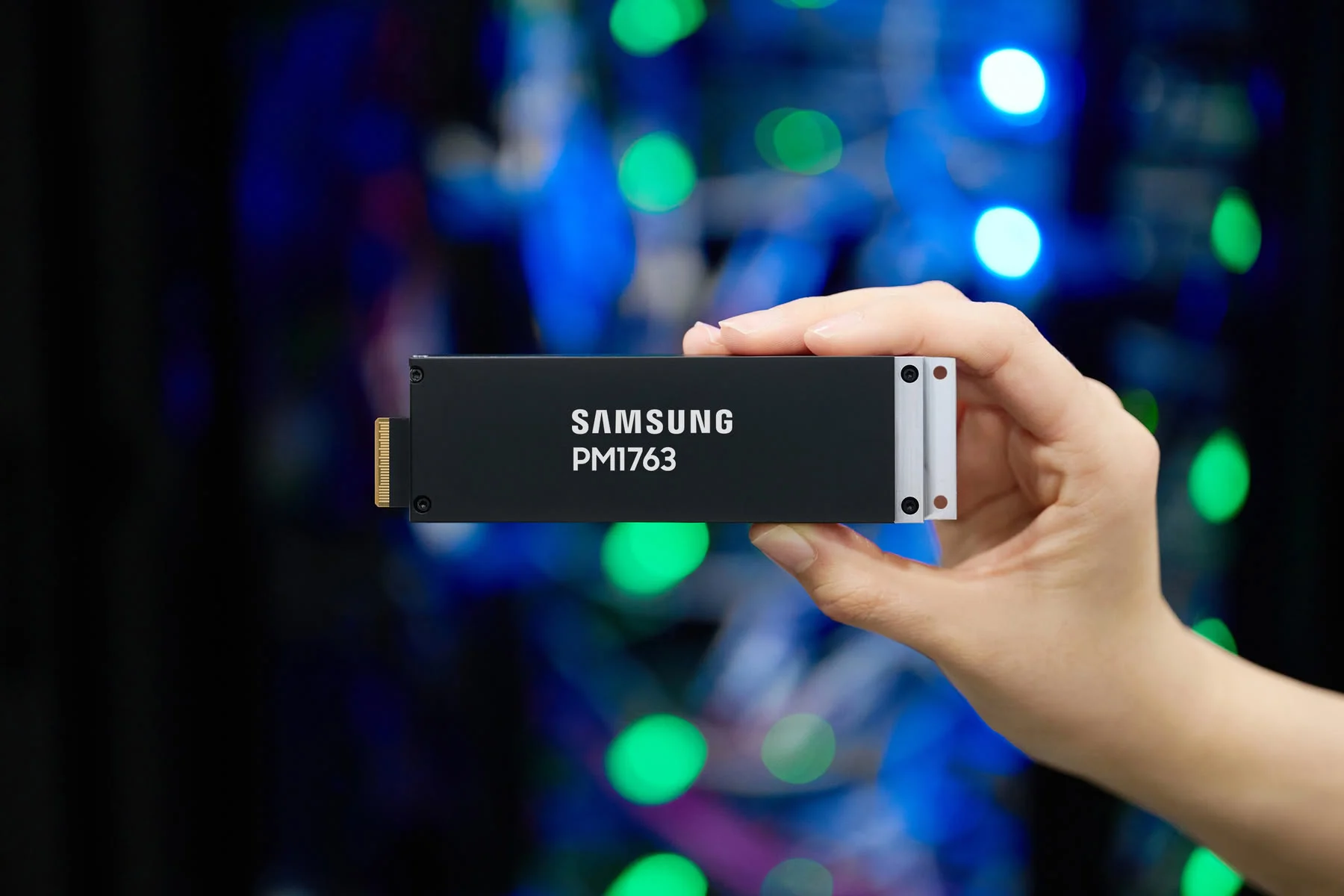
Advanced cooling and power efficiency
To maintain peak performance during intensive AI training and extended operating conditions, the drive incorporates direct-to-chip (D2C) liquid cooling technology. This specialized design ensures that the hardware remains stable even under heavy, sustained workloads. Beyond thermal management, the PM1763 is significantly more energy-efficient than its predecessor, offering a 1.8-fold improvement in power efficiency. This enhancement is critical for data centers aiming to minimize their operational costs while scaling their infrastructure to meet growing AI demands.
Future-proof security features
As AI-driven security risks evolve, Samsung has integrated advanced protective measures into the PM1763 to safeguard sensitive data. The drive supports post-quantum cryptography (PQC) algorithms, which are designed to defend against future threats posed by quantum computing. Furthermore, the inclusion of the TEE Device Interface Security Protocol (TDISP) provides a robust framework for securing data pathways within virtualized environments, ensuring that information remains protected as it moves through complex AI server architectures.