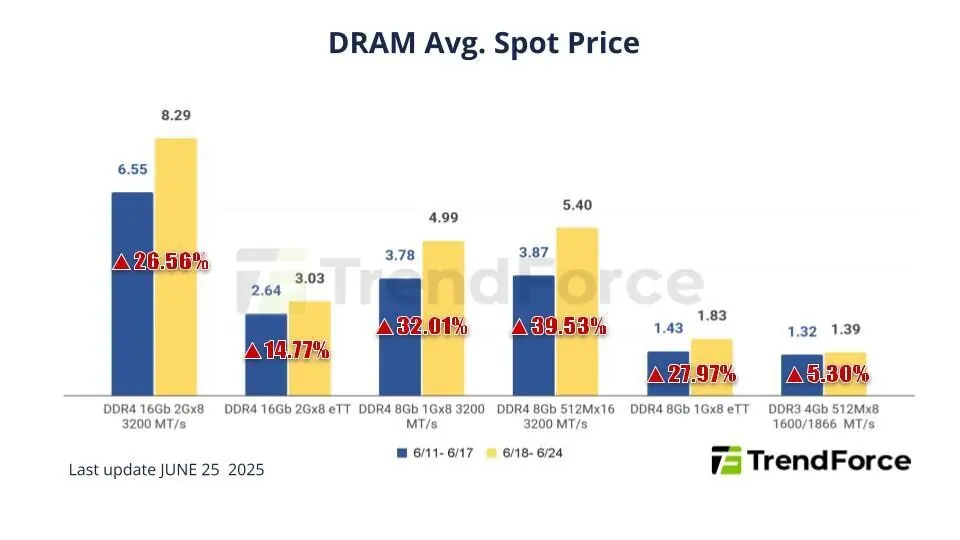
DDR4 RAM, once a cost-effective choice for PC builders, has seen its prices skyrocket, nearly tripling in just two months. This unprecedented surge has eroded its value advantage over the newer DDR5 modules, creating a perplexing market dynamic where older technology now often costs more than its successor. The sudden shift is attributed to a confluence of factors, including production wind-downs by major manufacturers and looming tariff concerns.
Unprecedented Price Surge for DDR4
For the first time in memory, the outgoing generation of DRAM, DDR4, has become significantly more expensive than the current generation, DDR5. This dramatic shift is largely due to a “perfect storm” of market conditions, including:
- Manufacturer Exits: Major players like Micron and Samsung are winding down DDR4 production to focus on DDR5 and High Bandwidth Memory (HBM), reducing supply.
- Tariff Fears: Speculation about potential U.S. tariffs on Chinese-produced DDR4 is fueling panic buying and driving prices up.
Key Takeaways
- DDR4 prices have nearly tripled in two months, with some kits seeing a 40% increase in a single week.
- The average spot price for DDR4 16Gb (1Gx16) at 3200 MHz from Samsung/SK Hynix reached $12.50, with highs of $24.00, while DDR5 2x8G modules at 4800/5600 MHz remain around $6, with highs of $9.
- Micron and Samsung are phasing out DDR4 production, with Micron’s lines entering end-of-life and Samsung shifting focus to DDR5 and HBM.
- Nanya, a major DDR4 supplier, is poised to benefit significantly from the price increases, having accumulated a substantial DDR4 inventory.
- The price hikes are also influenced by major manufacturers raising prices for their final batches of DDR4.
- Concerns over potential U.S. tariffs on Chinese DDR4 production are contributing to market uncertainty and panic buying.
- Despite the rise of DDR5, many consumers and laptop OEMs still prefer DDR4 due to its lower cost (historically) and maturity, but this cost advantage is rapidly disappearing.
The Impact of Manufacturer Shifts
The current DDR4 price surge is heavily influenced by major memory manufacturers exiting the DDR4 market. Micron, a significant producer, announced its exit from new DDR4 memory module production, with a complete wind-down expected within 6-9 months. Samsung also declared its imminent DDR4 retirement in April, citing the overwhelming demand for DDR5 and HBM. Even Chinese firm CXMT, which recently reached peak DDR4 production, has hinted at ending its DDR4 output.
This collective shift by leading manufacturers is drastically reducing the supply of new DDR4 modules, creating a scarcity that is driving up prices. The remaining supply is now largely in the hands of a few players, such as Taiwanese DRAM firm Nanya, which held a staggering NT$37.6 billion ($1.2 billion USD) in DDR4 inventory in Q1. Nanya has reportedly stopped providing DDR4 spot price quotes, positioning itself to capitalize on the escalating market.
Tariff Concerns and Market Uncertainty
Adding to the supply-side pressures are significant concerns about potential trade tariffs. Speculators believe the U.S. government might impose retaliatory tariffs on China’s substantial existing output of DDR4. Such a move would further restrict supply and could push DDR4 prices even higher, potentially making them more than triple the cost of DDR5.
This uncertainty is prompting panic buying, as consumers and businesses attempt to secure DDR4 modules before prices climb further or supply becomes even more constrained. The combination of reduced production and tariff fears has created a volatile market where the value proposition of DDR4 has been completely inverted.
Implications for Consumers and OEMs
The dramatic increase in DDR4 prices has significant implications for both consumers and Original Equipment Manufacturers (OEMs). While DDR5 is the newer technology, DDR4 still accounts for a substantial portion of the market, particularly in laptops. Many laptop buyers and OEMs have continued to opt for DDR4 due to its historical cost-effectiveness and mature technology, especially when paired with older, yet still popular, CPUs like Intel’s Raptor Lake chips.
However, this cost-saving strategy is now obsolete. Laptops and systems relying on DDR4 may soon become more expensive than their DDR5 counterparts, eliminating a key incentive for choosing the older standard. This market upheaval forces consumers and OEMs to re-evaluate their purchasing and production strategies, potentially accelerating the transition to DDR5 despite its higher initial cost.
Via Tom’s Hardware