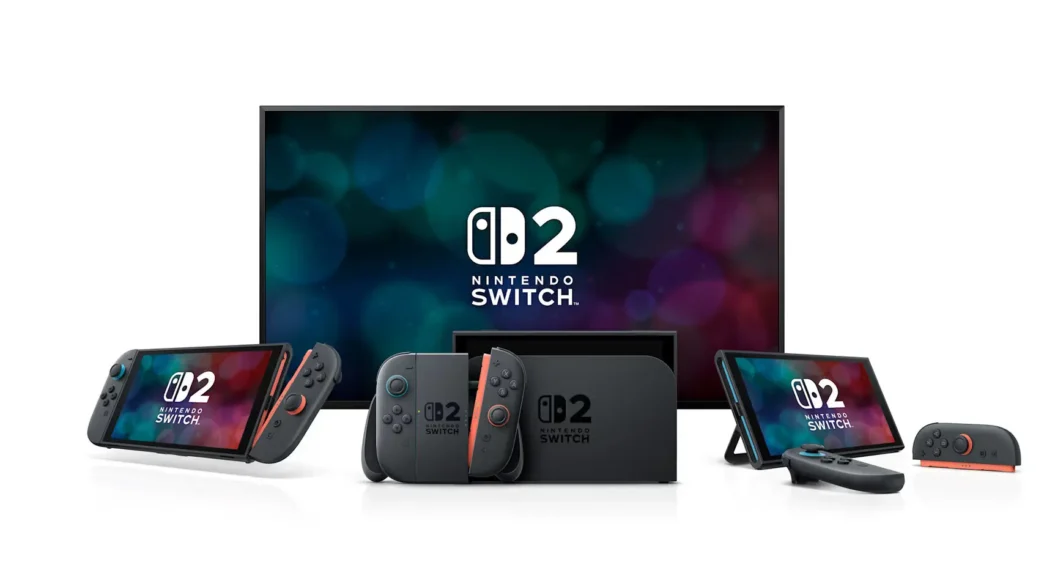
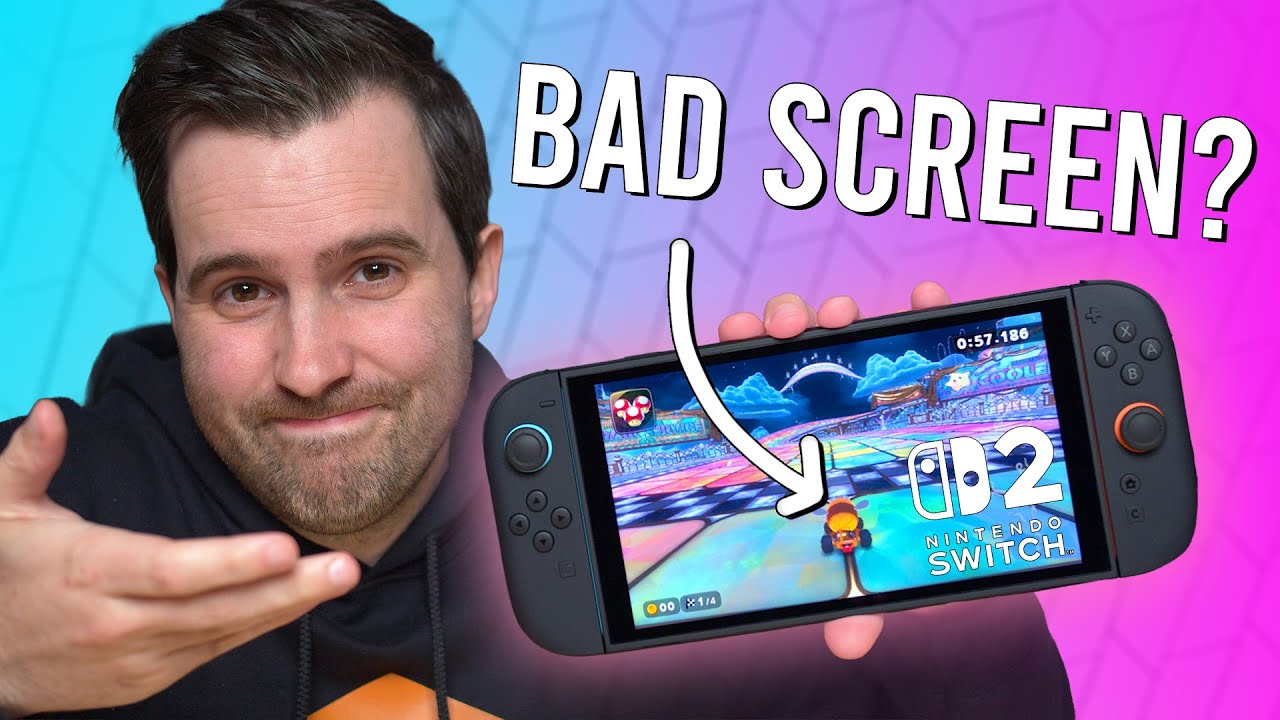
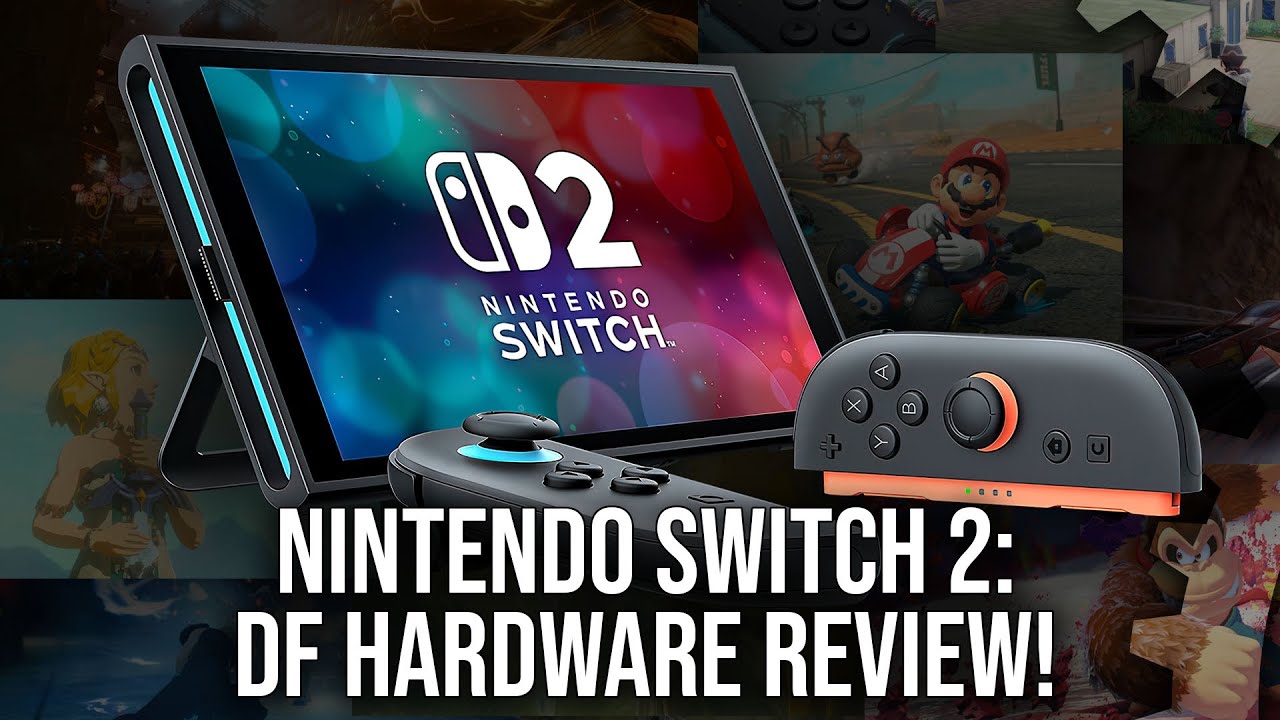
Nintendo’s highly anticipated Switch 2 is facing criticism regarding its LCD screen, with early analyses highlighting significant issues. Reports indicate slow response times leading to motion blur, particularly in fast-paced games, and subpar High Dynamic Range (HDR) performance due to limited brightness and elevated black levels. These display shortcomings are raising concerns among tech reviewers and potential buyers.
Switch 2’s Display: A Blurry Picture
Independent testing has revealed that the Nintendo Switch 2’s LCD panel suffers from remarkably slow response times, contributing to noticeable motion blur. Monitors Unboxed, a reputable hardware review publication, measured the Switch 2’s gray-to-gray transition response time at 33.3ms. To put this into perspective:
- Average Entry-Level LCD: 6.3ms
- Original 2017 Switch LCD: 21.3ms

This means the Switch 2’s display is nearly twice as slow as its predecessor and significantly slower than typical modern LCD panels. For games running at 60 frames per second (fps), where a new frame is rendered every 16.67ms, the display’s inability to transition quickly enough creates a bottleneck, diminishing the visual clarity expected from higher refresh rates.
HDR Falls Flat on LCD
Despite Nintendo’s promise of HDR support, the Switch 2’s LCD screen struggles to deliver a compelling HDR experience. GamingTech’s analysis found the panel reaches a maximum brightness of only 450 nits, which is below ideal HDR standards. Key observations include:
- Raised Black Levels: Prevents deep contrast, washing out dark scenes.
- Limited Brightness: HDR content lacks the vibrant highlights seen on OLED or Mini-LED screens.
- Better Docked Mode HDR: Games like Cyberpunk 2077 show improved HDR performance when played on an external display, indicating the console’s capability is hampered by its built-in screen.
Digital Foundry also noted that the difference between HDR on and off in games is minimal, further highlighting the display’s limitations.
Why the Downgrade?
The decision to equip the Switch 2 with an LCD panel, especially one with these performance issues, has puzzled many, particularly given the success of the Nintendo Switch OLED model. While LCDs can achieve high refresh rates, OLED screens offer superior contrast and color reproduction. One theory suggests that Nintendo may have reduced overdrive support for the display to conserve battery life, a crucial factor for a handheld console. The Switch 2’s 19Wh battery is less than half the capacity of Valve’s Steam Deck, making power efficiency a significant design consideration.
Key Takeaways
- The Nintendo Switch 2’s LCD screen exhibits slow response times, leading to motion blur.
- HDR performance is subpar due to limited brightness and elevated black levels.
- The display is slower than the original Switch’s LCD and significantly behind modern standards.
- The choice of LCD over OLED and potential battery life considerations may be contributing factors to these display compromises.
While the Switch 2 offers significant performance upgrades, its display appears to be a notable drawback, potentially impacting the handheld gaming experience.