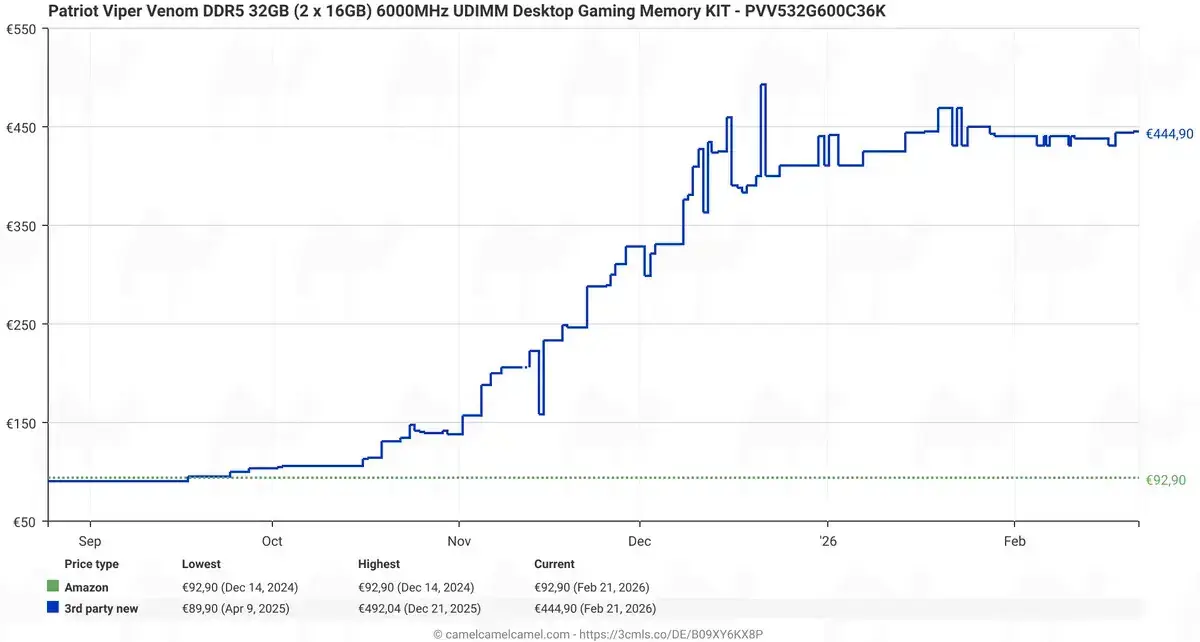
After a period of significant price hikes that made DDR5 memory prohibitively expensive, consumers in Germany and across Europe are finally seeing a glimmer of hope. Retail prices for DDR5 RAM have begun to show a modest decline, marking the first sustained easing since prices started their steep ascent in late 2025. While the drops are not yet uniform across all models, this trend offers a welcome relief to PC enthusiasts and builders who have been priced out of upgrades.
Key Takeaways
- DDR5 prices in Germany and the EU have started to fall after a significant spike.
- This easing is attributed to potential buyer hesitation, retailers clearing stock, and a slight increase in supply.
- US prices are expected to follow Europe’s trend with a delay.
- The decline could lead to more affordable laptops with higher RAM configurations.
A Welcome Correction
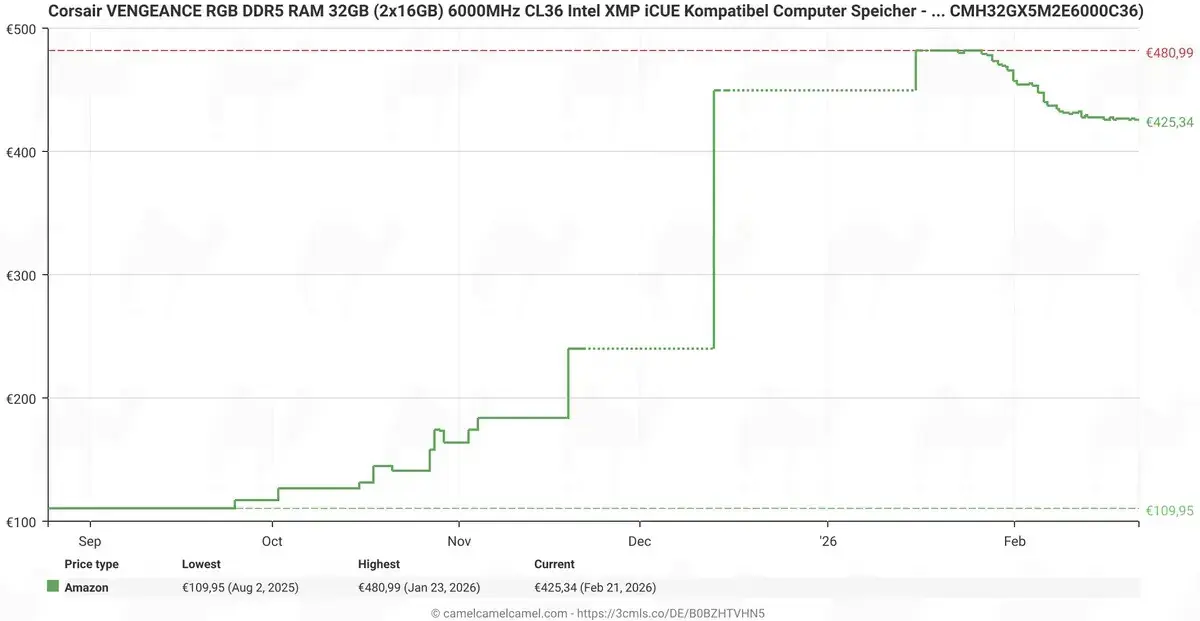
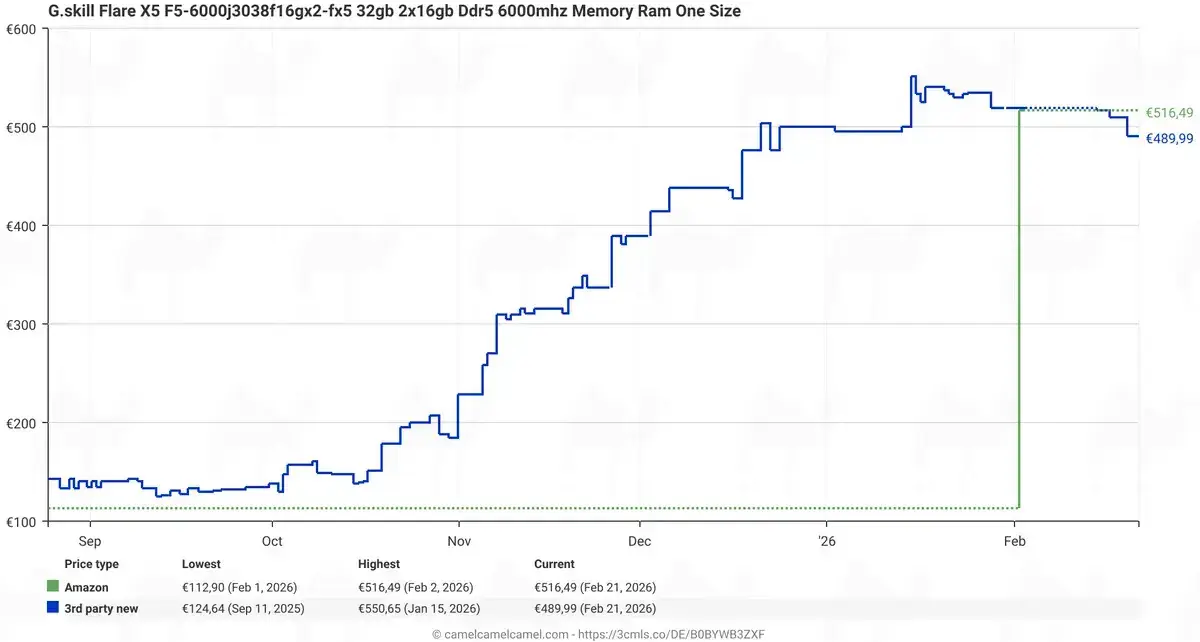
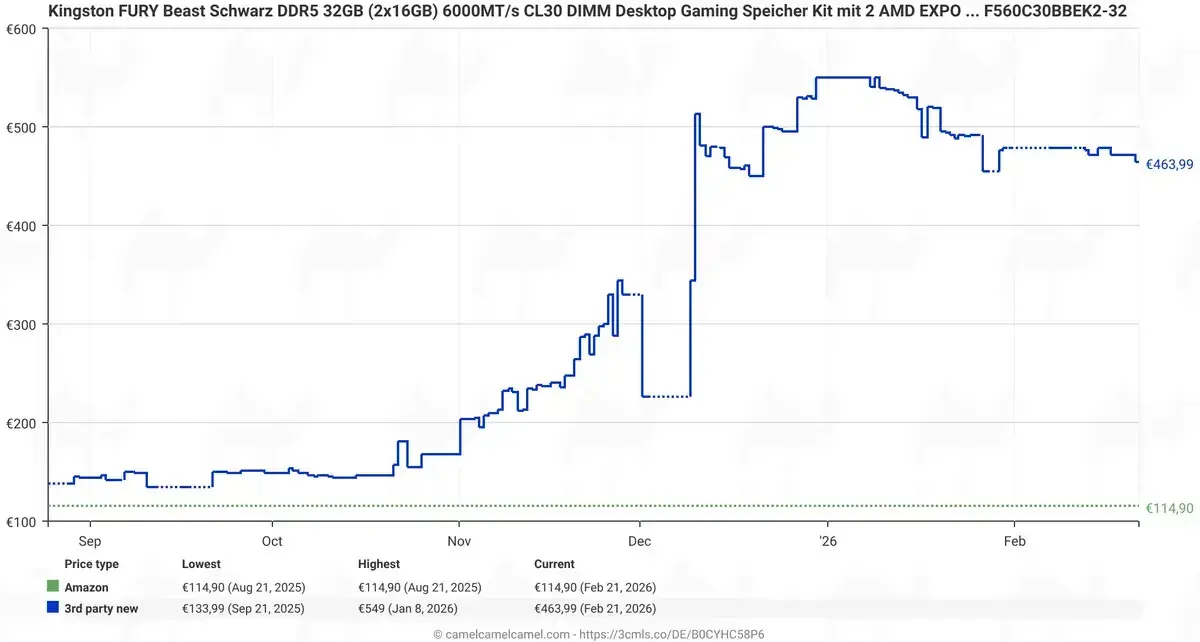
Recent data indicates that average prices for 32GB DDR5 kits in the European Union, which had surged to astronomical levels in early February 2026, have begun to trend downward. Independent checks on German retail sites reveal that popular models from brands like Corsair and Kingston have seen noticeable price reductions from their peaks. For instance, some Corsair Vengeance kits dropped from around €480 to approximately €425, and Kingston Fury Beast kits saw a decrease from about €550 to €463.
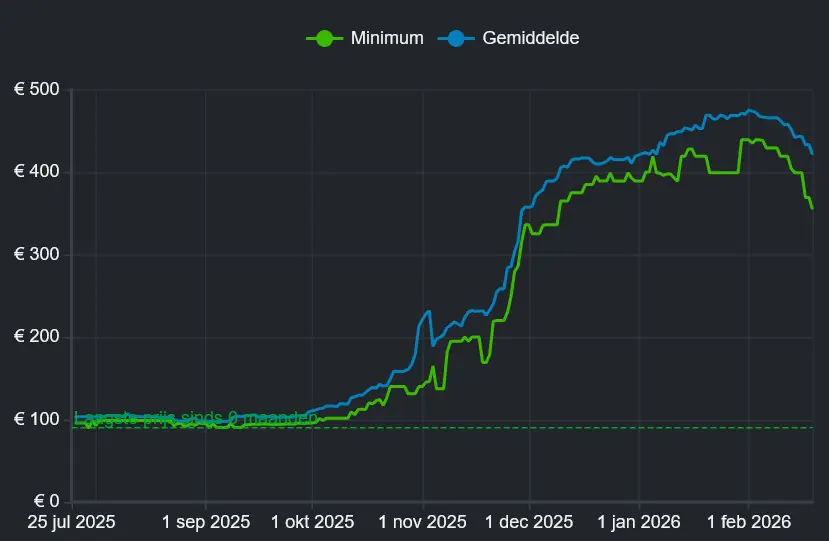
Several factors may be contributing to this softening. Consumers might be pausing their upgrade plans due to the rapid price increases. Retailers could also be incentivized to reduce prices to clear inventory and mitigate stock risk. Additionally, it’s possible that a small amount of additional supply has become available, diverting from the high demand driven by the AI sector.

What This Means for Consumers
While these price drops are a positive sign, experts caution that a complete return to normal pricing may still be some time away. The underlying issues of tight supply and high demand, particularly from the AI industry, continue to influence the market. However, the current trend suggests that consumer pushback against inflated prices is having an effect.
For consumers in the United States, a similar price stabilization or decline is anticipated, though typically with a lag of several weeks after European markets show the initial signs of easing. This development also holds implications for the laptop market, potentially leading to more affordable models with 16GB or even 32GB of RAM becoming standard again, rather than the 8GB or 12GB configurations seen in some entry-level 2026 models.
The Road Ahead
The current price easing is seen as a “quiet glimmer of hope” rather than a full resolution to the “RAMageddon” crisis. A sustained drop in prices will likely require clearer improvements in production capacity or a more significant and lasting decrease in demand. For now, PC builders are advised to monitor the market, as further corrections could occur, especially around seasonal sales events.
Via Reddit, Tom’s Hardware