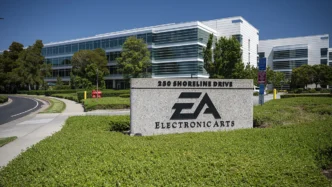

Video game giant Electronic Arts (EA), known for popular titles like “Madden NFL” and “The Sims,” is set to be acquired and taken private in a monumental $55 billion deal. The transaction, led by a consortium of investors including Saudi Arabia’s Public Investment Fund (PIF), private equity firm Silver Lake, and Affinity Partners, marks the largest leveraged buyout in history and signals a significant shift for the 36-year-old publicly traded company.
Key Takeaways
- Electronic Arts will be acquired for $55 billion, making it the largest leveraged buyout on record.
- The deal involves a consortium of investors: Silver Lake Partners, Saudi Arabia’s PIF, and Affinity Partners (led by Jared Kushner).
- EA shareholders will receive $210 per share in cash, a 25% premium over the pre-leak share price.
- The transaction is expected to close in the first quarter of fiscal year 2027, subject to regulatory approvals.
- EA CEO Andrew Wilson will continue to lead the company, and its headquarters will remain in Redwood City, California.
A Historic Transaction
The agreement, announced Monday, will see EA’s stockholders receive $210 per share in an all-cash deal. This valuation significantly surpasses previous record buyouts, including the $32 billion acquisition of Texas utility TXU in 2007. The move signifies a major shift for EA, ending its 36-year tenure as a publicly traded entity since its initial public offering.
The Investors Behind the Deal
The consortium leading the acquisition is a powerful mix of financial and strategic players. Silver Lake Partners, a prominent private equity firm with a history of tech investments, is a key player. Saudi Arabia’s Public Investment Fund (PIF) is making a substantial push into the gaming sector, aiming to diversify its investments beyond oil. Affinity Partners, a firm managed by Jared Kushner, President Donald Trump’s son-in-law, is also part of the group. The PIF already holds a significant stake in EA and has been actively investing in the gaming and esports industries.
Strategic Implications and Future Outlook
By going private, EA aims to operate with greater flexibility, free from the short-term pressures of public market scrutiny and quarterly financial targets. This strategic shift comes as the video game industry faces evolving market dynamics, including increased competition from mobile gaming and the high cost of game development. Despite recent challenges, including layoffs and project cancellations, EA’s core sports franchises and established intellectual properties are seen as valuable assets. The acquiring group plans to invest heavily in EA to expand its global reach, with CEO Andrew Wilson expected to remain at the helm. The deal will require approval from the Committee on Foreign Investment in the United States (CFIUS) due to the involvement of foreign investors.
Via EA