


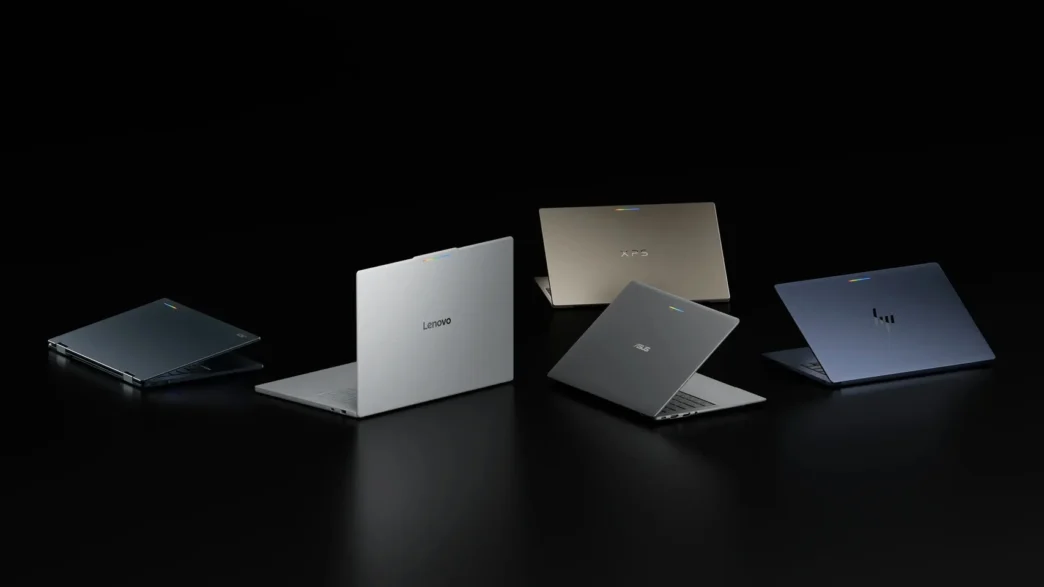
Google has officially launched Googlebook, a new laptop platform combining Android, ChromeOS foundations, Gemini AI, and premium hardware from Acer, ASUS, Dell, HP, and Lenovo. The first five systems target Android users who want stronger phone-to-PC continuity without giving up desktop-class browsing, Linux tools, gaming support, or traditional laptop performance.
Key takeaways
- Googlebook laptops start at $899, with US sales beginning October 4.
- Acer, ASUS, Dell, HP, and Lenovo are launching the first five models.
- Every system includes at least 16GB of RAM, touchscreen hardware, and dedicated AI acceleration.
- Gemini features include Magic Pointer, Rambler, and natural-language widget creation.
- Buyers receive Google AI Pro, cloud storage, software subscriptions, and a year of GeForce Now.
Googlebook is Google’s attempt to create a more cohesive computing platform for Android users. The operating system combines a full Chrome browser, Android applications, Linux support, and a desktop-style file manager with phone integration based on Android’s continuity features.
Five laptops define the launch lineup
The launch hardware covers several form factors and price points:
| Model | Processor | Display | Starting price |
|---|---|---|---|
| Acer Googlebook 14 | Intel Core Ultra 5/7 | 14-inch 2.8K OLED convertible | $899 |
| Dell XPS Googlebook | Snapdragon X Elite | 13.4-inch 2.5K touchscreen | $1,199 |
| ASUS Googlebook 14 | Intel Core Ultra 5/7 | 14-inch 2.8K OLED | $1,299 |
| HP Googlebook 14 | Snapdragon X Elite | 14-inch 2.8K OLED | $1,299 |
| Lenovo Googlebook 15 | Intel Core Ultra 5 | 15.3-inch 2.8K OLED | $1,299 |
The Acer is the only convertible in the initial range. Dell and ASUS offer the lightest designs at roughly 2.2 pounds, while Lenovo provides the largest display and Dolby Atmos audio. Configurations reach 32GB of memory, with storage starting at 256GB on most models and 512GB on Dell’s system.
Premium hardware and dedicated AI silicon
Google is setting a higher hardware baseline than traditional entry-level Chromebooks. All five laptops include at least 16GB of RAM, touchscreens, backlit keyboards, premium metal or carbon-fiber construction, and NPUs rated above 40 TOPS for local AI processing. Battery claims reach up to 14 hours of video playback and 16 hours of web browsing.
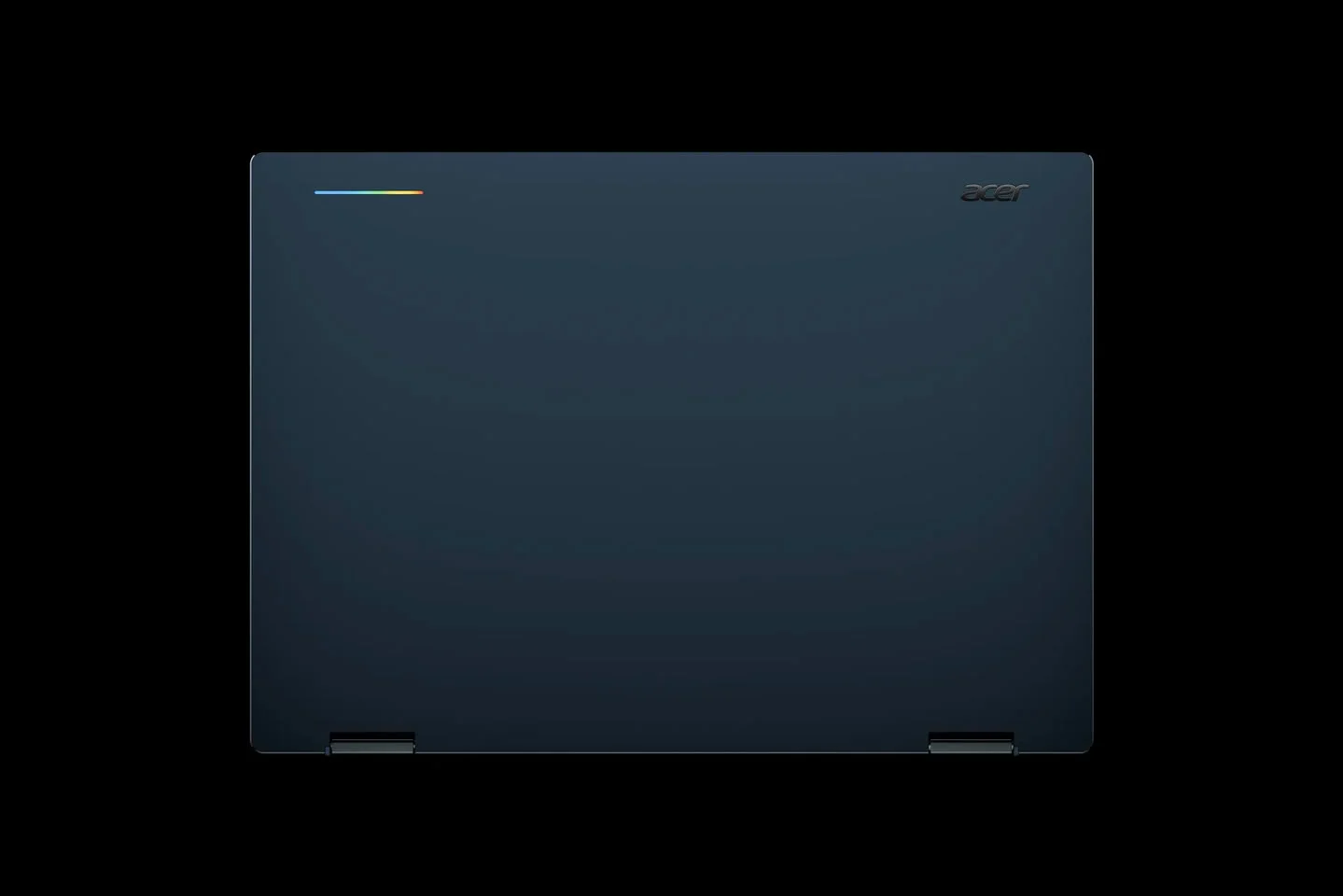
The systems also share Google’s Glowbar, an exterior light strip that indicates startup and charging status and can animate during Gemini interactions. Large glass trackpads, fingerprint readers, and haptic feedback are available across the lineup, while select models add face authentication.
Android continuity is the main selling point
During setup, Googlebook can bring over an Android phone’s settings, saved passwords, Wi-Fi networks, and messages using encrypted device-to-device transfer. Continue On is designed to resume tasks across devices, while Files can surface phone documents and photos directly on the laptop.
Cast My Apps allows users to run compatible phone applications in desktop windows without installing them locally. Google is also updating Chrome with extensions, vertical tabs, and phone-to-laptop browsing continuity. The Play Store will highlight applications optimized for larger screens, while Linux containers provide a fuller environment for developers and power users.
Gemini becomes part of the desktop workflow
Magic Pointer summons Gemini when users quickly move the cursor, allowing the assistant to interpret selected text, images, and on-screen context. Google demonstrated using it to turn a training plan into calendar events, while Rambler converts spoken, unstructured thoughts into organized notes.
Create My Widget lets users describe a desktop widget in natural language. Developers can also access the Glowbar for interactive software effects. Googlebook supports tools including Antigravity, Claude Code, and Codex through its Linux environment, with a security architecture based on ChromeOS, Titan hardware, malware detection, and isolated Linux virtualization.
Pricing, availability, and included software
Preorders are open through the Google Store, Best Buy, and participating retailers. US availability begins October 4, followed by Canada, the UK, Ireland, France, Germany, and Australia on October 5.
Every laptop includes 12 months of Google AI Pro with 5TB of cloud storage, three months of YouTube Premium, Adobe Photoshop, CapCut, and one year of Nvidia GeForce Now. Google also promises 10 years of automatic updates and quarterly feature drops, giving the new platform a longer support commitment than many conventional Windows laptops.
Via Google