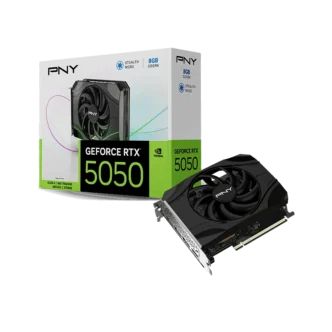
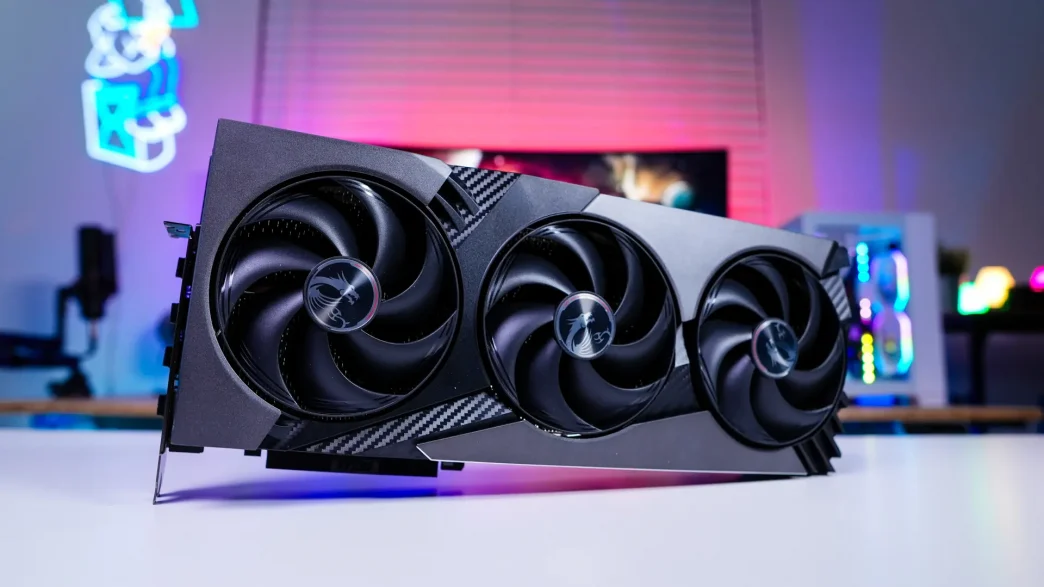
PC enthusiasts and gamers are facing significant sticker shock as many new graphics cards, including Nvidia’s RTX 5090 and 5080, are selling for up to 50% or more above their Manufacturer’s Suggested Retail Price (MSRP). This widespread price inflation extends across both Nvidia and AMD’s latest offerings, making it challenging for consumers to acquire new GPUs at their advertised launch prices.
The GPU Price Surge: A Closer Look
Recent data from various tech publications highlights a concerning trend in the graphics card market. Real-world selling prices, particularly on secondary markets like eBay and even major retailers, are consistently exceeding official MSRPs.
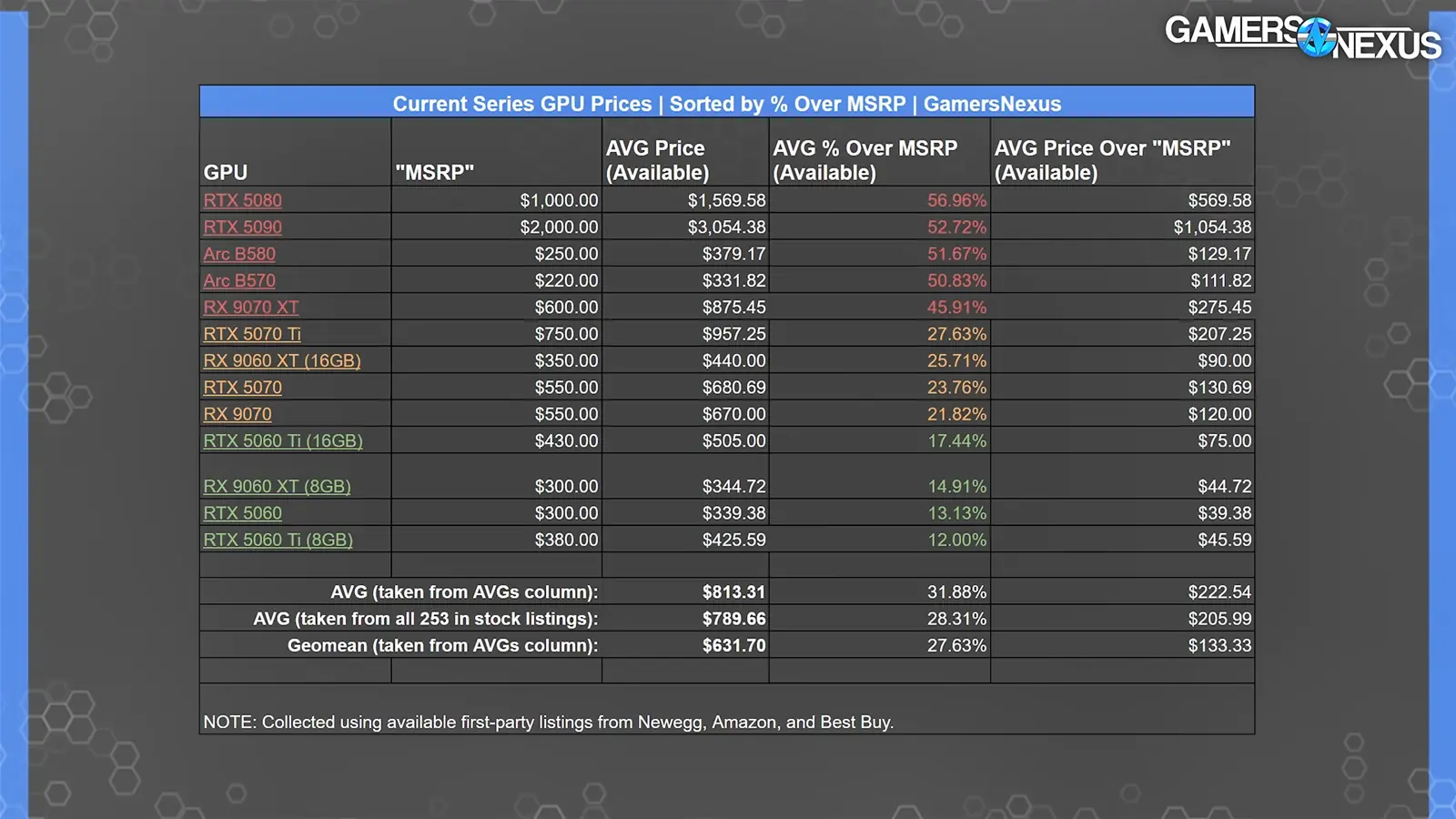
- The flagship Nvidia RTX 5090, with an MSRP of $2,000, is reportedly selling for a staggering $4,222 on secondary markets, representing an increase of over 111%.
- The RTX 5080, with a $1,000 MSRP, is frequently found at prices over 50% higher than its suggested retail price.
- Even the RTX 5070, with a $550 MSRP, is seeing real-world prices around $700, a 27% increase.
AMD’s latest offerings are not immune to this trend:
- The Radeon RX 9070, with a $550 MSRP, averages around $817 in real-world sales, a nearly 48% premium.
- Its higher-end counterpart, the RX 9070 XT, jumps to approximately $1,001 from a $600 MSRP, marking an increase of roughly 66%.
Why Are Prices So High?
Several factors contribute to the inflated GPU prices:
- Limited Supply: The primary bottleneck appears to be the limited production capacity at chip manufacturers like TSMC. These facilities are also heavily engaged in producing more lucrative data center GPUs and AI processors, which offer significantly higher profit margins.
- High Demand: Despite the elevated prices, demand for the latest GPUs remains strong, particularly for high-VRAM models. Early sales figures for AMD’s RX 9070 series were reportedly ten times higher than previous models, indicating robust consumer interest.
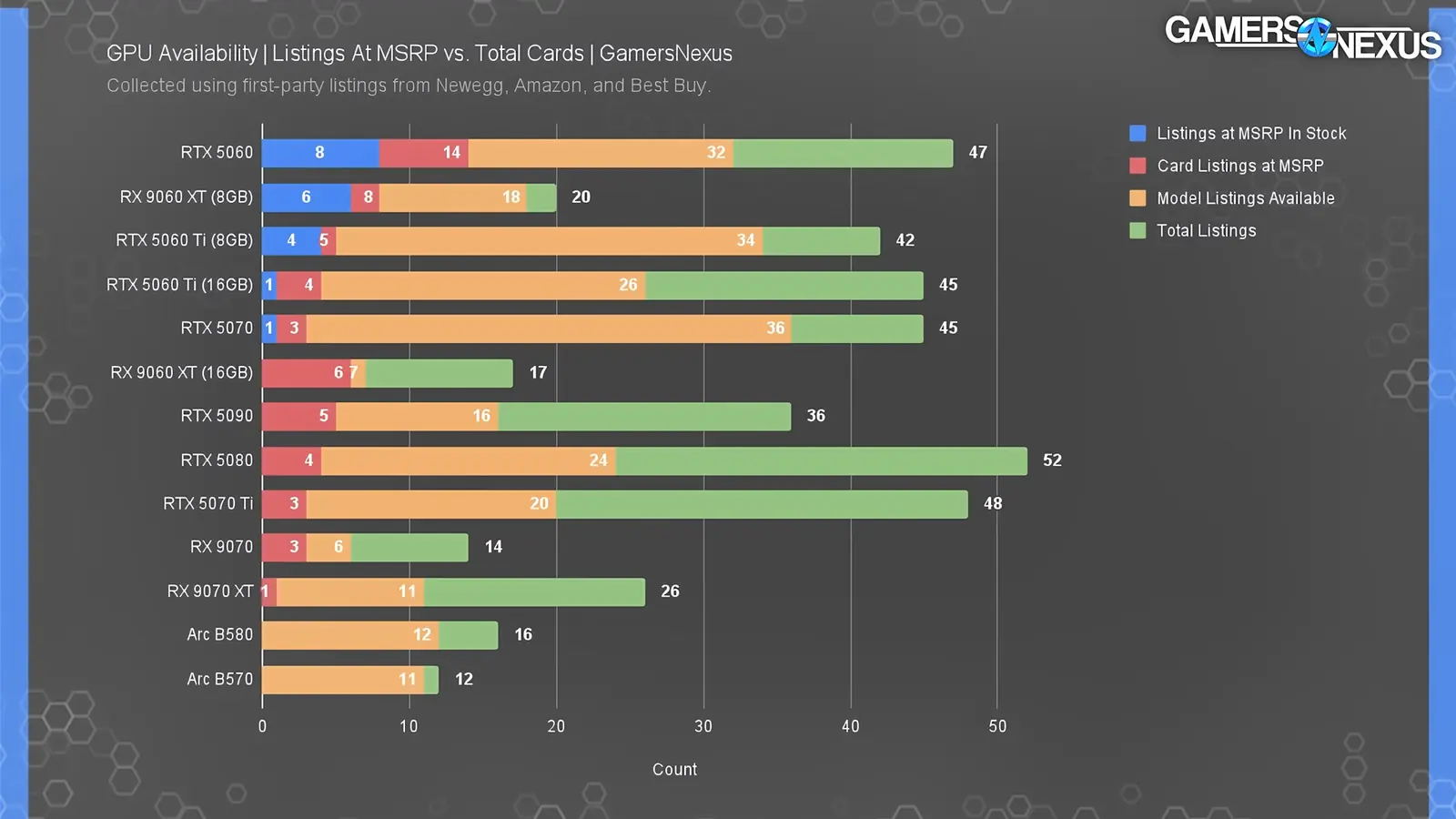
- Retailer and Scalper Markups: With limited stock available at MSRP, retailers and scalpers are capitalizing on the scarcity by marking up prices significantly. Reports indicate that less than 5% of all graphics cards listed by major retailers are actually in stock at their MSRP.
Impact on Consumers
For consumers, this situation means that the advertised MSRPs are largely irrelevant. Anyone looking to purchase a new, current-generation graphics card should be prepared to pay a substantial premium. Older generation cards, such as the RTX 4060 and 4060 Ti, show relatively minor inflation (around 3-5%), suggesting that the most severe price hikes are concentrated on the newest and most powerful GPUs.
The Road Ahead
Industry experts suggest that the current GPU shortages and inflated prices could persist for an extended period. The economic incentives for manufacturers to prioritize high-margin AI and data center chips over consumer GPUs are strong. While some hope for supply to improve in the coming months, a return to widespread MSRP availability for new GPUs is not anticipated anytime soon. Consumers in need of a new graphics card may need to consider older models or brace themselves for continued high prices.