
In today’s digital world, influencers have become a key part of successful marketing strategies. By collaborating with social media influencers, brands can expand their reach, build trust, and boost engagement with their target audience. However, finding the right influencers requires strategy and effort. This guide explains effective methods to discover social media influencers using hashtags, free influencer marketing platforms, and more ways, and actionable tips to maximize your return on investment (ROI) from influencer campaigns.
Best Ways to Find Social Media Influencers
Finding influencers requires strategy, research, and the right tools. Here are three proven ways to discover influencers who fit your brand.
1. Use Gleemo Influencer Marketing Platform
Gleemo influencer finder tops them all due to its vast database of over 200M influencers, smart algortithms that ensure precise search results, and intuitive interface for finding, managing, and analyzing influencers.
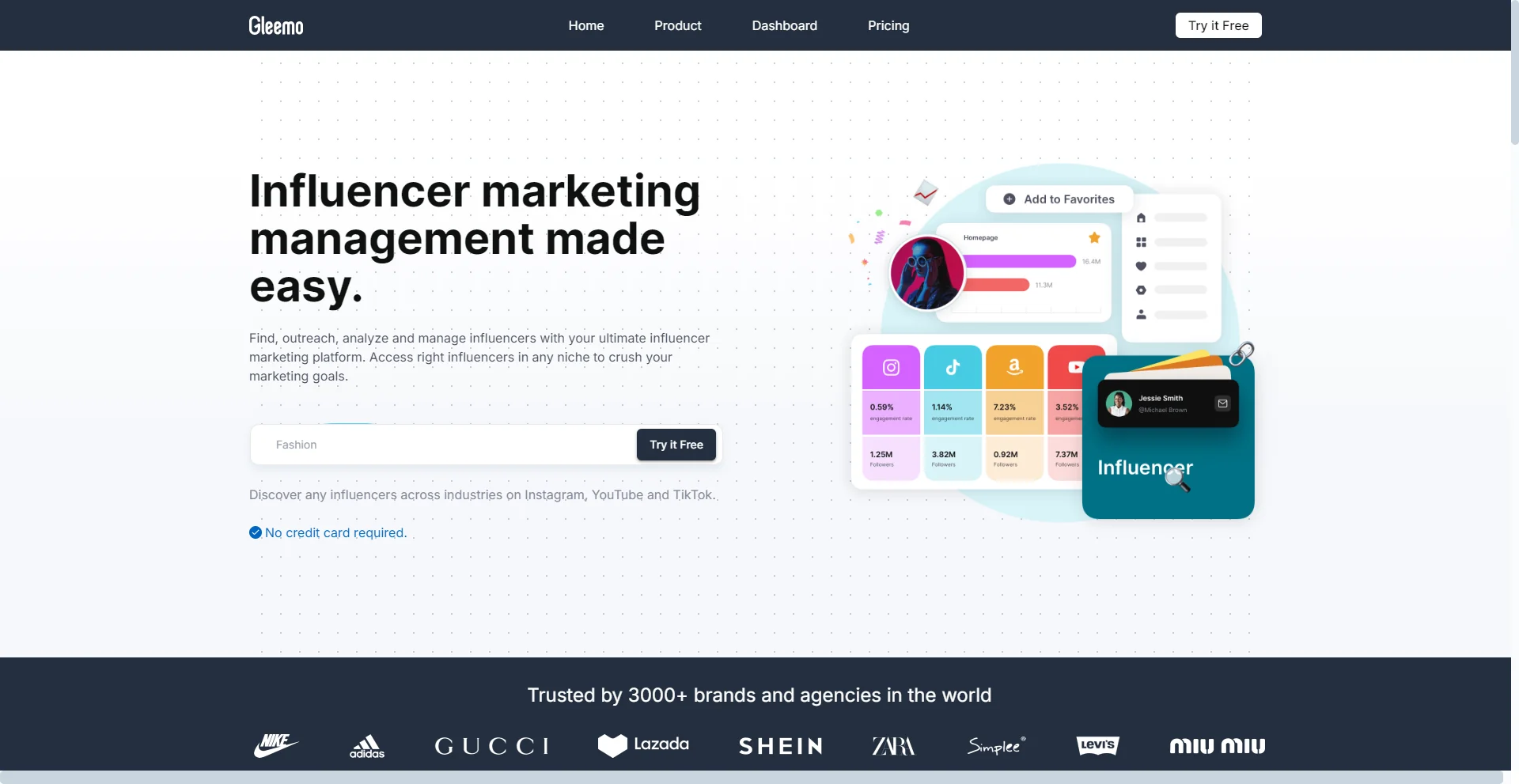
Steps to Find Influencers with Gleemo
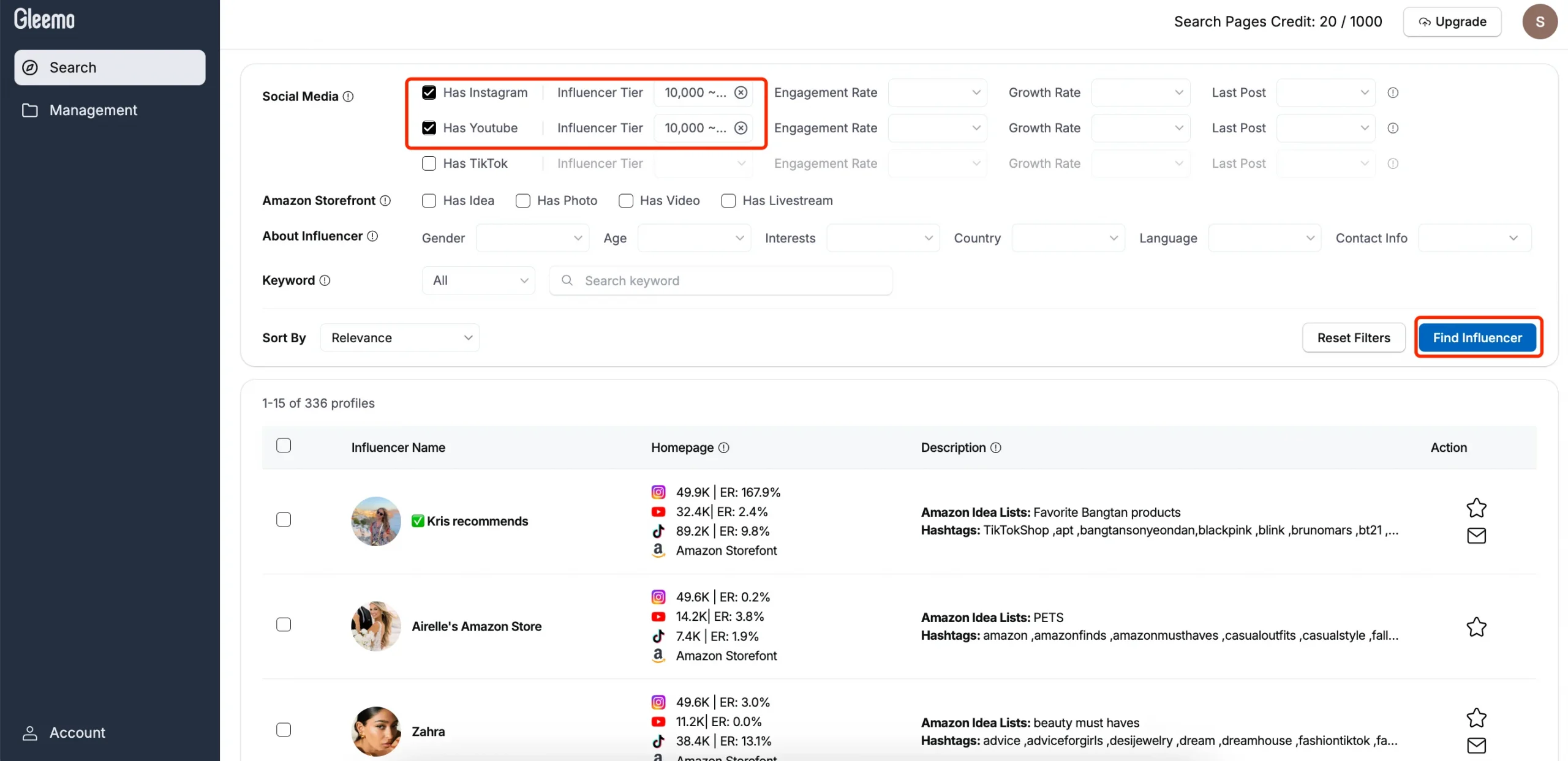
- Step 1: Upon accessing Gleemo, you have the capability to apply filters to refine the list of potential influencers in alignment with your specific marketing objectives.
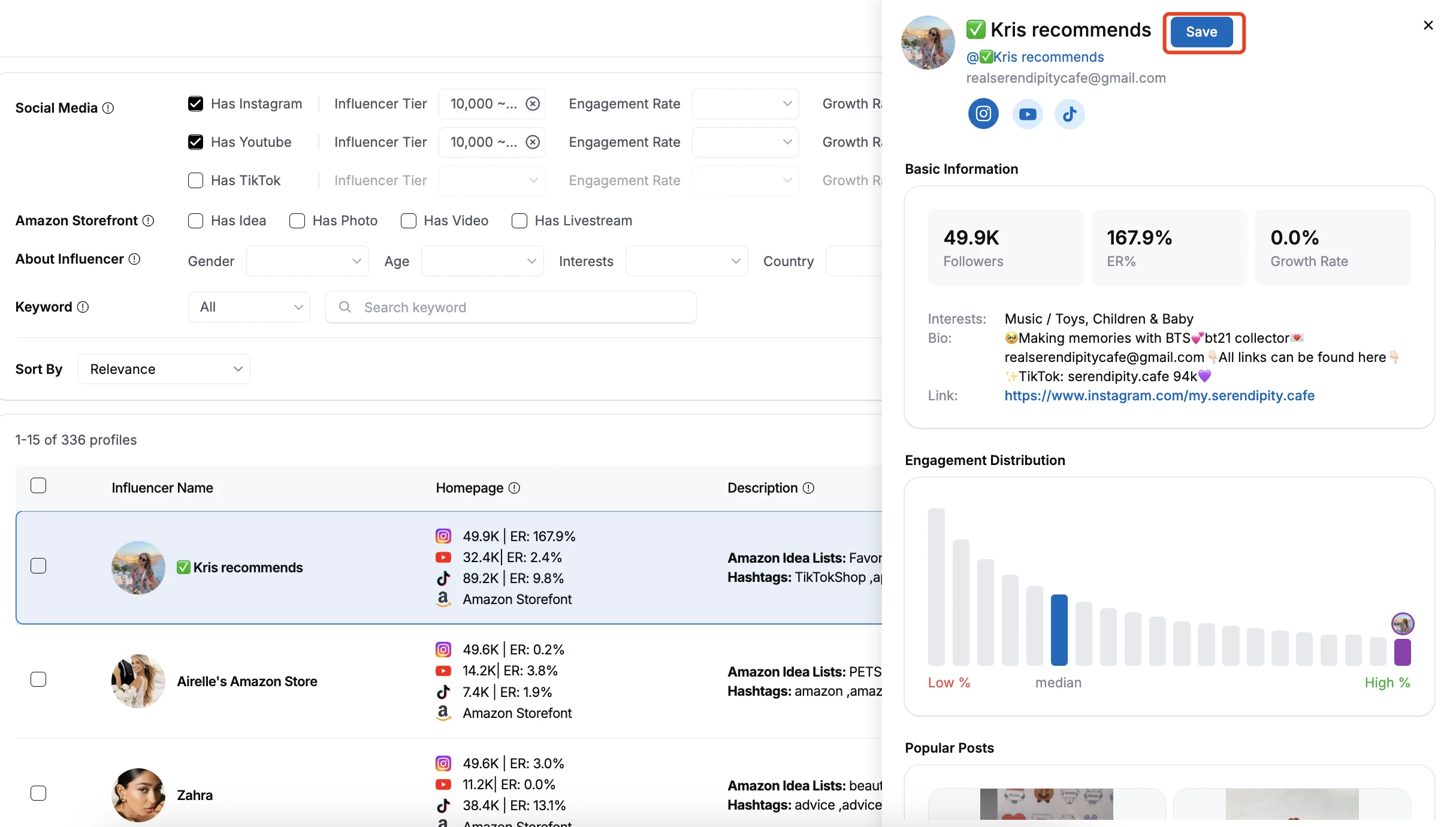
- Step 2: You can review and save detailed influencer profiles on Gleemo before contacting suitable ones.
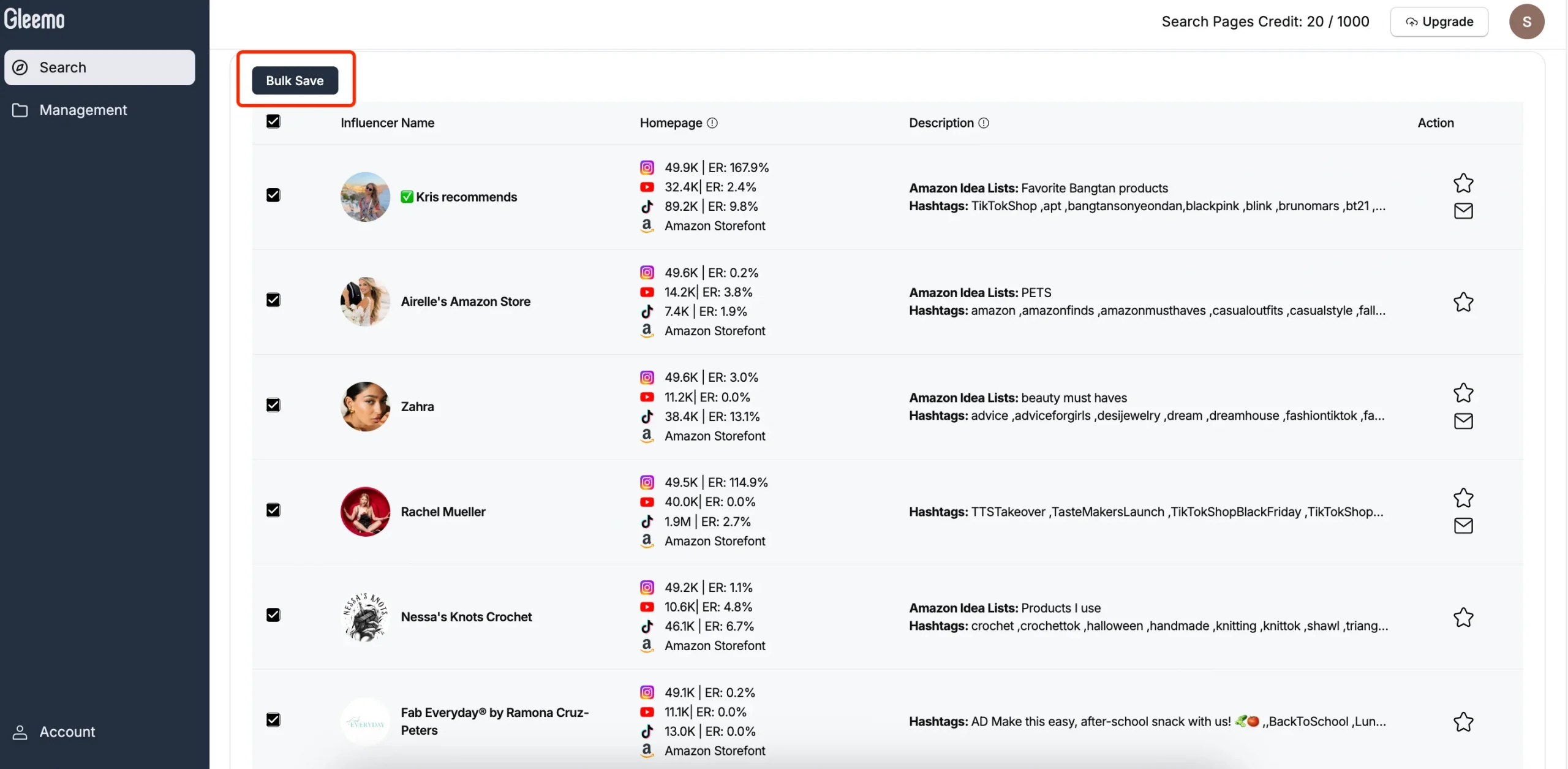
- Step 3: Save profiles in bulk for streamlined outreach and management.
Key Features of Gleemo
- Influencer Search: Access a database of over 200+ million influencers, including Instagram, YouTube, TikTok and even Amazon influencers.
- Audience Insights: View detailed demographics, engagement rates, and audience interests.
- Influencer Outreach: Use pre-built templates for contacting influencers.
- Campaign Management: Track influencer collaborations and campaign performance in one place.
Why Gleemo Stands Out
- Pros: Saves time with advanced search and analytics tools. Perfect for brands of all sizes.
- Cons: Subscription plans may be costly for smaller startups.
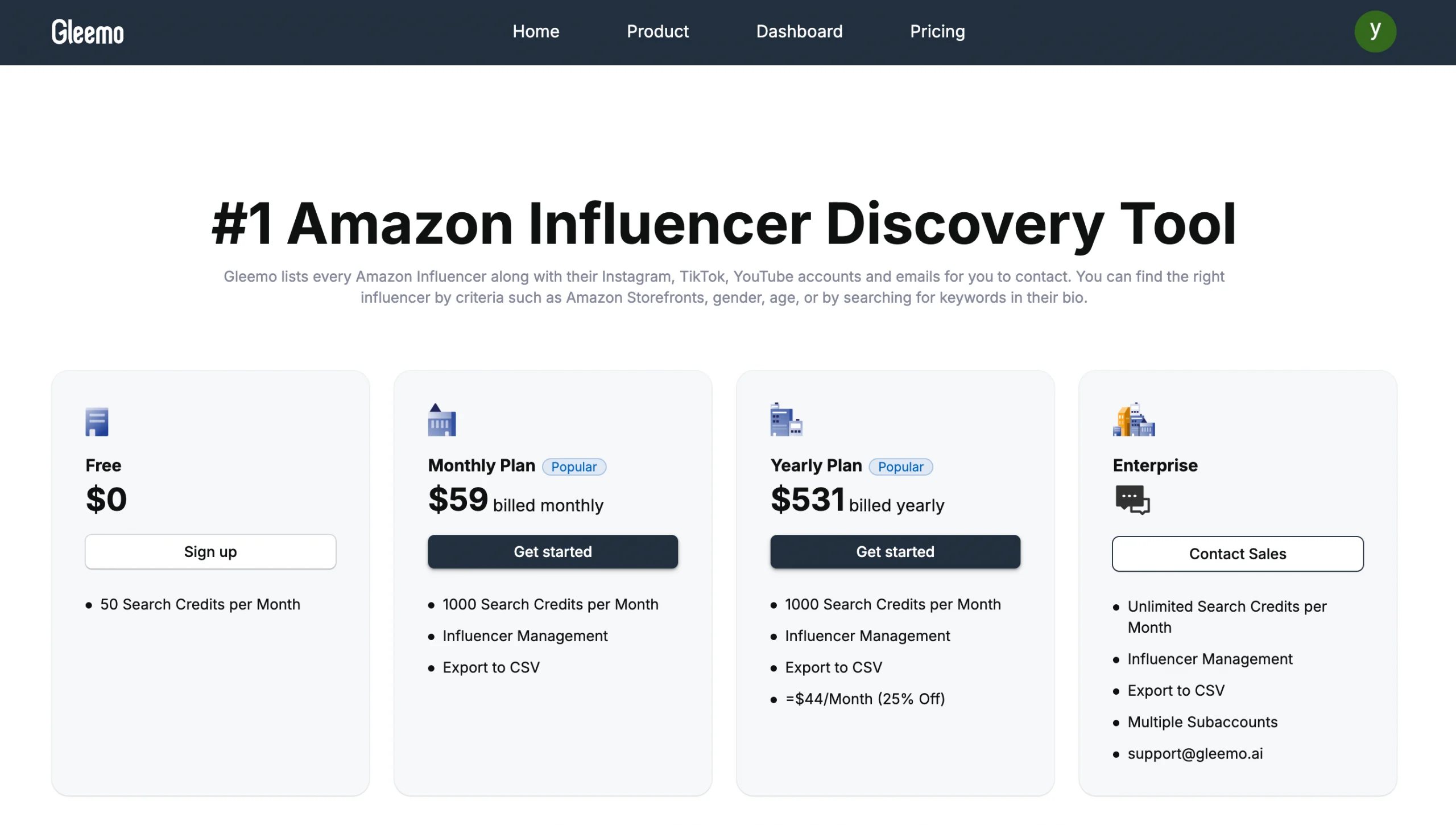
Pricing Plans
Gleemo offers a range of pricing plans to accommodate various business needs. The plans are designed to provide flexibility and value, catering to both startups and large enterprises.
2. Conduct Hashtag and Keyword Searches
Social media platforms are treasure troves for discovering influencers. Searching with hashtags related to your brand can reveal influencers who already align with your industry.
Steps to Follow:
- Use relevant hashtags (e.g., #FitnessTips or #VeganFood).
- Look for influencers with consistent posting and high engagement.
- Check their comments. This ensures their followers are genuinely interested in their content.
This method works well because it connects you to influencers already passionate about your niche. Additionally, this approach helps identify emerging influencers who are not yet saturated with brand collaborations.
3. Leverage Social Listening Tools
Social listening tools like Hootsuite or Mention monitor online conversations about your brand or industry. They track mentions, keywords, and trends. This identifies influencers who are actively discussing topics relevant to your business.
Why Social Listening Works:
- Discover influencers who already engage with your audience.
- Gain insights into what your target market values and talks about.
- Build connections with influencers naturally interested in your brand.
By keeping tabs on discussions related to competitors, social listening can also uncover influencers that haven’t been approached by similar brands.
How to Find Influencers for Your Niche Area?
Finding niche influencers can give your brand a competitive edge. These influencers focus on specific topics or industries and have followers with shared interests.
Proven Strategies to Find Niche Influencers
- Explore Niche Communities
Join forums, Facebook groups, or LinkedIn communities related to your industry. Look for members actively posting valuable content and engaging with others. Check if they frequently discuss industry trends or share unique insights. These are signs of influence. - Analyze Competitors’ Collaborations
Check which influencers your competitors work with. If they align with your values, reach out to them. Also, monitor how successful these collaborations are. This ensures the influencer is worth investing in. - Use Advanced Filters on Platforms
Platforms like Gleemo let you filter influencers by industry, location, or audience preferences. This feature ensures you find influencers who are a precise match for your campaign goals.
How to Achieve Higher ROI in Influencer Marketing
Maximizing ROI requires a well-thought-out strategy. Here’s how to get the most from your campaigns:

- Select Influencers Carefully
Look beyond follower count. Focus on engagement rates, audience demographics, and the authenticity of their content. A smaller influencer with an engaged audience is better than one with a larger but less relevant following. - Test Micro and Nano-Influencers
Smaller influencers often provide higher ROI because of their closer connection with their audience. These collaborations are also more budget-friendly. This makes it possible to run multiple campaigns at once. - Monitor and Analyze Campaigns
Track metrics like clicks, conversions, and impressions using analytics tools like Gleemo. Regular evaluation ensures your strategy stays on track. Create reports after each campaign to learn what worked and what didn’t.
Influencer Marketing Definition for Beginners
Influencer marketing is a partnership between brands and individuals who have a strong presence on social media. These influencers promote a product or service to their followers. This helps brands gain visibility and credibility.
This form of marketing works because influencers already have an established audience that trusts their opinions. It feels more personal than traditional ads. Influencers often share real-life experiences when recommending products.
For example, an influencer sharing their skincare routine featuring a particular product creates a relatable and engaging advertisement. This authenticity is why influencer marketing has become a go-to strategy for businesses.
Types of Influencers and Their Sizes
Influencers are categorized based on their follower count, and each type has unique strengths.
Nano-Influencers (1,000–10,000 followers):
- These influencers have small but highly engaged audiences.
- They are often niche-focused. This makes them great for specific products.
- Example: A local fitness trainer promoting workout gear.
- Nano-influencers are also cost-effective and approachable for smaller brands. This makes them ideal for startups.
Micro-Influencers (10,000–100,000 followers):
- Known for building strong relationships with their followers.
- They combine good reach with a personal touch. This makes them cost-effective.
- Example: A food blogger reviewing local restaurants.
- Micro-influencers often collaborate with brands repeatedly. This creates long-term trust and authenticity.
Macro-Influencers (100,000–1 million followers):
- They have larger audiences, which offers higher visibility.
- However, their engagement rate is often lower compared to smaller influencers.
- Example: A tech reviewer showcasing the latest gadgets.
- These influencers can elevate brand awareness quickly. However, they may require a bigger budget.
Mega-Influencers (1 million+ followers):
- These are celebrities or internet-famous individuals.
- Ideal for global campaigns but comes with a hefty price tag.
- Example: A Hollywood actor endorsing a luxury brand.
- While they have a vast reach, their campaigns require careful planning. This avoids appearing overly commercial.
Bottom Line
Finding the right influencers is key to a successful social media marketing strategy. Tools like Gleemo make the process easier, while hashtag searches, social listening, and niche-focused strategies ensure you find influencers that truly align with your brand.
By setting clear goals, choosing the right influencers, and analyzing performance, you can achieve a higher ROI and build lasting connections with your audience.